
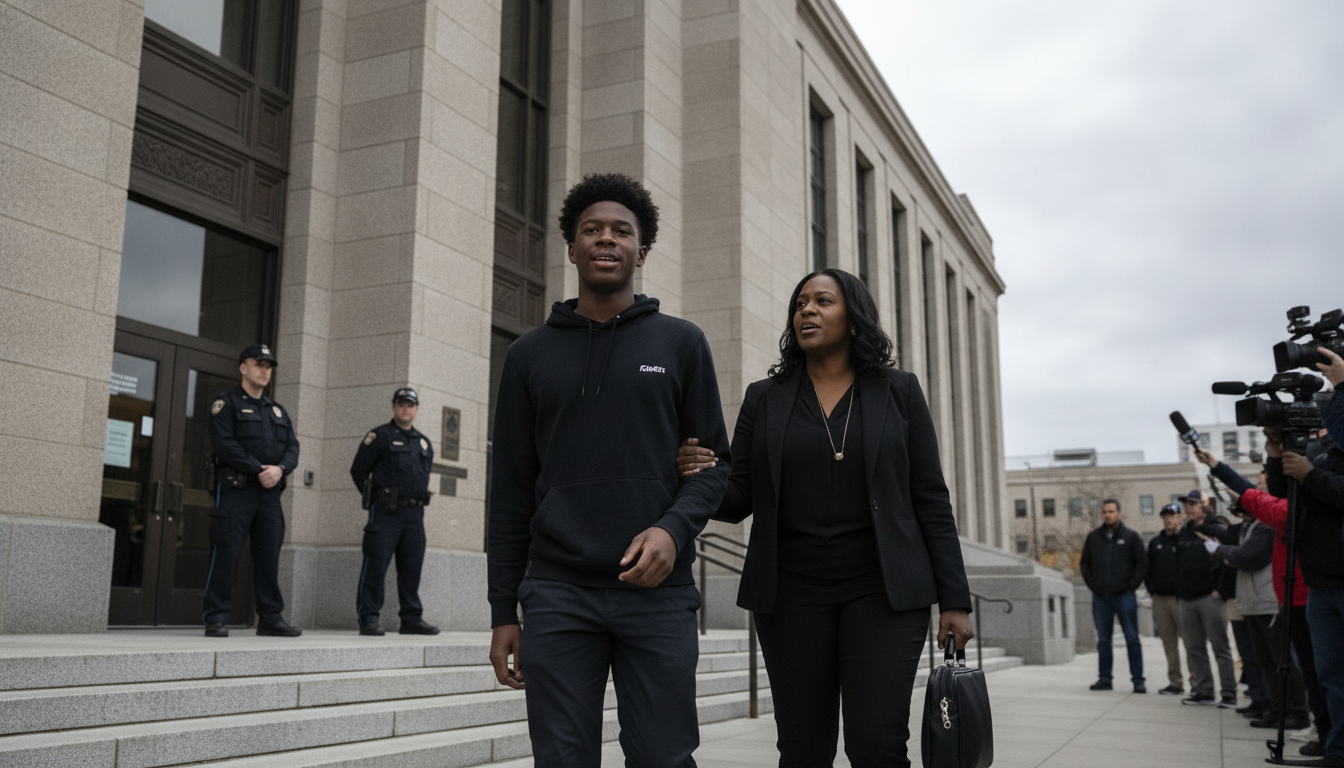
Judge stays charges after police misconduct shown in video of Edmonton teen arrest
Alberta judge stayed proceedings against an Edmonton youth after court video showed officers using excessive force, threats and mocking — raising police misconduct concerns.
A judge in the Alberta Court of Justice last month ordered a stay of proceedings in the case of an Edmonton teen, finding evidence of police misconduct during his arrest. Justice Julie Lloyd concluded that the officers’ conduct — including the pointed use of a Taser and firearm, harsh language and physical restraint after the youth surrendered — was sufficiently troubling to halt prosecution. The decision underscores growing scrutiny of police actions during youth arrests and their impact on the integrity of the justice system.
Judge cites excessive force and malicious conduct
Justice Lloyd wrote that multiple uses of force recorded on video were excessive and that one officer’s behaviour appeared motivated by anger and malice. The judge said continuing to trial the youth would risk condoning serious misconduct and would cause grave harm to public confidence in the courts. By directing a stay, the court effectively removed the prospect of conviction in the matter, citing the need to dissociate the justice system from the officers’ actions.
Video captures threats, Taser beam and knee restraint
Security footage presented at a hearing shows the youth surrendering with raised hands but still being threatened and restrained by police officers. The recordings depict an officer pointing a Taser and a handgun at the teen, and, in one instance, placing a knee on his back after he had lowered himself to the ground. The judge described scenes in which officers swore at the young person and continued to issue threats even after he complied, and noted the “light of the Taser beam” directed at his head and chest.
Officer history and prior discipline reviewed by court
One of the arresting constables has a prior record of an assault allegation arising from a 2019 incident in which he shoved a handcuffed suspect’s head into a wall. Those earlier charges were stayed, and an internal or external review later resulted in a reprimand in 2025 after the officer admitted to using excessive force in a charged situation. Justice Lloyd referenced that history in assessing whether the officer’s conduct in this arrest could be regarded as isolated or part of a pattern, and found the latter to be a meaningful factor in her decision.
Sequence of break-ins and arrest recounted in court
According to the Crown’s evidence, the youth admitted to a series of break-ins on two nights in August 2024, taking items including a backpack and alcohol from a residence. On the second night, neighbours and the homeowner confronted signs of attempted entry, called 911 and directed police to the area. When officers located the teen, he initially attempted to flee but then stopped and walked toward the officers with his hands raised before the forceful restraint occurred.
Youth’s circumstances and steps toward rehabilitation
The youth, identified in court only by initials under the Youth Criminal Justice Act, told his lawyer he has struggled with substance use and mental-health challenges following the death of a family member. His Legal Aid Alberta counsel said the teen engaged immediately with counselling and medication after the arrest and took steps the lawyer described as consistent with rehabilitation. The lawyer also said the youth had once aspired to join policing ranks but now experiences fear of police and lasting psychological effects from the arrest.
Police response and broader implications for enforcement
Edmonton police declined to comment on the specifics of the case at the time of reporting, and authorities had not released the body or security video to the public. The stay of proceedings has prompted renewed questions about training, oversight and accountability mechanisms for frontline officers who interact with young and vulnerable people. Legal advocates and civil-rights observers say the decision will likely fuel calls for clearer standards on de-escalation, use of force and the treatment of youth in custody.
The ruling also raises practical questions for prosecutors about when to proceed in cases where alleged police misconduct may taint the fairness of a trial, and for police services about balancing officer safety with restraint and proportionality. Justice Lloyd framed the stay as necessary to prevent the justice system from appearing to endorse or excuse serious misconduct, a concern that resonates with families and community groups seeking greater transparency.
Public debate over policing practices has intensified in recent years amid a number of high-profile incidents, and this case adds to scrutiny of how officers engage with Indigenous youth and others experiencing mental-health and addiction challenges. Civil-rights lawyers suggest that independent reviews and timely disclosure of body-worn or security camera footage could be central to restoring trust in contentious encounters.
The stay means the youth will not face prosecution on the charges stemming from the break-ins, but the case is likely to reverberate in policy discussions and internal reviews as Edmonton and Alberta officials weigh reforms to training, supervision and accountability frameworks for policing.
