
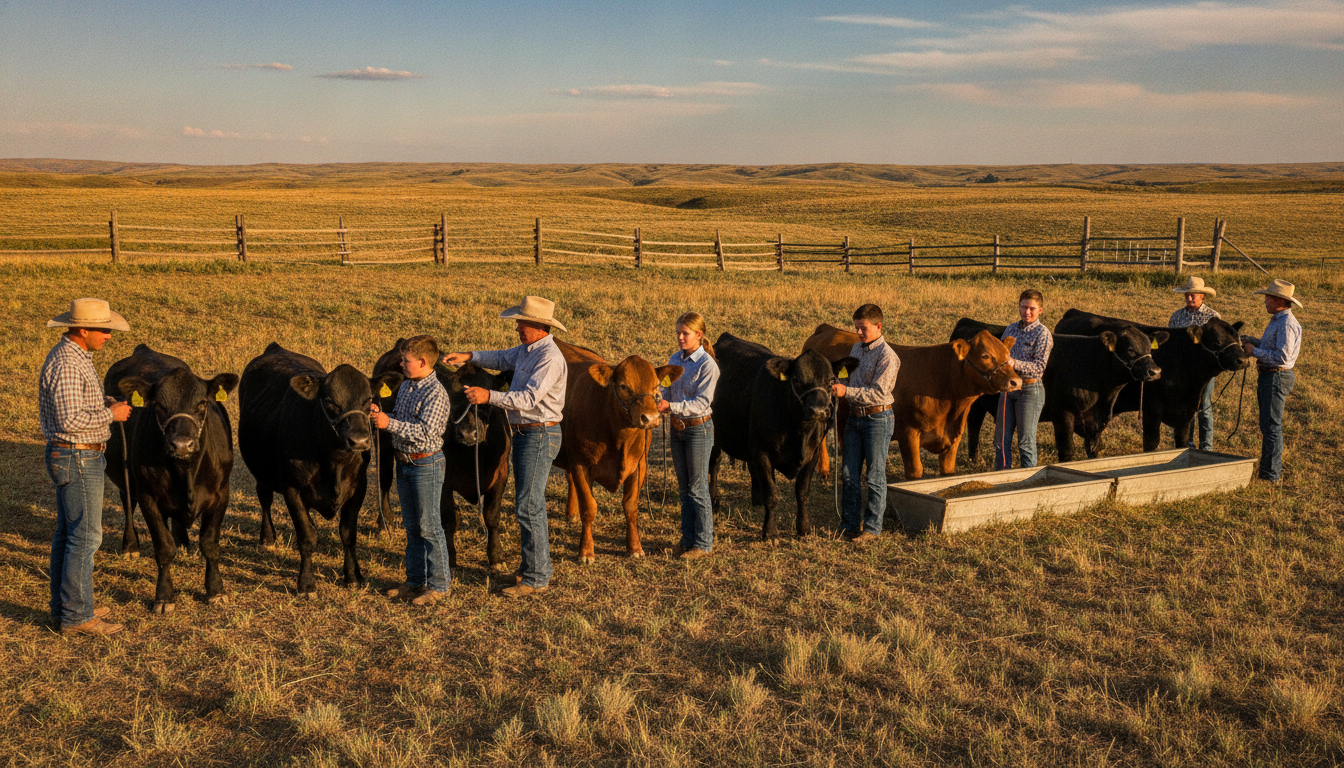
Stampede youth steer program brings 12 participants to OH Ranch for year-long livestock training
Stampede youth steer program launched in 2024 brings 12 young participants to the OH Ranch for year‑long steer care, showmanship training and auction exposure.
The Stampede youth steer program, launched in 2024, places 12 young people at the Stampede’s OH Ranch each October to learn livestock care and judging while selecting a steer to raise for the following year. Participants receive regular instruction in animal husbandry and showmanship, culminate in a public showing at the Stampede, and conclude with the sale of their animal at auction. The initiative aims to combine practical agricultural skills with mentorship and marketplace experience for youth with an interest in the livestock sector.
Program model and launch
The program began in 2024 as a seasonal, hands-on educational initiative run by the Stampede’s OH Ranch. It was designed to introduce young people to the responsibilities of caring for a large animal and to the processes behind judging and exhibition.
Organizers structured the year to begin with an October intake at the ranch and to follow participants through a full production cycle. That cycle includes selection, daily care, training for shows and participation in a high-profile auction at the end of the program year.
Selection and October start at OH Ranch
Each October, a cohort of 12 youth travels to the OH Ranch to choose a steer that they will raise and prepare. The selection process is educational, teaching participants how to evaluate breed characteristics, conformation and health when choosing an animal.
Once paired with a steer, the youth remain responsible for its daily needs under the supervision of ranch staff and program mentors. This early, immersive phase sets expectations for the year-long commitment required in livestock stewardship.
Hands-on animal husbandry and training
Instruction focuses on practical animal husbandry skills, including feeding regimes, housing, basic health monitoring and grooming techniques. The curriculum also covers livestock judging fundamentals, so participants learn how to assess animals objectively and prepare for competitive showing.
Regular training sessions tackle showmanship — the presentation skills and ring etiquette needed for exhibition — alongside animal care best practices. Mentors and experienced ranch personnel provide ongoing feedback, enabling steady improvement in both technical and handling abilities.
Showcase at Stampede and auction
A central milestone for the program is the public showing of each steer at the Stampede, where participants display their animals before judges and community audiences. The experience gives youth exposure to public events and the formal assessment process used in agricultural competitions.
Following the show, the steers are entered into an auction, providing participants with a real-world introduction to market dynamics and the economic aspects of livestock production. The auction serves as both a culmination of the year’s work and a practical lesson in value, pricing and sales presentation.
Skills development and youth outcomes
Beyond livestock techniques, the program emphasizes responsibility, record-keeping and time management as youth balance animal care with other commitments. Participants develop interpersonal skills through mentorship, teamwork and public presentation at the show and auction.
Organizers cite the program’s capacity to open pathways into agricultural education and industry careers, while also building tangible life skills. For many youth, the combination of hands-on work and exposure to industry practices offers clarity about future training or employment choices.
Community engagement and industry links
The Stampede’s OH Ranch model intentionally connects youth with local producers, veterinarians and judges, creating a network of industry contacts. These relationships help bridge the gap between classroom-style learning and the realities of livestock farming.
Community members and auction attendees also play a role, offering feedback, support and market participation that reinforce the agricultural value chain. Such engagement helps the program maintain relevance to both rural and urban audiences interested in food production and animal care.
Final paragraph
As the Stampede youth steer program marks its initial seasons, organizers and participants point to the year-long model as an effective way to teach stewardship and market literacy. The blend of practical animal husbandry, competitive showing and an auction finale offers young people a comprehensive introduction to livestock agriculture while building confidence and industry connections.
