
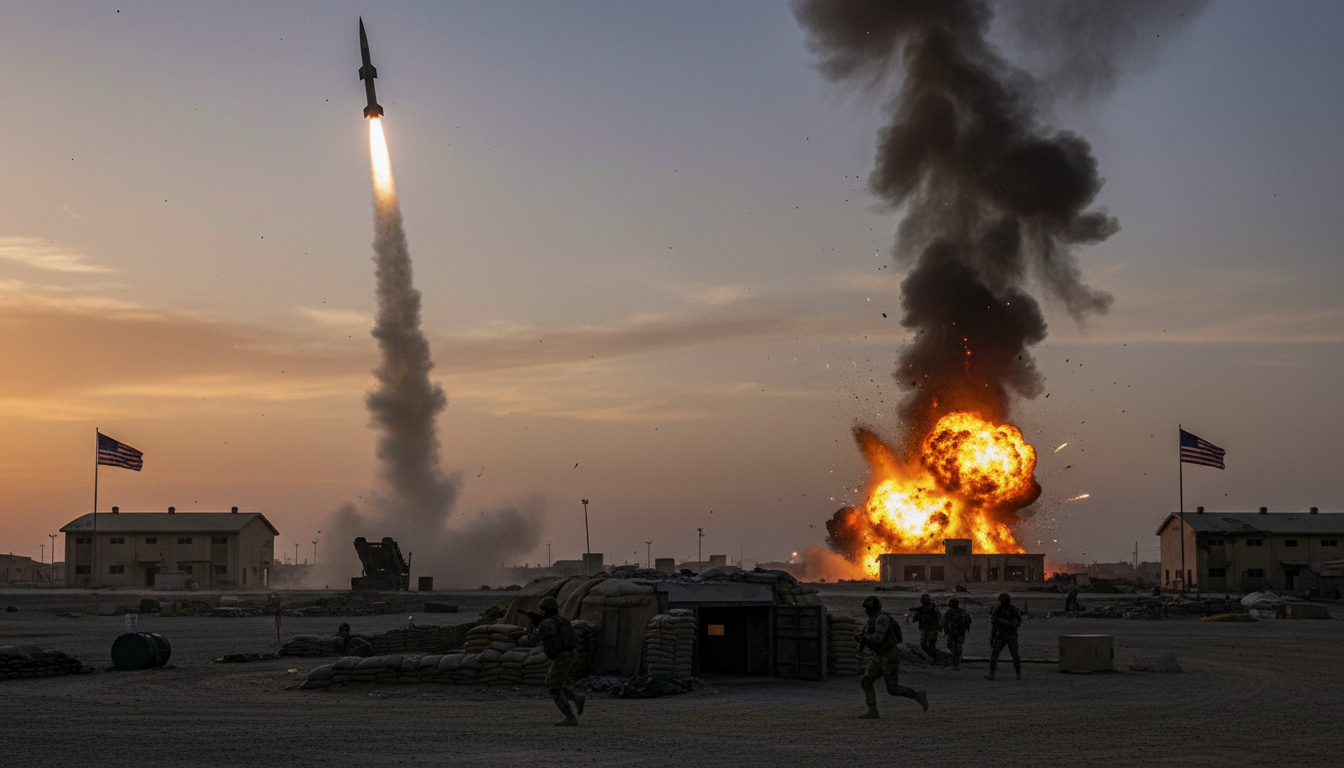
US-Iran strikes worsen as Washington and Tehran exchange retaliatory blows
US-Iran strikes escalate as Washington and Tehran trade air and drone attacks, threatening a fragile ceasefire and stalling talks on nuclear issues now.
The United States and Iran carried out reciprocal attacks overnight, in a fresh rupture of the fragile ceasefire that had briefly calmed the region. U.S. Central Command said American forces struck radar and drone-control systems in Goruk and on Qeshm Island in the Strait of Hormuz, saying the operations were defensive responses after the downing of an American MQ-1 drone. Iran’s Islamic Revolutionary Guard Corps (IRGC) swiftly announced it had hit a base used by the U.S. military, while Kuwait also reported being targeted by drones and missiles during the same period.
U.S. strikes on southern Iran
Centcom reported that the U.S. strikes over the weekend hit systems linked to drone operations and radar installations in southern Iran. The command characterized the actions as defensive measures taken after what it described as aggressive Iranian conduct, including the destruction of an MQ-1 over international waters. U.S. statements emphasized targeting infrastructure used to direct or threaten U.S. assets rather than broader population centers.
Military officials gave limited public detail on the precise locations and damage assessments, citing operational security. Still, the selection of targets on Qeshm Island and near Goruk underscored Washington’s focus on facilities tied to maritime control and unmanned aerial systems in the Strait of Hormuz. The strikes mark at least the third wave of U.S. operations in a little more than a week, signaling an elevated tempo of limited kinetic actions.
IRGC retaliation and regional incidents
Shortly after U.S. statements, the IRGC announced strikes it said were aimed at a base used for U.S. operations, though it did not identify the installation in state media reports. The assertion underlines Tehran’s intent to demonstrate both reach and resolve while maintaining a degree of ambiguity about specific targets. Iranian authorities have repeatedly framed their responses as proportional measures to protect national sovereignty.
Kuwait’s military also reported facing a combination of drone and missile attacks during the same timeframe, a development that highlights the widening geographic footprint of the exchanges. Gulf states and regional partners have increased alerts and monitoring after a series of incidents that include attacks on commercial shipping and military assets in recent weeks.
Ceasefire under strain as negotiations falter
The exchanges come amid stalled negotiations between Washington and Tehran over a ceasefire and a broader framework that could address nuclear and maritime security concerns. Both sides had accused the other of violating the ceasefire that had been in effect since April 8, and the recent strikes have further cooled hopes for a quick deal. Media reports over the weekend said U.S. officials submitted revised, tougher terms to Tehran, contributing to the breakdown in momentum.
According to reporting, the American proposal reportedly included a 60-day extension of the truce, provisions to reopen the Strait of Hormuz to commercial traffic, and a framework for resumed nuclear talks. Iranian negotiators have pushed back, insisting any agreement must include an immediate lifting of sanctions and firm guarantees for Iranian rights, a stance reiterated by Parliament Speaker Mohammad Bagher Ghalibaf.
U.S. stance and demands
Statements attributed to U.S. officials portray a desire to secure a durable halt to hostilities while addressing Tehran’s nuclear activities and maritime disruptions. Sources close to the talks indicated that Washington sought firmer commitments from Tehran, a shift that one report said came from President Donald Trump’s team. U.S. diplomats have made clear they expect Iran to curb support for proxy forces and to stop attacks that threaten shipping lanes and regional stability.
Iran, for its part, has repeatedly denied seeking nuclear weapons and has insisted its nuclear efforts are for peaceful purposes. Tehran says its priorities include a phased removal of sanctions and guarantees that any negotiated pause will be enforced and backed by concrete measures, rather than temporary promises.
Lebanon front and Israeli advances
The wider conflict dynamic was also evident in Lebanon, where Israeli forces intensified operations in the south and captured the medieval Beaufort fortress, a strategic position long used during earlier periods of control. Israeli officials argue those operations target Hezbollah infrastructure, while Hezbollah continues to launch attacks into northern Israel despite a ceasefire that has been repeatedly breached.
U.S. diplomacy has urged restraint from Iranian-backed militias and Hezbollah, with Washington reportedly proposing that Hezbollah be the first to suspend fire in exchange for Israeli abstention from strikes in and around Beirut. The delicate balance between local combat operations and broader U.S.-Iran talks complicates efforts to stabilize the front lines and to separate battlefield developments from diplomatic progress.
International response and next diplomatic steps
France requested an urgent meeting of the U.N. Security Council following the renewed hostilities, reflecting international concern over escalation. Global markets have already reacted to the conflict, with energy prices sensitive to tensions in the Strait of Hormuz and potential disruptions to shipping. Nations with strategic interests in the region are monitoring both military actions and the trajectory of diplomatic engagement closely.
As the week begins, diplomats on multiple sides face a narrowing window to salvage talks before intermittent strikes harden negotiating positions. The overlapping military and diplomatic moves mean that any agreement will require robust verification mechanisms and clear sequencing on sanctions relief, maritime security, and commitments on nonproliferation.
The renewed exchanges between Washington and Tehran demonstrate how quickly a fragile ceasefire can unravel and how military actions on the ground complicate the path to a political settlement.
