
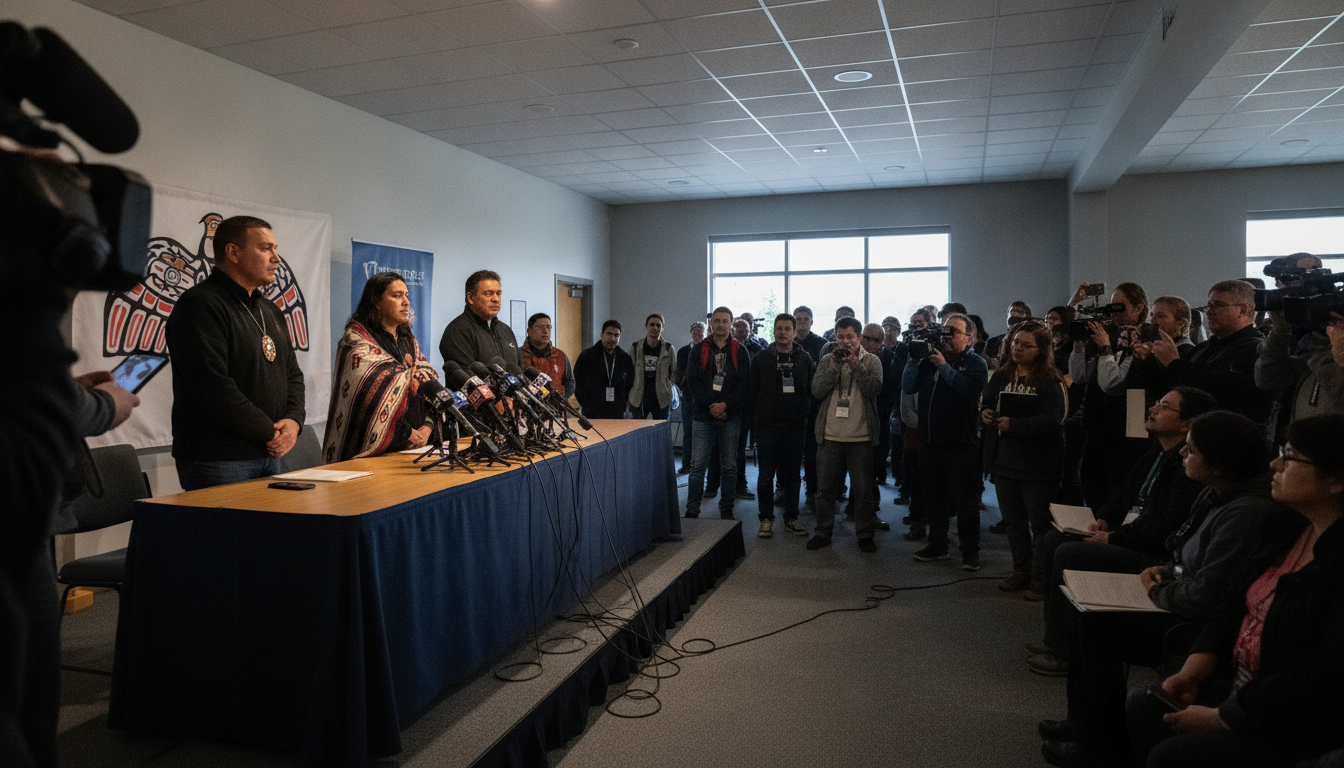
West Coast pipeline faces renewed opposition as Indigenous leaders demand Ottawa and Alberta halt plan
Union of B.C. Indian Chiefs urges Ottawa and Alberta to stop the West Coast pipeline proposal, citing climate harm and inadequate consultations. (ubcic.bc.ca)
Indigenous leaders mark International Day with rejection
On the International Day of the World’s Indigenous Peoples the Union of British Columbia Indian Chiefs publicly renewed its opposition to the proposed West Coast pipeline, calling on both the federal government and Alberta to end efforts to advance the project. (ubcic.bc.ca)
The union said expansion of the oil sector would accelerate climate change and exacerbate natural disasters affecting Indigenous communities across B.C. and beyond. (stoptmx.ca)
Criticism of the consultation process
UBCIC officials argued that government consultations have been superficial, saying invitations focused on how a largely predetermined project would be implemented rather than whether it should proceed. (ubcic.bc.ca)
The chiefs say that genuine free, prior and informed consent requires full discussion of route, impacts and alternatives, and they contend those elements have not been meaningfully addressed to date. (ubcic.bc.ca)
Federal government outlines route, partners and economic rationale
Federal documents and communications from Prime Minister Mark Carney’s office say Ottawa has referred Alberta’s proposal to the Major Projects Office and described a preliminary corridor that largely follows the existing Trans Mountain alignment. (canada.ca)
The federal announcements also identify a proposed ownership group involving Trans Mountain Corporation, the Alberta Petroleum Marketing Commission and Pembina Pipeline Corporation, and highlight government projections of jobs and export gains tied to the scheme. (canada.ca)
National-interest listing could shorten approval timelines
The federal government has begun the process of considering the pipeline for designation as a “project of national interest” under the Building Canada Act, a step that would allow Ottawa to set conditions and speed regulatory approvals. (canada.ca)
Critics, including Indigenous leaders and some environmental commentators, warn the designation can be used to fast-track projects and limit the scope of existing environmental reviews and provincial rules. Those concerns have become a central point of contention as Ottawa advances its timeline. (ipolitics.ca)
Public comment period and next administrative steps
Government notices and the Major Projects Office materials say consultations and information gathering are under way as officials determine whether to formally list the pipeline as a national-interest project, with Ottawa signalling a decision process aimed at late 2026. (canada.ca)
Officials have indicated the process will include engagement with Indigenous communities, provinces and the public before a final conditions document would be set, but Indigenous leaders remain skeptical about whether those steps will meaningfully shape the proposed route or terms. (canada.ca)
Environmental and economic debate intensifies
Supporters point to the pipeline’s potential to increase export capacity, attract investment and create construction and supply-chain jobs in Alberta and B.C., figures Ottawa has highlighted repeatedly in its public messaging. (pm.gc.ca)
Opponents counter that the long-term climate costs, heightened tanker traffic and elevated spill risk to coastal ecosystems are not adequately accounted for in economic projections, and that those risks disproportionately affect coastal and Indigenous communities. (stoptmx.ca)
The federal referral to the Major Projects Office and the prospect of a national-interest listing have made the West Coast pipeline a focal point of broader debates over how Canada balances industrial development, environmental protection and Indigenous rights. (canada.ca)
The coming weeks are likely to see heightened advocacy on both sides as Ottawa collects input and Indigenous leaders press for legally robust consultations and alternatives that address climate and community impacts.
