
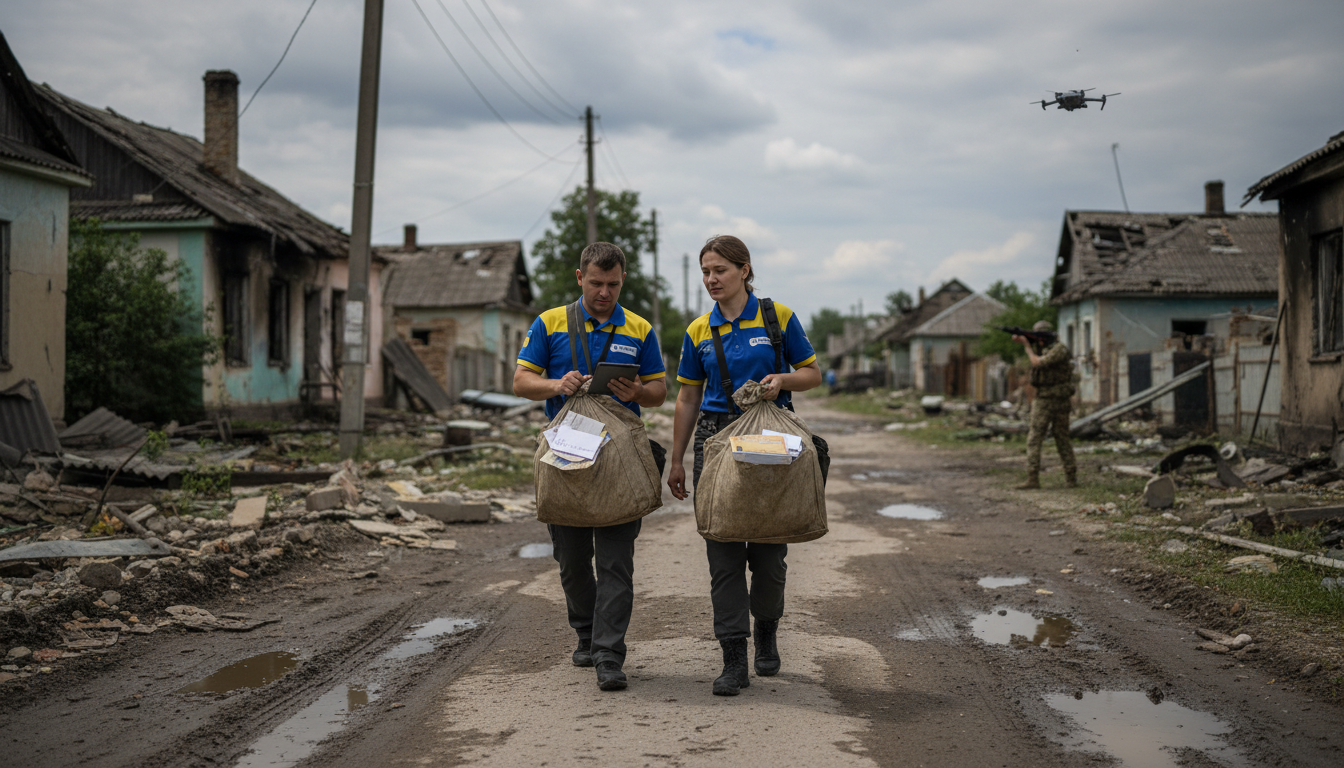
Ukrainian postal workers keep frontline communities connected amid drone threats
Ukrainian postal workers deliver mail, pensions and essentials to isolated frontline communities despite drone risks, damaged post offices and mounting casualties.
The hum of a delivery van is a rare sound of normalcy on the road to the front in eastern Ukraine, where Ukrainian postal workers continue making scheduled stops in villages under constant threat. Their routes bring pensions, medicine and food to retirees and families cut off by conflict, and the work now carries clear personal risk as drones and strikes have increasingly targeted postal infrastructure. Ukrposhta reports more than 500 post offices have been damaged or destroyed over four years of war, and at least nine postal workers have been killed while performing their duties.
Frontline Deliveries Face Drone Threats
Ukrposhta says delivery trucks and small post offices have become part of the war’s shifting front, with drones accounting for a large share of recent attacks. Vehicles are pursued not just for parcels but because they may carry military supplies such as drone parts bound for frontline units. The organization’s tally of damaged facilities underlines how civilian infrastructure has been swept into the conflict’s trajectory.
The Russian Ministry of Defense did not immediately respond to a request for comment about strikes on postal targets. Postal officials and workers say that threat has transformed routine deliveries into high-risk operations, forcing altered routes, added security precautions and constant vigilance by staff.
Route and Workload of Larysa Navrotska
One of those workers, Larysa Navrotska, operates from a hub in Vasylkivka and serves roughly 6,500 people each month along roads that lead close to the front. Accompanied by her driver, Vitalii, she typically visits three villages on a run and encounters loyal customers who depend on monthly pension payments and regular supplies. Larysa’s job stretches beyond courier work; she fills roles as clerk, cashier and the informal morale booster for colleagues and customers alike.
Larysa said she took the postal job after the Soviet-era collapse when work was scarce, and she has remained through marriage and raising a son in the same community. Her long tenure reflects both personal commitment and the way small post offices function as multi-purpose service centers in rural Ukraine.
Post Offices as Community Lifelines
For many villagers the post office is not merely a place to collect mail but an essential life-support node delivering groceries, medicines and vital information. After receiving pensions, some residents return a portion of their limited funds to postal workers so money can be donated to the war effort, illustrating the reciprocal bond between staff and the communities they serve. The last brick-and-mortar branch on the road to the front often becomes a meeting point, offering a familiar face and conversation to those living in isolation.
Postal staff report that social duties—checking on elderly residents, relaying news, and coordinating small deliveries—are now woven into every trip. Those human interactions help sustain morale in villages where outside contact is otherwise scarce.
Ukrposhta Leadership Visits and Staff Appeals
The head of Ukrposhta made a field visit to the region, offering postal workers a chance to speak directly about safety concerns and compensation demands. Workers told visiting officials they want more than public gratitude: they seek concrete measures such as protective gear, secure vehicles and additional pay that reflects the elevated danger of their routes. Management has acknowledged the risks and faces pressure to balance service continuity with staff safety.
Postal unions and local employees argue that clearer protocols and targeted investment are required to maintain reliable service without exposing couriers to unnecessary harm. Officials say visits to frontline hubs are part of an ongoing effort to assess needs and prioritize resources where the service is most at risk.
Losses, Repairs and Service Continuity
Over four years of conflict, the destruction of infrastructure has forced Ukrposhta to adapt operations across eastern Ukraine, repairing or relocating branches and rerouting deliveries when roads are unsafe. More than 500 post offices have been reported damaged or destroyed, a figure that illustrates the scale of physical loss and the logistical challenges involved in maintaining national postal service. Despite those losses, staff continue operations as best they can, prioritizing pension distribution and emergency deliveries.
The targeting of delivery trucks has prompted changes in convoy practices, route timing and the use of reinforced vehicles in some sectors. Postal managers say these steps are costly and difficult to sustain, underscoring calls for increased funding and international support to ensure the continuity of essential civilian services.
Postal workers on the frontlines are carrying out a mix of humanitarian, administrative and social functions that go beyond standard mail delivery. Their daily presence in villages under threat provides a crucial link to the outside world and a measure of stability for vulnerable residents.
The resilience of postal staff such as Larysa and Vitalii highlights the broader challenge of maintaining civil services in conflict zones: adapting operations to immediate dangers while preserving the trust and needs of the communities they serve.
