
Drone attacks on Moscow kill four as Russia says hundreds of drones were intercepted
Large-scale Ukrainian drone attacks hit Moscow and other Russian regions on May 17, 2026, killing four people and prompting mass interceptions as authorities assessed damage and casualties.
Multiple Fatalities Reported in Moscow Region
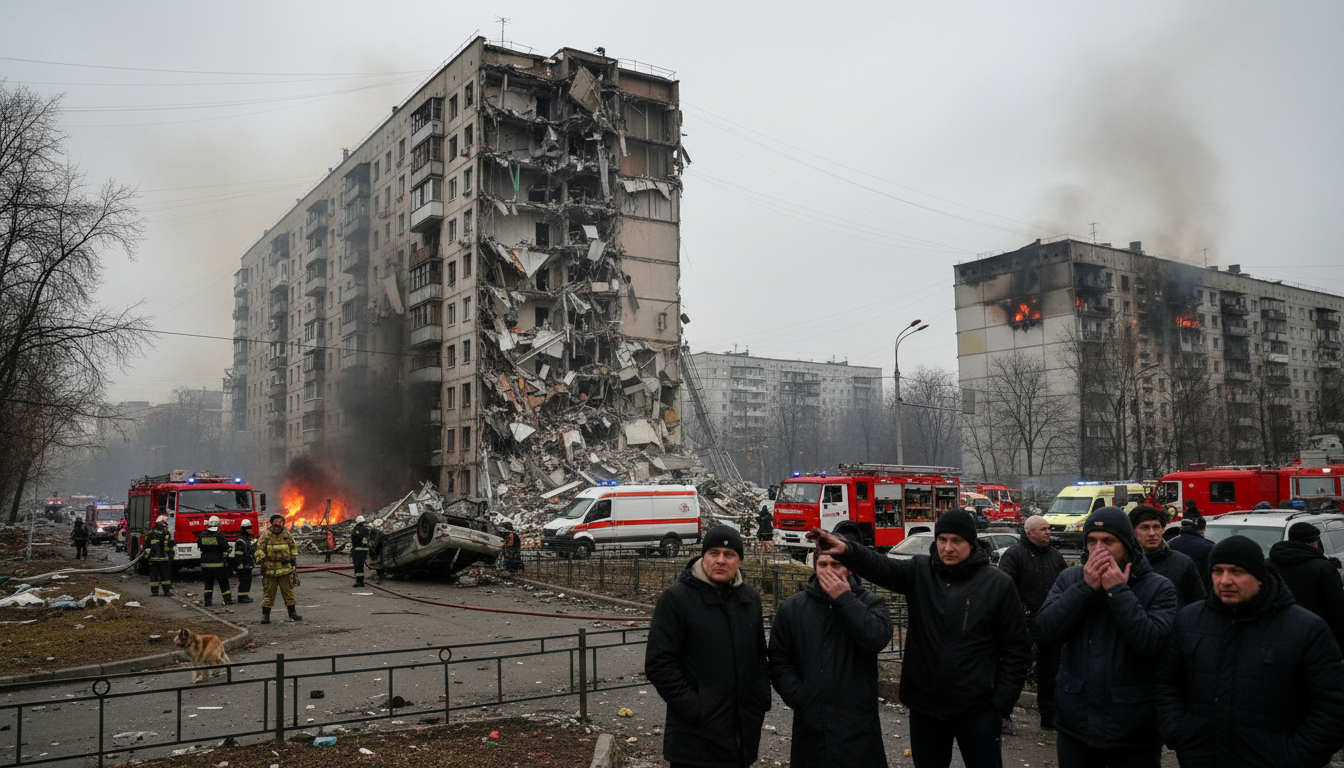
On May 17, regional officials reported three fatalities in the Moscow region after drones struck populated areas overnight. Governor Andrei Vorobyov said a woman died when a drone hit a house in Khimki and rescue crews were searching the rubble for a possible additional victim.
Vorobyov also reported two men killed in the village of Pogorelki in Mytishchi district, and said apartment buildings and infrastructure suffered damage. Authorities described the strikes as among the most severe drone attacks in the area in more than a year.
Death Near Border in Belgorod
Russian officials said a separate strike in Belgorod, close to the Ukrainian border, resulted in one fatality. The report did not provide extensive detail on the circumstances of that death but placed it alongside the Moscow-region casualties.
Local and regional emergency services were mobilized to the affected towns, with officials continuing to investigate the sequence of impacts and verify missing-person reports. Hospital and municipal statements indicated several people were treated for injuries in the wake of the raids.
Mass Drone Interceptions, Officials Say
Moscow Mayor Sergei Sobyanin and state outlets reported that air-defence systems had shot down 81 drones targeting the capital during the overnight assault. The federal Ministry of Defence said it had intercepted a total of 556 drones across Russia as the incident unfolded into Sunday morning.
Officials framed the operation as a wide-ranging, coordinated strike capability and highlighted the scale of defensive efforts needed to counter it. The defence ministry and city authorities emphasized the volume of intercepts while investigators worked to account for any systems that penetrated defences.
Damage Near Oil Refinery and Airport Debris
Authorities reported 12 people injured, most of them near an oil refinery outside Moscow, though officials said the refinery continued to operate without disruption. Emergency services also noted three homes damaged in regions around the capital as clean-up and structural assessments began.
Debris from downed drones fell on the grounds of Sheremetyevo airport, Moscow’s largest, but airport officials said the fragments caused no damage to infrastructure or flight operations. Local emergency teams searched affected sites for unexploded ordnance and secondary hazards as part of immediate safety measures.
Cross-Border Violence Persists in Kharkiv and Kherson
Ukrainian officials said Russian forces continued strikes inside Ukraine, signalling that violence remained active on multiple fronts despite the drone assault on Russian territory. Authorities in the Kharkiv region reported that 15 settlements were targeted in the previous 24 hours, leaving seven people wounded.
In the southern Kherson region, officials said a 36-year-old man was killed when a Russian drone dropped explosives on the village of Inhulets. Regional emergency responders described damage to civilian structures and ongoing efforts to assist displaced residents and treat the injured.
Leaders’ Statements and Diplomatic Signals
The drone strikes came after public remarks by international leaders suggesting talks or a potential reduction in hostilities. U.S. President Donald Trump had said he believed Moscow and Kyiv might “soon reach a deal,” comments that followed exchanges with Russian President Vladimir Putin and other diplomatic signals.
Analysts cautioned that statements about negotiations did not immediately alter the operational tempo on the ground, where both sides continued military actions. Officials on each side reiterated security concerns and framed the strikes within the broader, unresolved conflict.
The scale of the raids and the number of intercepts have raised fresh questions about the reach of unmanned systems and the resilience of both civilian and military defences. Investigations by regional authorities and federal agencies were ongoing to establish responsibility for specific incidents, to catalogue damage and casualties, and to inform any potential diplomatic follow-up.
Russian emergency services and local governments said recovery and repair work would continue in affected towns, while hospitals and social services prepared to support those displaced or injured. As officials tallied the human and material cost, authorities warned residents in border and metropolitan areas to remain vigilant for additional security notices.
