
Sergii Koretsky appointed Ukraine prime minister as protests erupt over Defence minister’s removal
Sergii Koretsky confirmed as Ukraine’s prime minister on July 16, 2026, sparking nationwide protests after the dismissal of Defence Minister Mykhailo Fedorov.
Sergii Koretsky was confirmed by the Ukrainian parliament on Thursday after President Volodymyr Zelensky nominated the Naftogaz chief to replace Ioulia Svyrydenko, whose resignation had been accepted earlier this week. The vote, carried by 289 deputies, capped a rapid government reshuffle that prompted rare mass demonstrations across the country protesting the removal of Defence Minister Mykhailo Fedorov. The appointment comes as Kyiv prepares for the coming winter amid ongoing Russian military pressure.
Parliamentary vote and political timing
The Verkhovna Rada approved Koretsky’s nomination following Zelensky’s decision to reorganize his cabinet with little prior public explanation. Lawmakers moved quickly to accept Svyrydenko’s resignation, noting she had served as prime minister since July 17, 2025. Parliamentary sources said the 289-vote tally reflects majority backing for a change framed by the president as a tactical reshuffle.
Observers in Kyiv noted the speed of events and the central role of the presidency in selecting the successor. Zelensky had publicly endorsed Koretsky before the vote, describing him as the best candidate to manage the government’s immediate priorities. The choice marks the third individual to hold the prime ministership since Russia’s full-scale invasion in February 2022.
Koretsky’s profile and stated priorities
Sergii Koretsky, 48, is an engineer by training and took over as chief executive of state energy company Naftogaz in May 2025. His professional record centers on energy transport, extraction and refining, and officials say that experience informed the president’s decision to name him at a time when infrastructure resilience is a top concern.
Addressing deputies prior to the confirmation vote, Koretsky outlined three priorities: strengthening Ukraine’s defence capabilities, securing economic stability, and accelerating integration with the European Union. He and senior officials signalled a focus on ensuring energy and transport systems can withstand winter weather and sustained attacks on critical infrastructure.
Protests over Mykhailo Fedorov’s dismissal
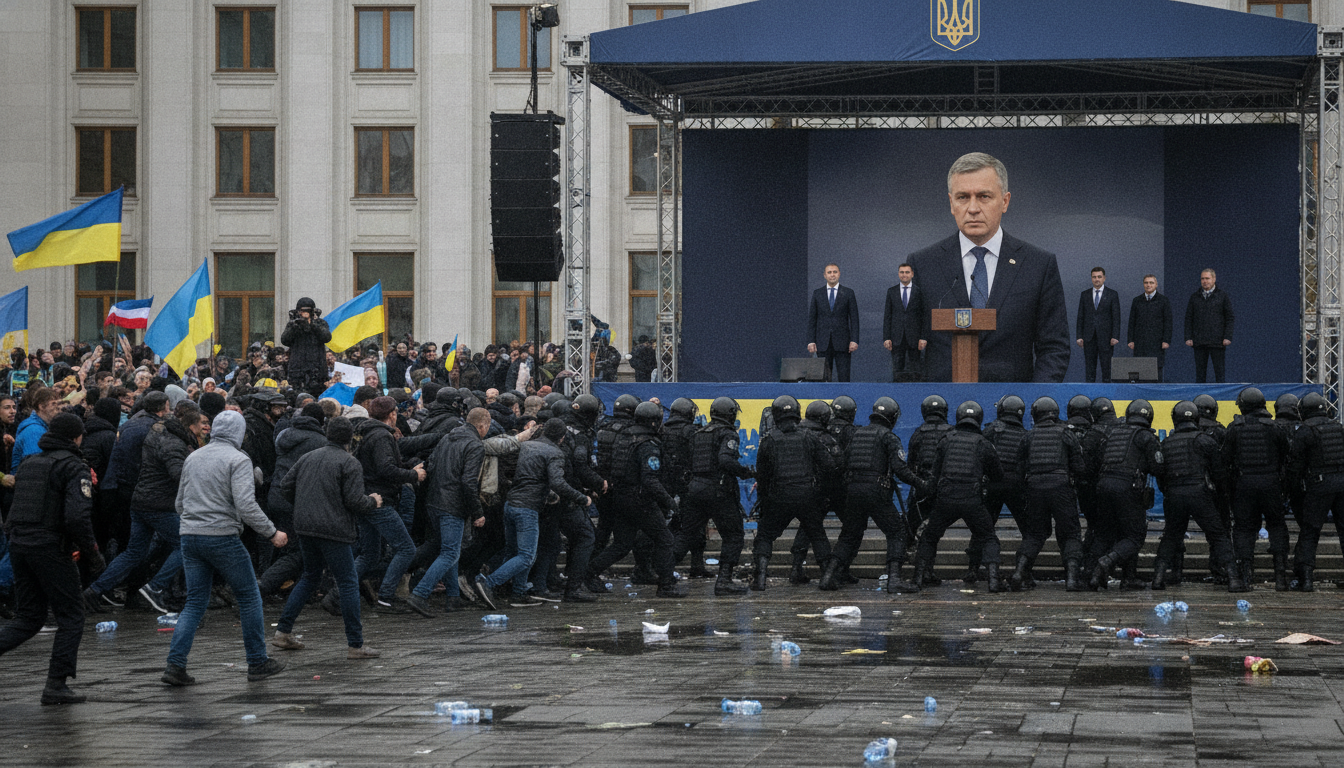
Koretsky’s elevation triggered public anger in cities across Ukraine, with hundreds gathering in central Kiev to protest the removal of Mykhailo Fedorov, a 35‑year‑old former technology minister widely seen as a reformer. Demonstrators said Fedorov’s departure was a step backward at a time when modernising the armed forces and logistics remains urgent.
At the Kiev rally, a protester who gave his name as Ali said demonstrators wanted recognition and promotion for Fedorov, not what they viewed as a demotion. Placards and chants reflected frustration with decisions made in Kyiv as well as concern about continuity in defence procurement and digital reform programmes led by Fedorov’s team.
Ministerial reshuffle and military resignations
Parliamentarians indicated the new government would transfer Ihor Klymenko, the current interior minister, into the role now held by Fedorov, while offering Fedorov a post in the presidential administration that he reportedly declined. Fedorov told journalists he had a disagreement with the head of the Ukrainian armed forces, General Oleksandr Syrskyi, and rejected a presidential advisory position.
The fallout included at least one high‑profile resignation in the defence sphere: Pavlo Yelizarov, deputy commander of the Ukrainian air force and a leading figure in drone operations, announced he was stepping down in protest at Fedorov’s dismissal. Yelizarov described the change as a serious blow to Ukraine’s defence efforts and lamented the loss of momentum in key programmes.
Domestic debate and media reactions
Reactions in Ukrainian media and among political commentators were sharply divided. Some commentators praised the move as a pragmatic attempt to shore up infrastructure and energy leadership ahead of winter, while others warned that sidelining reformist ministers risks undermining public confidence and military innovation at a critical moment.
Editors and columnists noted that personnel changes during wartime can produce both swift gains and costly disruptions, especially when they affect ministries directly engaged with logistics, technology and procurement. Analysts emphasised the need for clear operational continuity to prevent setbacks on the battlefield and in civilian protection measures.
Implications for winter preparedness and EU aims
Officials stressed that the immediate policy test for the new government will be managing energy systems, transport links and repair capabilities as colder weather approaches and strikes on infrastructure continue. Koretsky’s Naftogaz background is expected to shape a government push to prioritise fuel supplies and grid resilience, officials said.
Koretsky also reaffirmed a commitment to EU integration, signalling that economic stability and closer alignment with European institutions would remain central. How quickly the new cabinet can implement those objectives while addressing the concerns that fuelled Thursday’s protests will be watched closely by allies and domestic stakeholders alike.
The swift replacement of a sitting prime minister and the dismissal of a high‑profile defence minister have exposed fractures within Ukraine’s wartime governance and stirred public unease at a delicate phase of the conflict. As Sergii Koretsky assumes office, his ability to balance defence needs, economic stability and reform priorities will determine whether the reshuffle strengthens Ukraine’s resilience or intensifies political strains ahead of a challenging winter.
