
Tsuut’ina Trail crash: investigators outline two theories after head-on collision kills four
Investigation into the Tsuut’ina Trail crash that killed four on Aug. 2, 2026 examines two theories, EDR data and fire-damaged evidence as police probe cause.
Fatal collision on northbound lanes leaves four dead
Late on Sunday, Aug. 2, 2026, a head-on collision on the northbound lanes of Tsuut’ina Trail near the Elbow River bridge left four people dead and four others injured. The southbound travel of a 2011 Mercedes-Benz into northbound traffic resulted in a high-speed impact with a 2016 Subaru Impreza, after which both vehicles caught fire and were heavily damaged. A third vehicle, a Chevrolet Equinox, then struck the Mercedes, sending its driver and three youth passengers to hospital with injuries, one described as life-altering but not life-threatening. Police have confirmed identities and ages of the drivers and said two families were directly affected by the fatalities.
Collision reconstructionist offers two possible driver paths
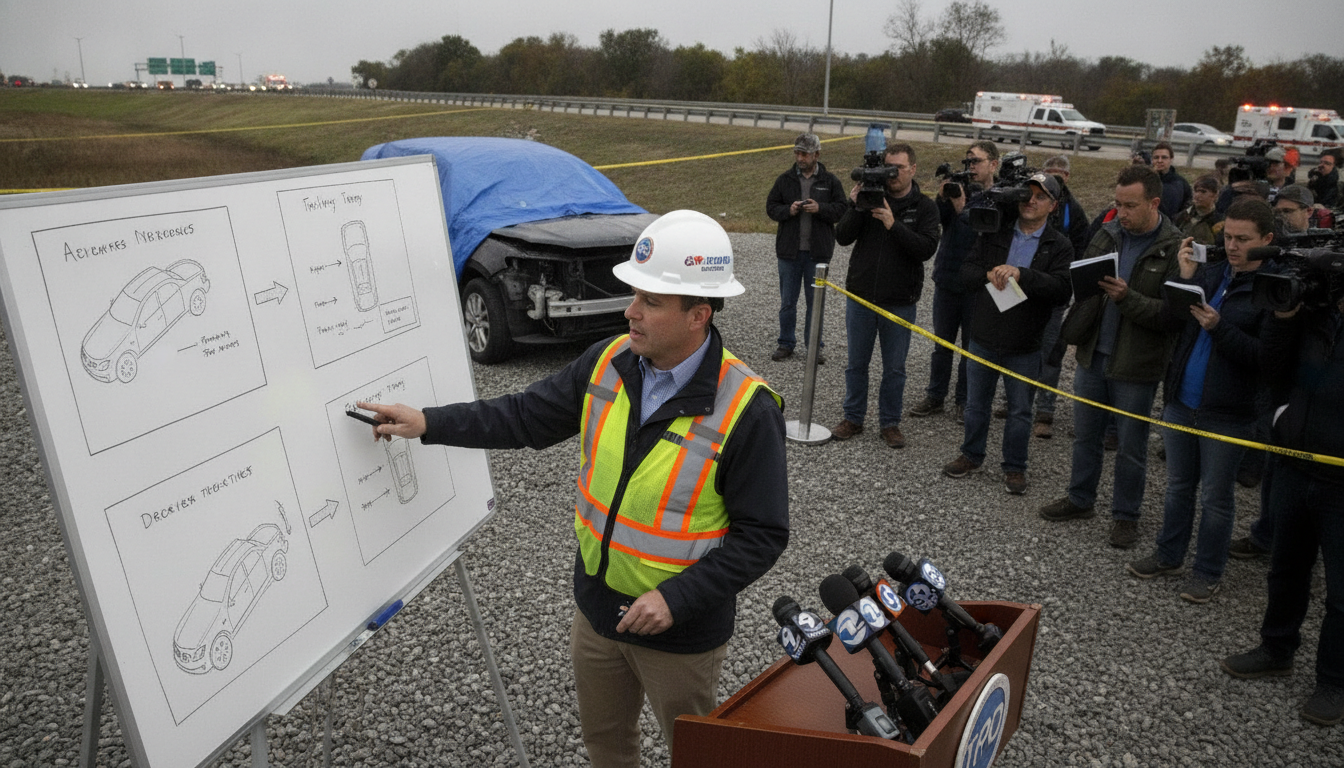
A Calgary police collision reconstructionist has presented two plausible sequences for how the Mercedes could have entered the northbound lanes, saying each would produce similar end results. One scenario posits the Mercedes veered off the southbound roadway, traversed the wide, uneven median and entered the northbound lanes, while the other suggests the vehicle may have traveled southbound from north of the Glenmore and Sarcee interchange before making an irregular maneuver. Investigators are treating both possibilities as viable as they match some physical evidence at the scene, but neither theory is yet confirmed pending further analysis. The reconstructionist cautioned that driver awareness and intent cannot be determined from routing alone and require additional investigation.
Tire marks, vehicle damage and fire complicate the scene
Detecting the exact route was complicated by tire marks in the median that could not be conclusively linked to the Mercedes because of subsequent activity at the site. Investigators noted other drivers and first responders sometimes move through a crash zone in ways that obscure or introduce tire evidence, limiting its forensic value. Examining the impact signatures and damage patterns on the surviving vehicle hulls has helped map angles and forces of contact, but the intense fires that consumed two vehicles removed or altered some critical indicators. Fire damage has been described by police as a major complicating factor that requires careful coordination with fire crews to reconstruct the pre-fire positions.
Electronic data retrieval gives investigators partial leads
Police have extracted electronic event data from the Mercedes-Benz and the Chevrolet, providing timestamps and vehicle status data that can be reconstructed into a pre-crash timeline. The Subaru was destroyed by the blaze and yielded no usable electronic data, leaving a gap in the full technical picture of the collision. Reconstructionists will integrate recorded speeds, brake application history and other telemetry with physical measurements from the scene to model the sequence of impacts. Those calculations are expected to clarify vehicle velocities and contact points, but officers stress they will not alone provide a motive or explain driver behavior.
Fire service documents actions to preserve evidence
Calgary Fire Department crews that fought the post-crash fires and recovered occupants documented their tactics and the angles used to extinguish flames to assist investigators in separating firefighting effects from collision evidence. Fire public information officers said crews routinely record their activities, because water streams, foam and extrication techniques can disturb evidence and must be accounted for during collision reconstructions. Investigators and firefighters are collaborating to ensure operational notes and photographs are considered when assessing what the scene looked like immediately after impact. That collaboration aims to preserve as much of the original evidence picture as possible despite the destructive effects of the blaze.
Probe of driver intent and timeline to continue
The primary investigation will assess driver intent, looking for digital traces, camera footage and witness accounts that might indicate pre-crash behavior, such as phone use or erratic steering well before impact. Police said they will review traffic camera recordings where available, extract cellphone records if warranted and interview witnesses who may have observed vehicle movements approaching the Glenmore and Sarcee interchange. Determining whether the incident was the result of medical emergency, mechanical failure, driver error or deliberate action remains a central focus and will shape any potential criminal findings. Authorities reiterated the investigation is ongoing and that results will be released once evidence is fully examined.
Police urge anyone with dash-cam footage or information related to the Tsuut’ina Trail crash to contact Calgary police as the reconstruction continues, and said final conclusions will depend on the full integration of electronic data, physical evidence and witness accounts.
