
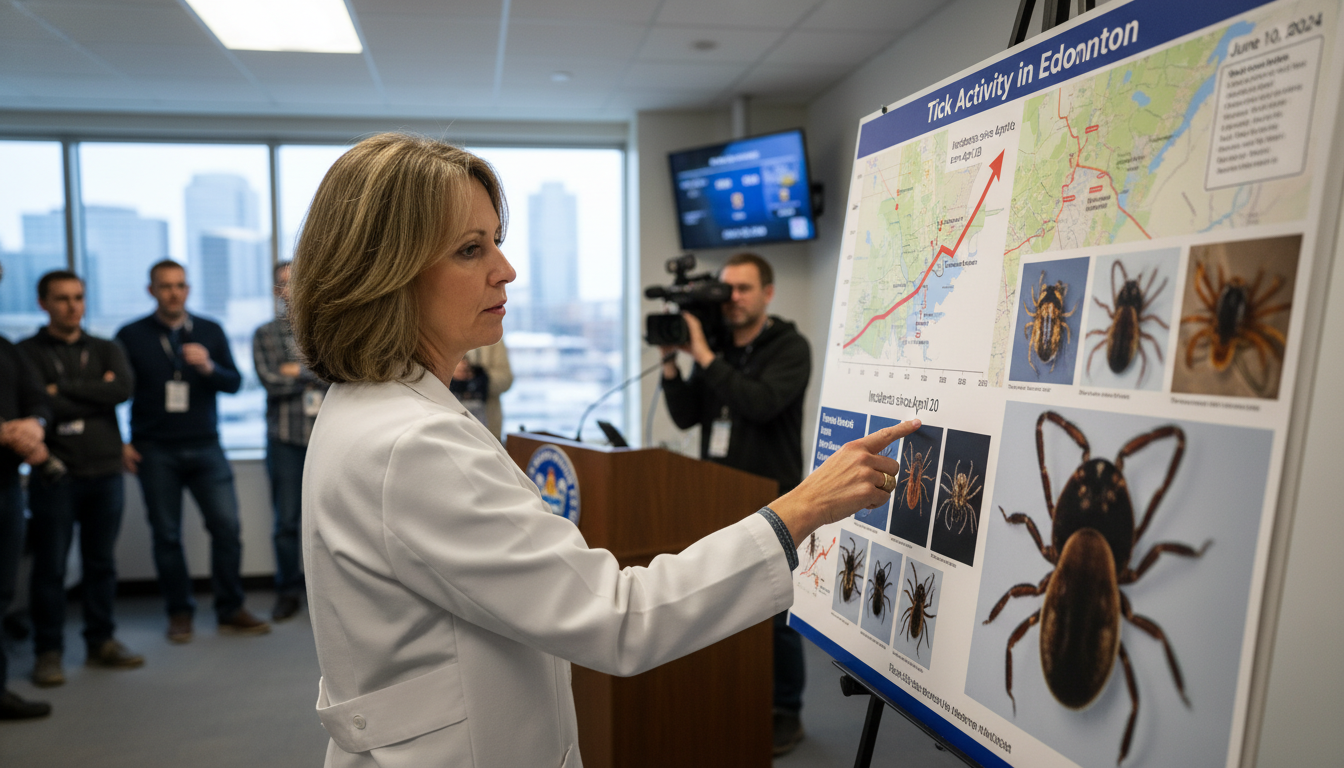
Ticks in Edmonton: Blacklegged tick reported April 20 as 26 incidents logged during April–June season
Ticks in Edmonton: Blacklegged tick reported April 20; about 26 incidents logged as April–June tick season begins. Residents urged to check for ticks.
Edmonton is seeing a rise in tick reports as the spring season takes hold, with the blacklegged tick confirmed in the city on April 20. The emergence of ticks in Edmonton is expected from April through June, and local reporting shows roughly 26 incidents have been logged since that sighting. Public health and municipal sources say the sightings reflect normal seasonal activity but note the presence of Lyme-carrying species warrants attention.
April 20 Blacklegged Tick Confirmed
The blacklegged tick was documented within city limits on April 20, a signal that the active spring period has begun for tick activity in Edmonton. That species is a known carrier of the bacteria that cause Lyme disease, which is why its presence drew immediate notice from local observers.
Officials emphasize that a single confirmation does not equate to an outbreak, but it does mark the start of heightened surveillance and public reminders about tick awareness. Residents who spend time in grass, shrubs or urban green spaces are being reminded to take basic precautions.
Incident Reports Since April 20
Since the April 20 sighting, approximately 26 tick incidents have been reported to municipal or public health channels in Edmonton. Those reports include both tick encounters found on people and ticks collected from outdoor locations within the city.
The incidents are being logged as part of routine monitoring rather than as a cluster of confirmed infections. Health authorities typically track these reports to identify trends, map species distribution, and guide public information campaigns.
Tick Lifecycle and Species Differences
Ticks in the region follow a four-stage lifecycle: egg, larva, nymph and adult, with different stages active at varying times of year. The spring months often see an increase in nymphs and adults, which are more likely to bite humans and domestic animals.
Not all tick species carry the same pathogens; different species can transmit different bacteria and parasites. That distinction matters for public health because it affects which diseases are a risk in any particular area and guides testing and treatment recommendations.
Lyme Disease Presence in the City
Lyme disease–carrying ticks have been reported in recent seasons in Edmonton, prompting awareness efforts from health agencies. The detection of a blacklegged tick on April 20 reinforced concerns because that species is the primary local vector for Lyme disease bacteria.
Confirmed human cases require laboratory testing and clinical assessment, and the presence of infected ticks does not automatically translate to high infection rates. Still, public health officials say early detection and treatment remain critical to prevent complications from Lyme disease.
Public Health and City Response
Local health authorities have increased outreach and are encouraging residents to report tick encounters through established channels. Public health messaging typically includes information on how to find ticks, the need to monitor for symptoms, and when to seek medical assessment.
Municipal maintenance crews and park managers are also reviewing procedures for public green spaces, focusing on signage and vegetation management to reduce tick habitat where feasible. These measures are designed to lower encounter risk without disrupting natural areas.
Prevention Measures for Residents
Residents are advised to take practical steps to reduce tick exposure when using parks, trails and other outdoor spaces. Suggested precautions include wearing long sleeves and pants in tall grass, checking clothing and skin after outdoor activity, and keeping lawns and gardens trimmed to limit tick-friendly environments.
If a tick is found attached, public health guidance recommends removing it promptly with fine-tipped tweezers and cleaning the site, and to consult a healthcare provider if a rash or other symptoms develop. Pet owners should also check animals regularly and speak with veterinarians about preventive options.
Local reporting and seasonal patterns underline the importance of vigilance as spring progresses. Keeping informed through city and public health updates will help residents manage the modest but real risk posed by ticks in Edmonton this season.
