
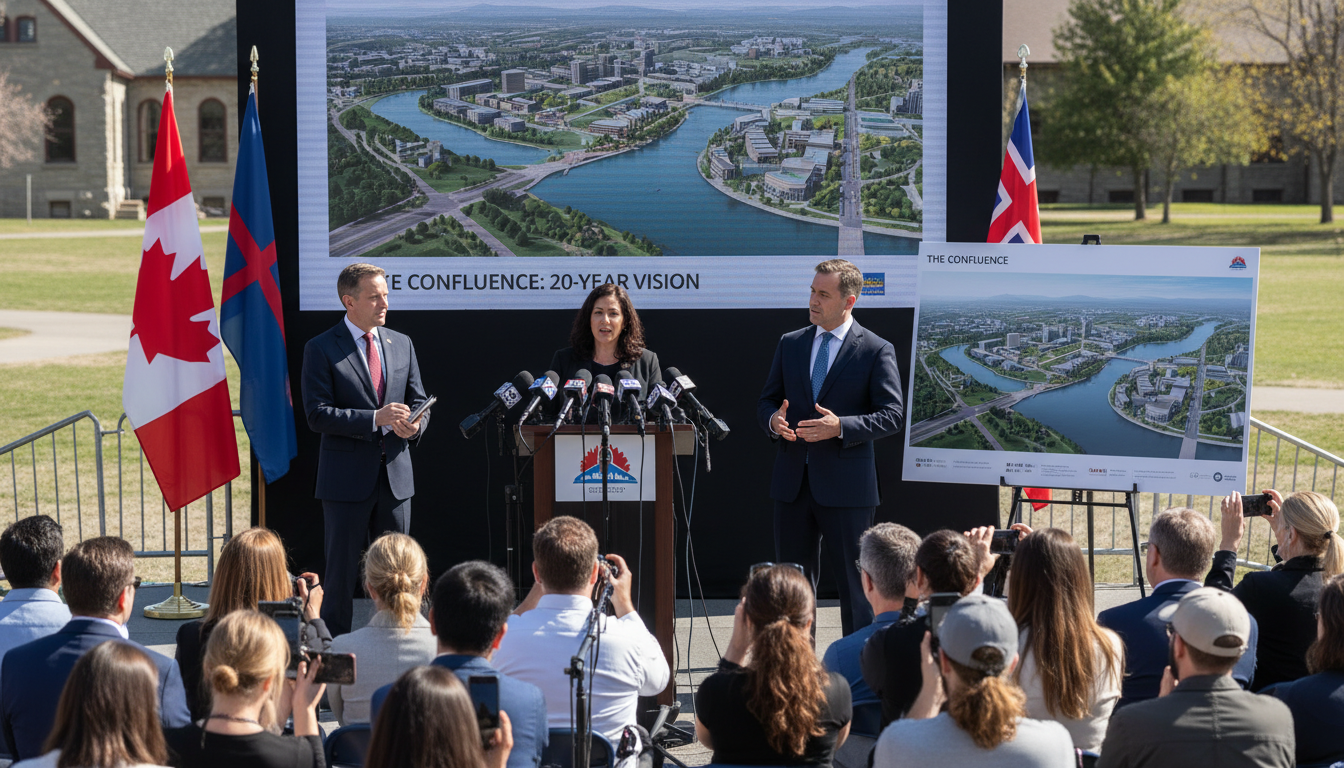
Confluence concept plan unveiled to transform 42‑acre park at Calgary’s river meeting
The Confluence concept plan unveils a 20‑year vision to redevelop 42 acres at the Bow and Elbow rivers in Calgary with gardens, amphitheatre and a permanent residential school memorial.
The Confluence concept plan was revealed on Wednesday, May 27, 2026, outlining a 20‑year strategy to remake the 42‑acre site at the meeting of the Bow and Elbow rivers into a major year‑round park and cultural destination. The civic‑owned lands, previously known as Fort Calgary, will be reimagined with new public spaces, interpretive features and facilities aimed at increasing visitation and community use.
Master plan unveiled and purpose explained
Jennifer Thompson, president of The Confluence Historic Site and Parkland, presented the new site concept plan as a high‑level blueprint to guide long‑term change on land immediately east of downtown. The document is intended as an early‑stage planning tool that sets the layout, priorities and public ambitions for the site over two decades.
Officials described the concept as a response to increased interest in the site: The Confluence drew roughly 135,000 visitors last year and reported more than $4 million in operational revenue, figures the organization says support making the park a regional attraction. Thompson framed the plan as an effort to unlock unused space and create “a park for everyone” that balances large events with reflective cultural places.
Design highlights and visitor capacity
The plan proposes a sequence of new features clustered around the river junction, including an entry plaza, public gardens and pathways that link the cultural centre to open green space. A covered amphitheatre with fixed seating for about 5,000 and adjacent lawn room for an estimated 13,000 people is part of the concept to accommodate large concerts and festivals.
Planners also prioritized flexible, everyday uses so the park can host small‑scale programming and passive recreation while supporting major events. Designers say the site will offer both programmed spaces for performances and quieter zones for reflection and ecological appreciation.
Indigenous engagement and commemorative elements
Indigenous‑led consultations played a central role in shaping the concept, according to project partners, with dedicated engagement sessions run by the Hatlie Group. That work influenced inclusion of a permanent Indian Residential School memorial, a powwow arbour and expanded Indigenous presence throughout the site’s interpretation and public programming.
Thompson emphasized community calls for stronger Indigenous representation and noted that many of the plan’s cultural elements are direct outcomes of those conversations. Project teams say Indigenous perspectives will continue to guide detailed design and programming as the plan advances into implementation phases.
Winter programming and year‑round activation
Recognizing Calgary’s seasonal extremes, the concept incorporates winter‑focused amenities such as an outdoor skating rink and expanded cold‑weather activities to keep the site active beyond summer months. Thompson and partners said the aim is to transform The Confluence into a year‑round destination that attracts visitors in every season.
Planners also flagged connections to nearby civic assets and cultural hubs, arguing that a stronger winter program will knit the park into a broader downtown calendar. The site’s planned mix of programmed events and informal uses is intended to sustain visitation throughout the year.
Events compatibility and existing festival use
The land has already become home to summer festivals including Country Thunder and the Calgary International Blues Fest, and the concept plan was developed to preserve that function. Designers say the amphitheatre and generous lawn space are deliberately sized to enable large‑scale concerts while protecting areas reserved for ceremony, storytelling and cultural gatherings.
Thompson said the plan is meant to balance competing demands: support major public festivals and concerts, accommodate powwows and ceremonial uses, and provide spaces for everyday community life. Project leads said the layout aims to make the site versatile without privileging one type of event over another.
Planning process, approvals and next steps
The concept is explicitly a visionary document rather than a funded construction program, and officials said a phasing plan with high‑level budgets will be developed in the coming months. The Confluence is already working with partners on elements such as a potential NHL‑size rink, gardens and pathways while using its own operations to activate parts of the site now.
Because the area is historically significant, each major renovation may require a historic resource impact assessment, a process the provincial government would conduct before construction proceeds. Project leads indicated that detailed technical work, regulatory approvals and staged fundraising will shape the timeline for turning the concept into built reality.
Calgary landscape architects involved in the project said the opportunity to reshape more than 40 acres of riverfront adjacent to downtown is rare. O2 Planning and Design, working with the Hatlie Group and Reimagine Architects, emphasized a design intent that reconnects residents to the ecology and layered past of the place while creating settings for both large gatherings and quiet reflection.
The plan positions The Confluence as Calgary’s second‑largest central parkland—smaller only than Prince’s Island Park—and charts an ambition to make the site a major cultural and recreational node in coming decades. Officials said detailed phasing, funding partnerships and regulatory reviews will determine how quickly the vision is realized, while ongoing Indigenous engagement and community consultation will continue to shape the work.
