
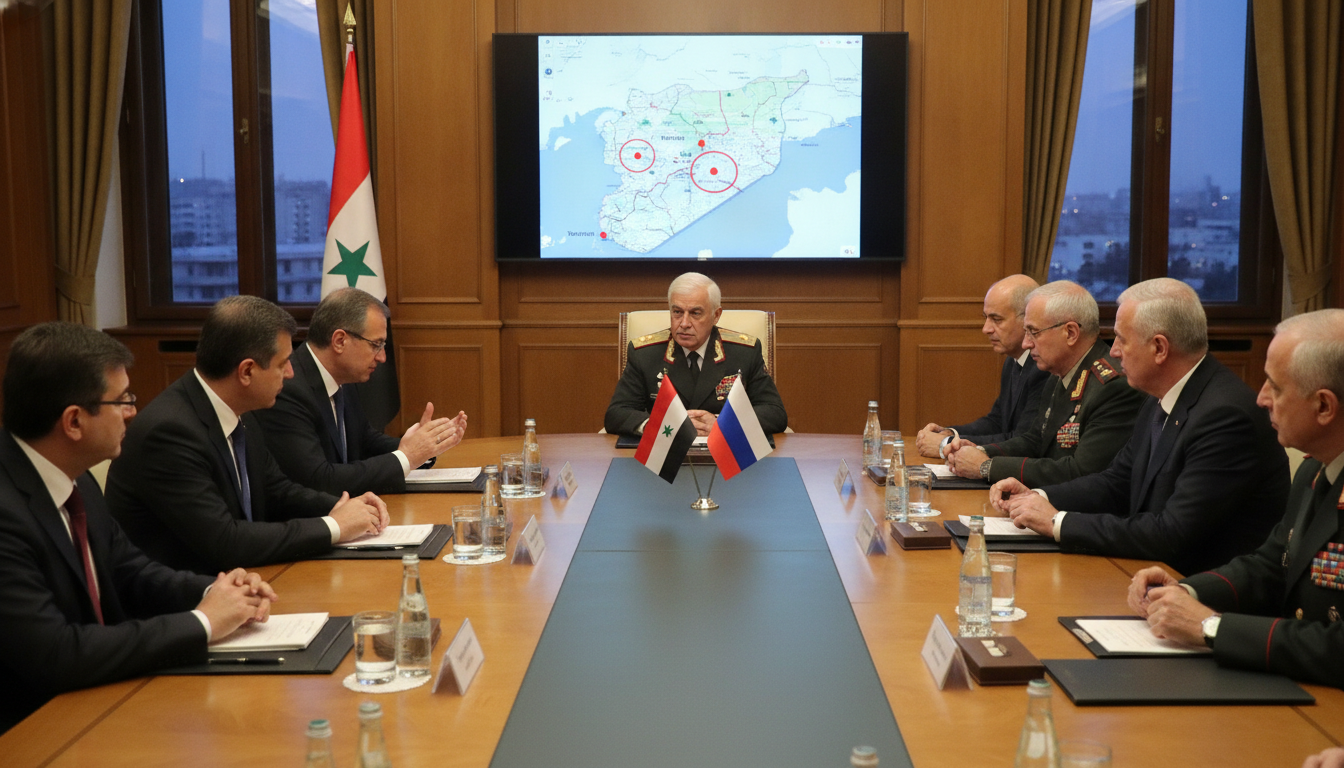
Syria and Russia Agree to Convert Tartous and Hmeimim, Redefining Russian Bases in Syria
Syria and Russia have agreed to convert the Tartous naval facility and the Hmeimim air base into joint training centres, reshaping the role of Russian bases in Syria as civilian areas return to Damascus control.
Syria announced on Sunday that it had reached an agreement with Russia to change the status of the two Russian bases on its Mediterranean coast, the Syrian foreign ministry and state news agency Sana said. The deal — the product of roughly 18 months of negotiations — sets a deadline of no more than three months to complete the transition and foresees civilian parts of the facilities being handed back to Damascus. The announcement marked a significant shift in the footprint of Russian military forces that had supported Syria’s former president for more than a decade.
Syria announces transformation of Tartous and Hmeimim
The Syrian foreign ministry described the plan as converting the port of Tartous and the Hmeimim air base into “joint training centres” under new arrangements intended to protect mutual interests. Sana reported that the ministry framed the agreement as a step toward redefining the purpose of the bases after years of Russian military operations centred on supporting the previous regime. Moscow did not immediately issue a public comment on the Syrian announcement.
Senior Syrian officials inspected the sites following the announcement, according to state media, with the foreign minister visiting installations and infrastructure covered by the accord. Sana called the pact “historic” and said it included a specific timetable to finish the transformation within three months, a relatively swift schedule given the complexity of converting active military outposts.
Terms and timeline of the agreement
Sana said the negotiations lasted about a year and a half, culminating in a formal understanding that includes both military and civilian components. Under the agreement, the military sections of Tartous and Hmeimim will be reconfigured into joint training centres, a model that would allow continued cooperation with Russian personnel while reducing the bases’ previous operational profile. The announcement specified a completion deadline of no more than three months, though it provided limited detail on operational command, staffing levels, or legal arrangements.
Officials did not disclose the precise legal framework governing the training centres or whether Russian forces will retain any permanent combat assets on site. The pace set by Damascus suggests an intent to implement the changes quickly, but observers cautioned that logistical, legal and diplomatic arrangements could complicate full implementation within the stated window.
Civilian infrastructure returned to Damascus
As part of the deal, Syria said the civilian sections attached to both bases would be transferred to the authority of the Damascus government. The Syrian Civil Aviation Authority announced that it had assumed control of Latakia International Airport, the civilian facility adjacent to Hmeimim, and pledged to work on restoring the airport to national aviation networks. Omar al-Hasri, the authority’s director, described the restoration as an important step for reintegrating Syrian airports into the country’s civil aviation system.
Returning civilian infrastructure is likely to affect commercial and humanitarian access along the Mediterranean coast, potentially enabling greater movement of people and goods if reconstruction and safety standards can be met. Damascus has framed the handback as part of a broader effort to reassert state control over public assets previously entwined with foreign military presence.
Russia’s response and regional posture
Moscow’s silence at the time of the Syrian announcement was notable given Russia’s long-standing military relationship with the previous Syrian leadership. The Tartous naval facility and Hmeimim air base were the only official Russian military outposts outside the territory of the former Soviet Union and served as key platforms for air and naval operations supporting the now-deposed president. Those facilities remained operational throughout the negotiations, Sana reported.
The Syrian statement underscores continued diplomatic engagement between the two capitals; President Ahmad al-Chareh of Syria has met Russian President Vladimir Putin multiple times since taking office. Russia’s broader regional posture now faces new constraints as Damascus seeks to balance cooperation with claims to sovereign control and to distance itself from individuals tied to the former government.
Background: Assad’s fall and shifts in power
The announcement follows the overthrow of Bashar al-Assad in late 2024 by a coalition of Islamist rebel groups, an event that dramatically altered Syria’s political landscape and diluted Moscow’s influence in Damascus. Assad and his wife sought refuge in Moscow after his ouster, and Damascus has repeatedly demanded his extradition, according to state reporting. The change in leadership in Damascus has prompted a recalibration of bilateral relations and fresh negotiations over Russian military entitlements on Syrian soil.
Earlier this year the Kremlin also pulled forces from Qamishli airport in northeastern Syria, a move that fits a pattern of tactical withdrawals and renegotiation of basing rights since the political turnover in Damascus. Syrian officials have signalled a willingness to maintain ties with Russia while reasserting national control over key infrastructure.
Next steps and international implications
Implementation now hinges on technical inspections, formal transfer procedures and possible amendments to status-of-forces understandings that once governed the bases. Syrian authorities have set an ambitious timetable but many practical questions remain, including the future presence of Russian personnel, the command arrangements for the training centres, and the status of any Russian equipment left on site.
The shift could have wider diplomatic implications across the Eastern Mediterranean and the Middle East as regional and external actors assess how diminished Russian basing might change power dynamics. For Damascus, regaining civilian control over ports and airports is a step toward normalising state administration; for Moscow, the arrangement may preserve a degree of influence even as the overt military footprint is reduced.
The coming weeks will test whether the announced timetable is achievable and whether Moscow accepts the new framework without public protest, leaving the final shape of Russia’s role in Syria dependent on technical details that have not yet been disclosed.
