
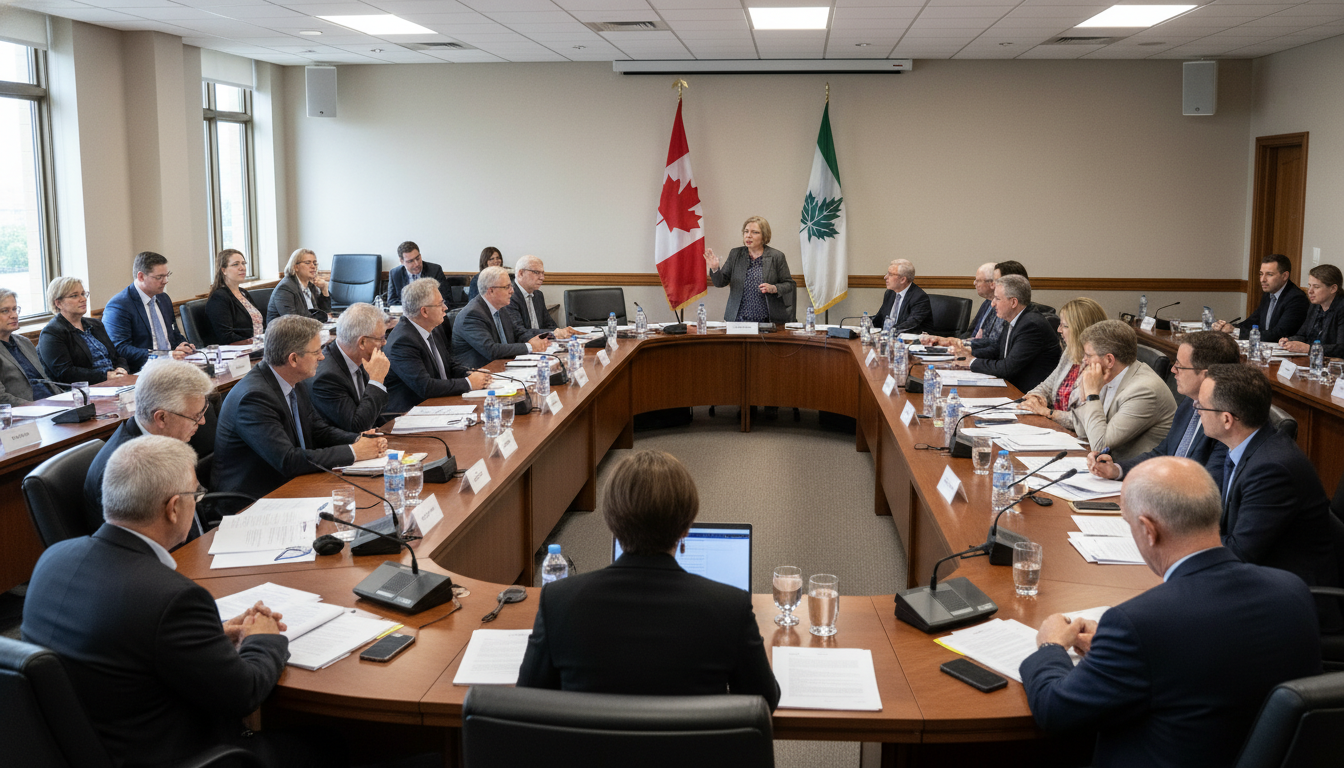
Speaker McIver urges restraint on procedural challenges after cross‑province talks
Speaker McIver urged members to limit routine objections and points of order after meeting with fellow provincial Speakers, citing their sparing use of such challenges. He began the current sitting in February and said the contrast with other jurisdictions should inspire restraint in the chamber. McIver framed his remarks as guidance for keeping debate focused while preserving the Speaker’s authority to rule on procedure.
McIver’s message to the legislature
Speaker McIver told the house he had recently met with Speakers from other provinces and compared practices across legislatures. He noted that in some jurisdictions, Speakers recorded only a handful of points of order across multi‑week sittings. His comments were delivered at the opening of the sitting and were intended to set expectations for how members use procedural objections.
Comparisons with other provincial assemblies
McIver emphasized that several provincial Speakers reported very low counts of points of order during condensed sittings. He suggested members consider that experience when deciding how often to raise procedural challenges. The comparison was offered as a model rather than a prescriptive rule, with the Speaker asking members to reflect on whether frequent points of order serve the legislative agenda.
How points of order function in parliamentary practice
Points of order are formal objections raised when members believe chamber rules or precedents have been breached during debate. They are resolved by the Speaker, who interprets standing orders and historical practice to determine whether a breach occurred. Frequent use can slow proceedings, while restraint can allow longer stretches of uninterrupted debate and committee work.
Responses expected from members
Reactions among legislators are likely to vary depending on party position and procedural strategy. Some members may welcome the push toward fewer technical challenges as a way to expedite business. Others may caution that limiting points of order could reduce opportunities to hold the government or other members to account on procedural or fairness grounds.
Precedent and historical context
Across Canadian parliaments, usage of points of order has fluctuated with political temperature and the priorities of individual Speakers. Historically, Speakers who encourage deference to established practice tend to see fewer formal challenges. Conversely, periods of intense partisan competition often produce higher rates of procedural objections and rulings.
Potential impact on the current sitting
If members take McIver’s remarks to heart, the chamber could see fewer interruptions and a more continuous schedule for debate and committee referrals. That outcome would affect how quickly bills and motions move through the calendar and could change negotiations over how and when issues are ventilated. The Speaker retains discretion to rule on the substance and timing of points of order, and his initial comments signal a desire to manage that discretion with an eye toward efficient proceedings.
McIver’s remarks reframed an internal procedural matter as a broader question about legislative culture, asking members to weigh immediate tactical gains against the benefits of smoother, more predictable sittings. Members, staff and the Speaker’s office will likely monitor how often points of order are raised as the sitting proceeds, and the practice established in the coming weeks may influence conduct for the remainder of the session.
