
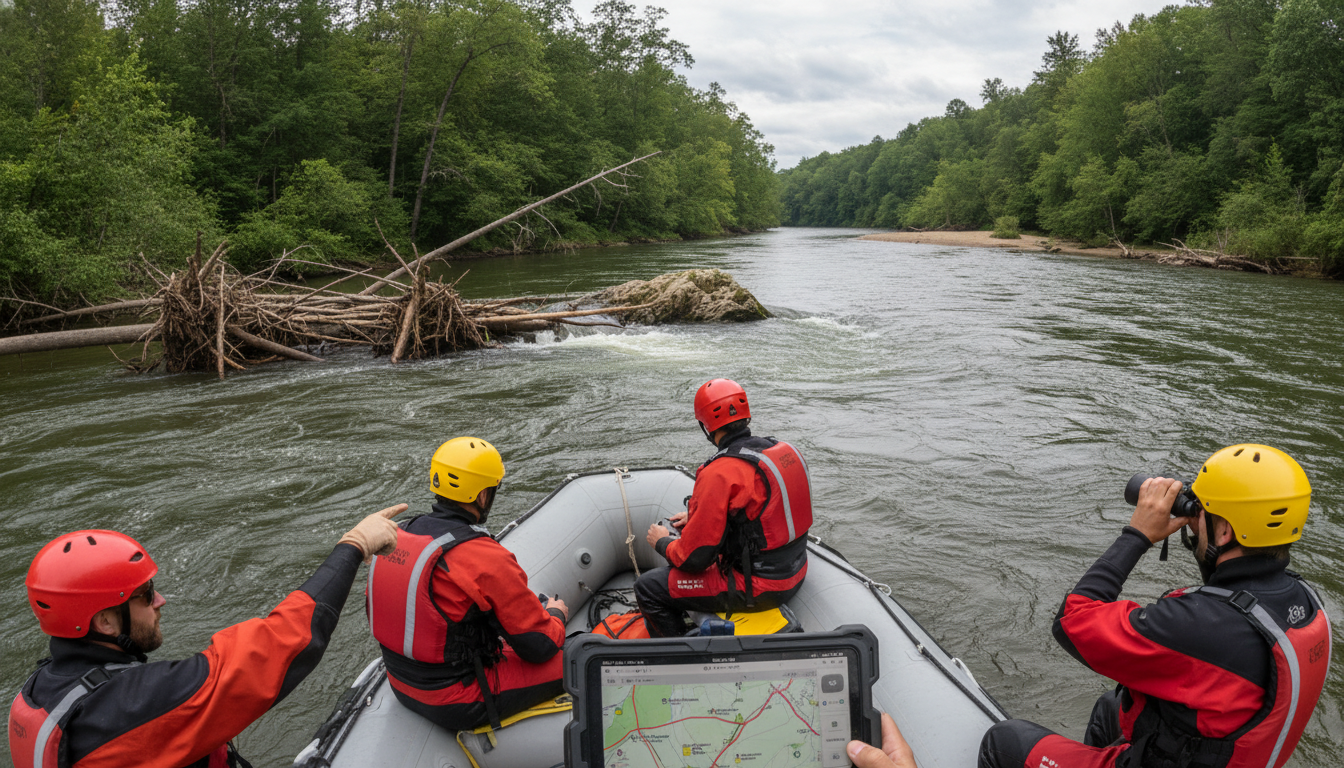
Search teams map river features to improve river rescue outcomes
Canadian search-and-rescue teams map river features like strainers and eddies to predict where drifting people or debris will stop, improving river rescue response and cutting search times.
Teams focus on predictable stopping points
Search-and-rescue teams across Canada are increasingly relying on river morphology to narrow search areas during river rescue operations. By identifying likely points where people or objects will strike shore or become trapped, crews can deploy resources more efficiently. The approach reduces time spent combing long stretches of river and helps concentrate lifesaving effort where it is most likely to succeed.
Identifying strainers, woody debris and eddies
Crews examine natural and man-made obstacles that act as traps during a drift, such as strainers created by fallen trees, accumulations of woody debris and persistent eddies. These features are well-known to slow or stop progress through fast water and are therefore prime locations for recovery or rescue. “We use that as an opportunity to identify probable points of hitting the shore or getting slowed in their progress, getting hung up on strainers, as we call them, like woody debris in the river, or eddies — things that will stop the progress,” Phillips said.
Mapping techniques used in the field
Teams combine aerial reconnaissance, river charts and on-the-ground scouting to map likely stopping points before committing watercraft or dive teams. Hand-drawn escape lines, GPS waypoints and river-flow observations allow search managers to create focused search corridors. In many cases, small teams will deploy to test likely zones while larger resources stage nearby, shortening response time if survivors are found.
Training and equipment adjustments
River rescue units have adjusted training to reflect the emphasis on environmental cues, practicing rapid assessment of banks, strainers and hydraulics. Crews rehearse approaching and extracting people from locations where woody debris or eddies have pinned them, and they refine cutting and disentanglement protocols. Equipment inventories now commonly include specialized rescue ropes, throw bags, cut tools and flotation devices optimized for working around obstructions.
Coordination with police and ambulance services
Effective river rescue operations hinge on close coordination among search-and-rescue volunteers, police, fire departments and ambulance services. Dispatchers and incident commanders use mapped stopping points to brief responding units, reducing duplication of effort on the water. Ground teams and boat crews also establish rendezvous zones near predicted sites so medical personnel can reach casualties quickly once they are recovered.
Use of technology to refine searches
Portable sonar, GPS tracking and drone imagery are supplementing traditional scouting methods to pinpoint likely impact areas for river rescue missions. Drones provide a rapid overhead view of debris fields and bank conditions that would otherwise require lengthy boat searches. GPS-marked features allow teams to return to high-probability sites even as river conditions change with rising or falling flows.
Advice for the public near rivers
Authorities urge people recreating near rivers to respect warning signs, wear appropriate personal flotation devices and avoid alcohol near fast water. Simple precautions—staying out of swollen channels after rain, using life jackets in all inflatables and supervising children—significantly reduce the need for river rescue deployments. If someone is observed in trouble, bystanders should call emergency services and avoid entering fast water unless trained and equipped for river rescue.
Search managers say concentrating on environmental features does not replace traditional search techniques but complements them, helping teams allocate personnel and specialist resources more effectively. As river conditions shift with seasonal melt and weather events, mapping likely stopping points remains a practical tool to improve river rescue outcomes and protect both victims and rescuers.
