
Hydro-Québec unpaid electricity bills in Indigenous communities spark provincial intervention
Quebec seeks consultation with Hydro-Québec as unpaid electricity bills in Indigenous communities—topping an estimated $250 million—threaten reconciliation and future hydro projects.
Opening summary
Hydro-Québec unpaid electricity bills in Indigenous communities have prompted Quebec’s government to insist on being consulted before any decision is taken to erase or reassign those debts. The move follows internal recommendations and a 53-page independent report by retired chief justice François Rolland that re-evaluates which portions of the arrears are legally recoverable. The dispute is unfolding as Hydro-Québec pursues closer ties with First Nations and large-scale hydro projects in territories where unpaid accounts are concentrated.
Quebec demands a seat at the table
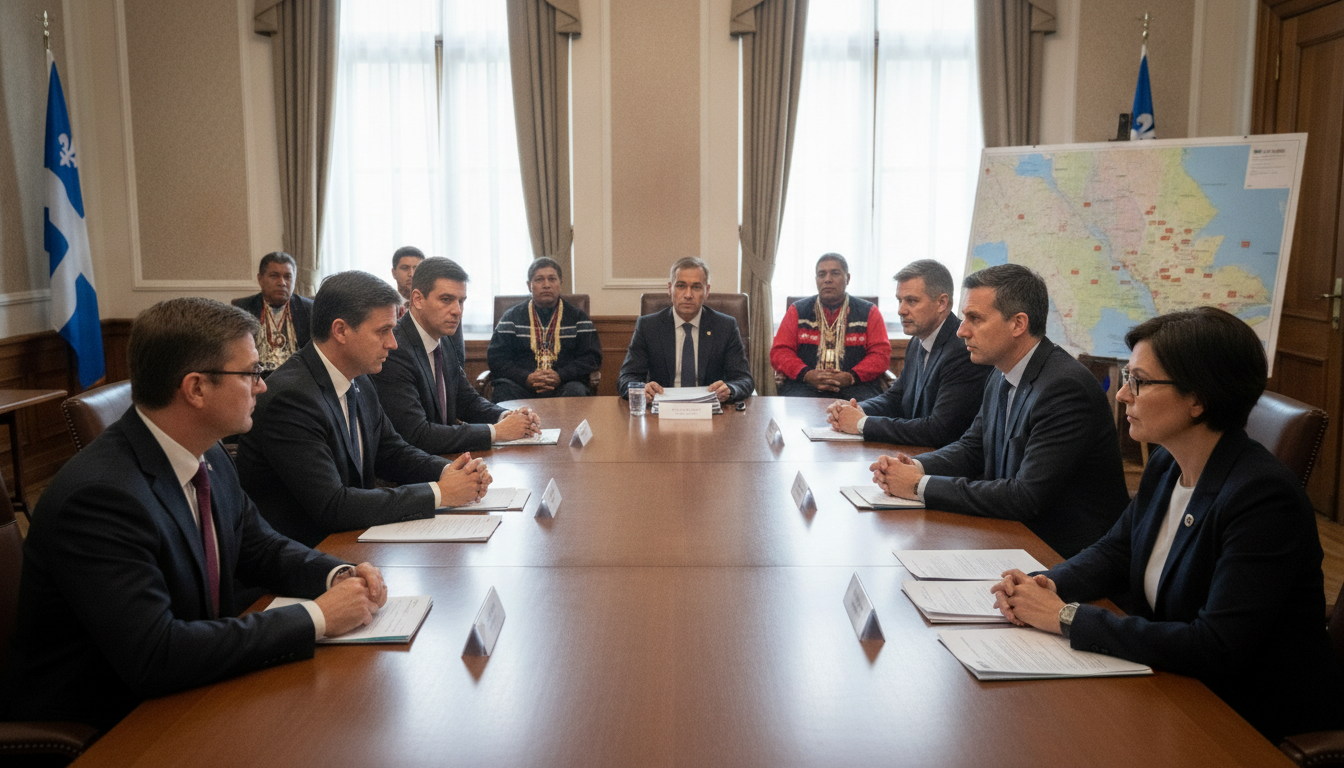
The provincial ministry responsible for the economy, innovation and energy told the utility it expects to be consulted on any remedy proposed for the outstanding accounts. Minister Bernard Drainville has signalled that discussions between the government and Hydro-Québec are forthcoming, arguing that decisions with broad fiscal and policy implications require provincial input. The government framed its intervention as balancing the need to repair relationships with Indigenous partners while upholding fairness for all ratepayers.
CEO’s visit to Chisasibi highlights stakes
Hydro-Québec’s CEO, Claudine Bouchard, travelled to Chisasibi on the shores of James Bay to discuss increasing capacity at the LG-2 complex and to meet community leaders. That visit, on August 18, 2026, came as the utility considers operational and reconciliation strategies in communities where it already operates dams or plans new projects. Local conditions in those communities—economic distress, remote geography and aging housing stock—are central to the conversations underway.
Scale of arrears and the Rolland findings
Hydro-Québec has internally estimated unpaid accounts tied to roughly 15 of Quebec’s First Nations communities at more than $250 million. Rolland’s independent review, completed in a report obtained by media, applies Quebec civil prescription rules and concludes that about $91 million of those arrears are not time-barred as of a May 2025 assessment. The report also notes that 55 percent of Indigenous clients pay on time, meaning around 45 percent fall behind, and that those accounts, while a small share of total customers, represent a disproportionate share of the utility’s problematic receivables.
Legal and practical limits to collection
Rolland’s analysis points to two legal obstacles to full recovery: prescription under the Civil Code of Quebec and limits created by the federal Indian Act that restrict execution measures against certain reserve property. The report argues that, in practical terms, many enforcement tools available off-reserve are ineffective on reserve land, reducing Hydro-Québec’s ability to seize assets to satisfy debts. Those legal constraints are the basis for the recommendation to treat recoverability differently in Indigenous communities and to consider delegating arrears management in some cases.
Community grievances and financial realities
Community members and some leaders oppose paying bills they say are owed to them through unresolved claims related to the flooding and dispossession that accompanied large hydro developments. The Rolland report highlights structural issues—high unemployment, high living costs in remote areas and poorly insulated homes—that contribute to non-payment. In some communities the average outstanding balance per household is striking: examples cited include a Chisasibi household average of about $39,000, a Nutashkuan case where a resident’s overdue bill exceeded $75,000, and arrears averaging around $65,000 per household in Matimekush‑Lac John.
Options on the table and equity concerns
Hydro-Québec has been studying a recommendation to write off certain debts and transfer responsibility for recovery to band councils, but that proposal has generated internal and public debate. Critics warn of an equity problem: many non-Indigenous customers also struggle with bills and face disconnection, raising questions about fairness if a different approach is taken for Indigenous communities. Hydro-Québec officials have acknowledged the complexity and said they are considering multiple measures, including improved community financial literacy supports and liaison roles suggested in the Rolland report.
What this means for future projects
The dispute has immediate implications for planned hydro developments and agreements with Indigenous partners. Since the Paix des braves, Hydro-Québec has committed not to proceed with major projects without First Nations’ consent, making stable relations essential for capacity expansions such as at LG-2 or for negotiating arrangements like the Churchill Falls agreement. Officials and stakeholders say resolving the billing impasse will be a prerequisite to constructive negotiations on future infrastructure and benefit-sharing.
The province’s request to be consulted marks a new phase in the file, bringing political oversight to a technical and legal problem that intersects with historic grievances and the practical realities of delivering and billing electricity in remote Indigenous communities.
