
Homelessness in Quebec City: Encampment Clearings Displace People and Fuel Calls for Humane Solutions
Quebec City encampment clearings displace people experiencing homelessness, workers warn of lost belongings, safety risks and urgent need for services.
The city’s recent dismantling of public encampments has left many people experiencing homelessness without a stable place to shelter and with few clear alternatives. Under a tightened enforcement directive from municipal authorities this spring, police and city crews moved into high‑visibility sites, giving some occupants minutes to pack and depart. Community workers and outreach staff say the approach is fragmenting established support networks, increasing safety risks and resulting in lost personal effects that set people back in recovery and reintegration efforts.
Encampment cleared at Place de l’Université‑du‑Québec
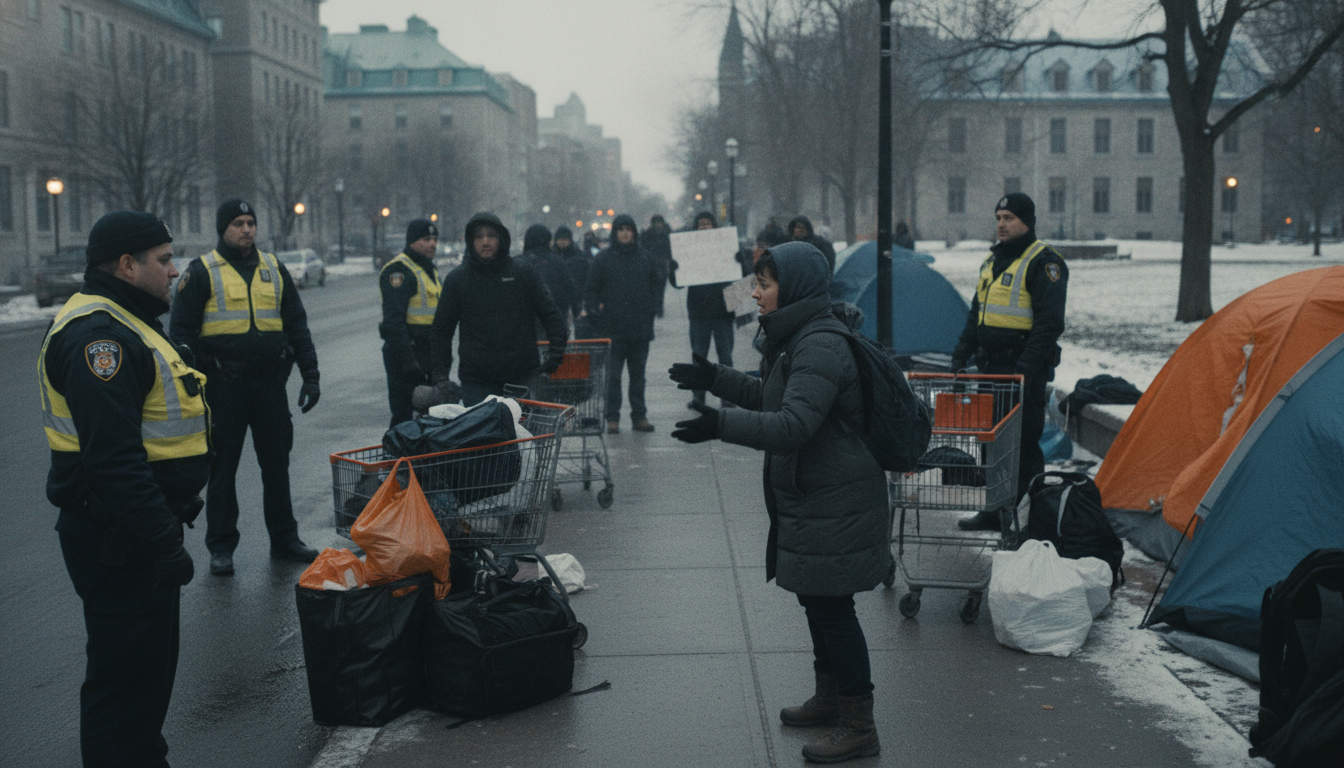
Several clearings this spring culminated in the removal of tents and belongings from the Place de l’Université‑du‑Québec, a site long used as a daytime shelter. Witnesses described crews arriving early and telling occupants they had only minutes to leave, a practice that left personal goods behind and exposed them to theft or disposal. Outreach workers documented instances in which items essential for survival — sleeping bags, medication and identity documents — were lost or discarded during hurried removals.
Those directly affected report that the short notices and police presence have intensified anxiety and disrupted routines that previously allowed outreach teams to maintain contact and provide services. Community agencies say the losses go beyond material goods; the disruption also undermines fragile steps toward stability for people already coping with trauma, mental‑health issues and substance use.
Enforcement escalates under mayoral directive
City officials say enforcement aims to address public complaints and maintain the safety and cleanliness of downtown spaces, and the mayor has ordered a firmer approach in certain neighbourhoods. Local authorities frame the measure as a response to rising visible homelessness across the province and mounting pressure from residents and businesses. However, outreach organizations argue that stricter enforcement without accompanying supports effectively criminalizes rough sleeping rather than addressing root causes.
The policy shift marks a change from earlier practices in which cleanups were more predictable and sometimes coordinated with outreach teams to allow occupants time to reclaim belongings. Under the recent approach, enforcement often leaves people with citations for reoccupation and fewer safe places to shelter during the day or night.
Service providers report harm and fragmentation
Front‑line workers say the tougher approach is counterproductive and endangers clients. They report people retreating to peripheral or wooded areas where access to services is limited, increasing isolation and the risk of overdose or victimization. Workers highlight that groupings and semi‑permanent encampments can function as informal safety networks where peers monitor each other and share resources.
Several outreach professionals described how recurring displacements force them to spend time locating clients and replacing lost identification or health cards, diverting resources from longer‑term housing and health interventions. They warn that the enforced mobility exacerbates chronic instability and damages relationships of trust that are essential for effective casework.
People on the ground describe losses, risks and survival tactics
Individuals affected by the clearings recount tangible setbacks: bicycles, recycling equipment and crafted goods used to earn small incomes have disappeared, and some have been forced into riskier sheltering options. Women in particular report turning to more hidden or precarious locations for safety, sometimes accepting exploitative arrangements to avoid sleeping outdoors. These shifts, workers say, increase health harms and complicate efforts to connect people with treatment, housing and benefits.
Those sleeping outside also face daily choices between guarding possessions and attending appointments that could help secure housing or income. The resulting trade‑offs hinder progress and can mean repeating administrative processes when vital documents are lost during clearings.
Calls for alternatives and basic supports
Community organisations and outreach workers urge the city to pair any enforcement with immediate, practical supports: 24‑hour access to water and toilets, secure lockers, charging points and drop‑in spaces where people can safely store belongings. Some frontline staff propose employing people with lived experience to participate in maintenance and cleaning efforts, both to provide income and to reduce tensions with residents and businesses.
Advocates also call for clearer, consistent communication between the municipality, police and service providers so that cleanups are predictable and coordinated, allowing people time to secure items and remain connected to supports. They stress that humane, low‑barrier services are central to preventing further harm and creating pathways off the street.
According to a provincial count in 2025, 1,084 people were experiencing visible homelessness in the city, with 17 percent reported as sleeping outdoors — a proportion community groups say has grown substantially in recent years. Those figures are cited by both municipal decision‑makers and service organisations in framing the urgency of the issue, even as they disagree on best practices.
Housing advocates say policy must balance neighbourhood livability with the constitutional and human rights of people without housing, and that short‑term enforcement cannot substitute for investments in affordable housing, mental‑health care and addiction services. They are pressing for a coordinated municipal and provincial response that reduces harm while addressing the structural drivers of homelessness.
The enforced clearings in Quebec City have crystallized a wider debate about how municipalities handle visible homelessness and the consequences of removing encampments without offering immediate, viable alternatives. As community workers continue to document losses and safety concerns, calls for a more predictable, service‑oriented approach are growing louder. Stakeholders say the next steps will require clearer communication, dedicated resources for basic services and a commitment to policies that do not push people further from help.
