
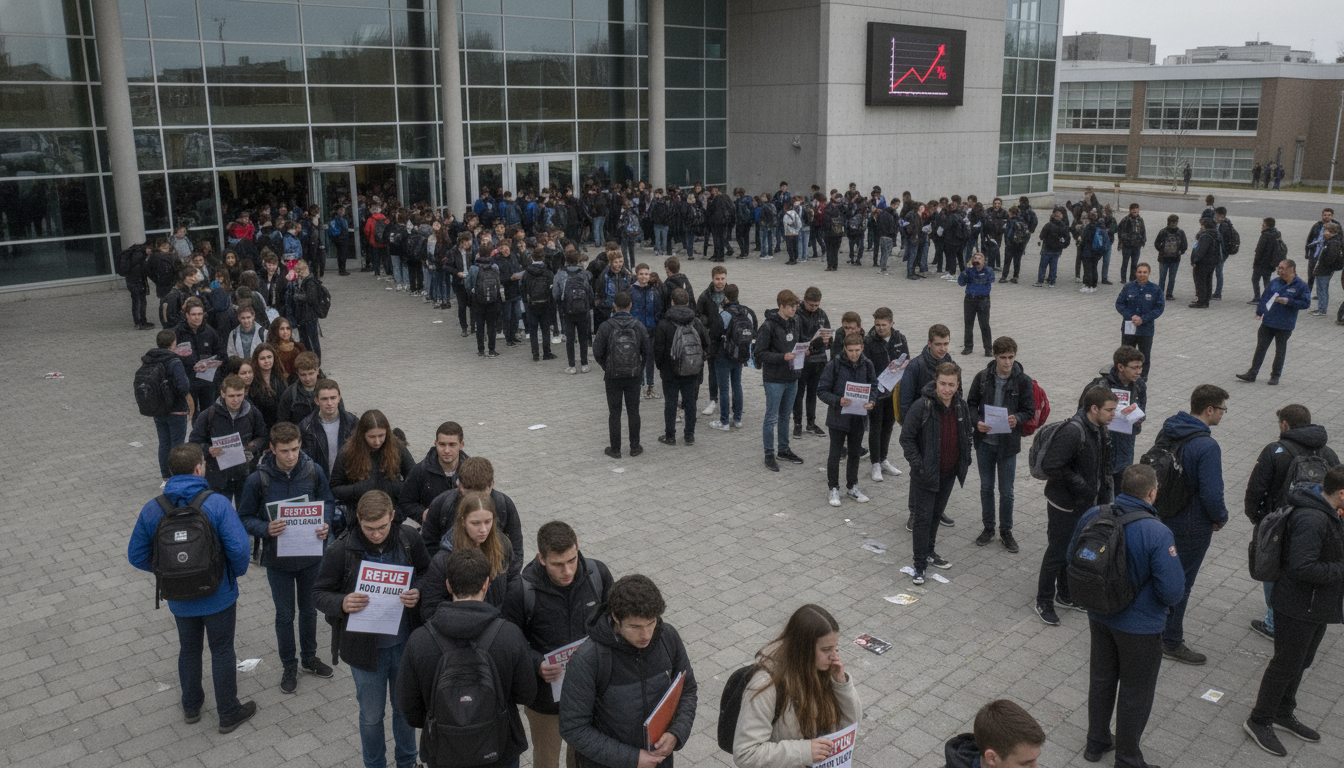
Cégep admission refusals surge 40% in Québec City as campuses reach capacity
Cégep admission refusals are rising sharply in Québec City, with first‑round denials up 40% and campuses scrambling to absorb record enrolments this fall.
The Service régional d’admission au collégial de Québec (SRACQ) reported 1,120 first‑round refusals for lack of space this year in the Sainte‑Foy, Garneau and Limoilou cégeps, compared with roughly 800 a year earlier. Marie‑Claude Côté, SRACQ’s director general, said the increase reflects a higher volume of applications while available seats have remained largely unchanged. Across the 15 cégeps the SRACQ serves in eastern Québec, first‑round refusals rose as much as 50% this admission cycle, the agency added.
SRACQ reports sharp year‑over‑year increase
The SRACQ’s tally highlights a significant shift in the local admissions landscape, officials say. Marie‑Claude Côté told reporters this autumn marks the largest number of space‑related refusals the regional service has recorded in five years. The rise is not limited to one or two programs but reflects broader pressure across multiple campuses and fields of study.
Officials attribute the surge to demographic growth and more applicants competing for a fixed number of seats. The SRACQ has warned that larger cohorts at the college level are expected to persist for the next five years, increasing the urgency for long‑term planning.
Program‑level bottlenecks: science, policing and ultrasound
The spike in refusals has been most pronounced in several contingent and popular programs. Cégep administrators report heavier demand this year in techniques policières (policing techniques) and in the medical ultrasound technology program, where enrollment caps quickly filled. For the first time this year, sciences de la nature (natural sciences) also faced an unusual number of first‑round denials in Québec City.
Students denied entry to their first choice in natural sciences often found places at neighbouring cégeps during the second round of admissions, a development SRACQ described as reassuring for now. Nevertheless, program‑level limits mean some applicants must pivot to second choices or continue applying in subsequent rounds.
Campus capacity strains daily life
Cégep officials and faculty representatives say the overcrowding is visible across campuses. At Cégep Garneau, which reached full capacity this year as it did last year, many programs were already closed by May after the second admission round. Faculty union leaders report that common spaces are strained, with students sometimes forced to eat in stairwells or adapt to fewer seating and study areas.
The Cégep de Sainte‑Foy is similarly at full capacity for a third consecutive year, administrators confirmed. On‑campus services from cafeterias to student supports are feeling increased demand, prompting discussions about short‑term adjustments and use of alternative spaces.
Record growth at Lévis and Limoilou
Not all institutions are experiencing refusals in equal measure; some are seeing rapid overall enrolment increases. Cégep de Lévis recorded a 12.5% rise in total student numbers this fall, the largest jump the college’s director of studies, Isabelle Tremblay, said she has seen in at least 25 years. That growth already requires conversion of non‑instructional spaces into classrooms and could push Lévis to capacity within a year if trends continue.
Cégep Limoilou also reports a roughly 10% increase in students this year, mirroring last year’s gains. Despite the pressure, Limoilou still has limited openings in some natural sciences sections for late applicants who seek enrollment this autumn.
Institutions adapt as regional demand climbs
Colleges are pursuing short‑term measures to accommodate larger cohorts, including reconfiguring existing rooms, scheduling classes across extended hours and identifying temporary learning spaces. Cégeps on the south shore and in smaller regions have reported similar upticks, with Beauce‑Appalaches indicating it may exceed its own projection for new registrations.
SRACQ and college leaders emphasize that demographic momentum — driven by a larger population of post‑secondary‑age youth — is a primary factor and will require sustained capital and planning efforts. Administrators caution that without additional seats or infrastructure investments, access to a nearby cégep may become less feasible for many students.
Students began returning to campuses this week for orientation and the start of classes, with Limoilou, Sainte‑Foy and Garneau scheduling the resumption of in‑person instruction beginning Friday. Champlain St. Lawrence has already welcomed students back following an earlier start.
Pressure on local cégeps has led community stakeholders to call for provincial engagement on capacity planning and funding for expansion. Until longer‑term solutions are secured, colleges will continue balancing the immediate needs of incoming students with limits on physical space and program resources.
Demand for cégep places has risen sharply in the region, and officials say the trend is likely to persist, challenging institutions to adapt while maintaining program quality and student services.
