
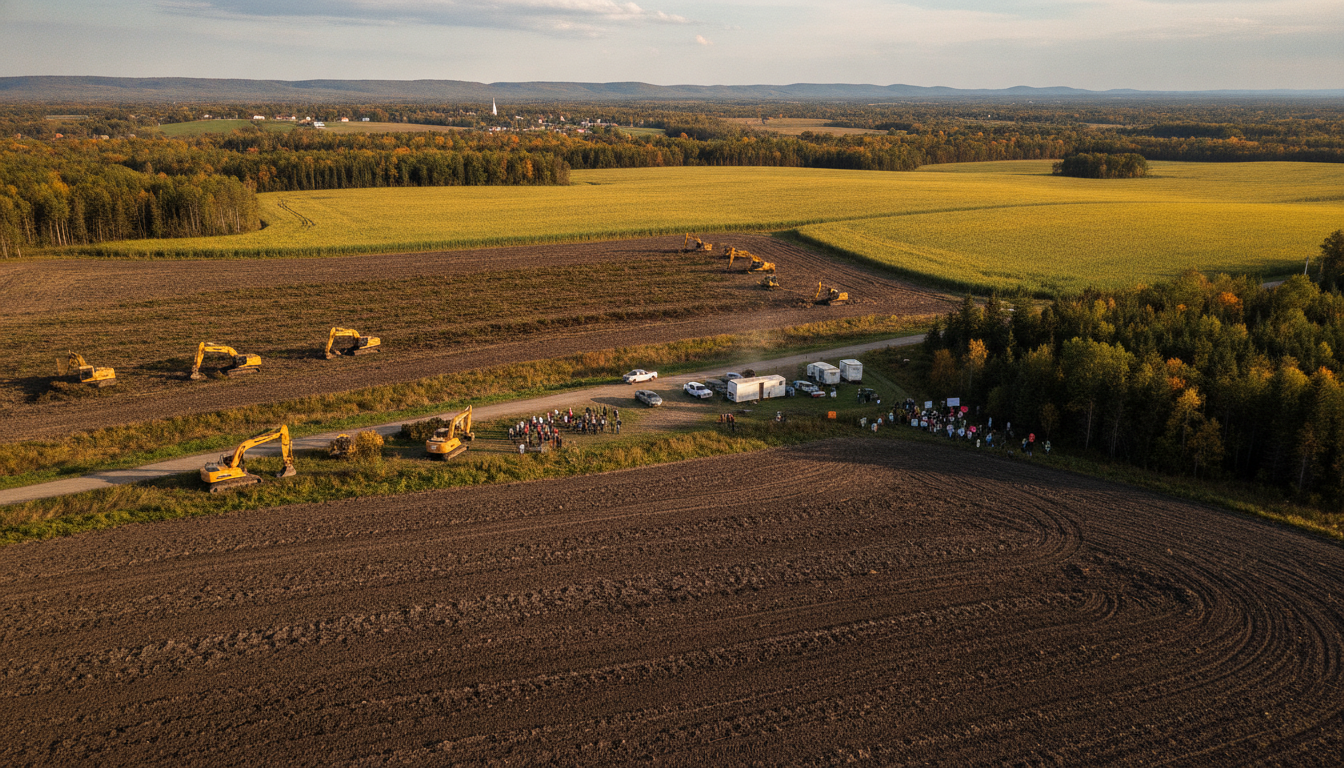
Quebec farmland expansion approved after 20-year moratorium, opening 200,000 hectares
Quebec approves farmland expansion after a 20-year moratorium, adding up to 200,000 hectares from January 1, 2027; farmers welcome it, environmental groups warn.
Quebec’s government has ended a moratorium that has constrained the conversion of certain lands to agriculture for more than two decades, approving a policy package that permits what officials call a managed expansion of cropland. The Quebec farmland expansion is expected to add as much as 200,000 hectares — roughly a 10 percent increase in the province’s cultivated area — under a new regulatory framework that will come into force in stages beginning January 1, 2027. The move has been greeted by farm groups as a response to the steady loss of agricultural land, while conservation advocates warn of risks to forest cover and water quality.
End of a two‑decade moratorium
The moratorium had primarily applied in five regions long considered sensitive for conversion: Centre‑du‑Québec, Chaudière‑Appalaches, Estrie, Lanaudière and Montérégie. Provincial officials say the pause was initially intended to give time to evaluate environmental and land‑use tradeoffs. After years of pressure from agricultural organizations and some municipal leaders, the government concluded a revised approach was needed to balance food production and environmental protection.
Municipalities in the affected regions will be able to propose targeted expansions subject to provincial rules and local planning processes. The government has emphasized that the measure is not a blanket opening of all land, but a regulated pathway intended to bolster agricultural capacity. Still, the lifting of the moratorium closes a chapter that shaped land‑use decisions in multiple regions for more than 20 years.
New regulation sets 200,000‑hectare cap
The centerpiece of the policy is the newly adopted Règlement sur les pratiques agroenvironnementales, which establishes conditions for expanding cultivated land and sets a ceiling of up to 200,000 hectares to be brought into agricultural production. Officials say the cap represents an approximate 10 percent increase over current cultivated area and will be phased in gradually to allow monitoring and adjustments. The regulation also specifies technical requirements and procedural steps for municipalities and landowners seeking conversion approvals.
The government has signalled that implementation will be incremental to allow for oversight and to coordinate with provincial agricultural priorities. Ministries responsible for agriculture and the environment will share responsibility for administering the new provisions, according to statements from Quebec’s executive offices. The staged approach is intended to give authorities time to evaluate environmental impacts as new parcels are developed.
Farm groups hail return of productive land
The province’s principal farm lobby, the Union des producteurs agricoles (UPA), had long lobbied for relief from the moratorium, arguing that urbanization and infrastructure projects have steadily eroded the province’s best agricultural soils. UPA leaders described the decision as a win for producers looking to maintain viable operations and expand acreage to meet supply needs. New cabinet leadership in the agriculture portfolio made the issue a priority, and ministers framed the change as necessary to sustain the sector over the long term.
Farm advocates say the expansion will help reverse a trend of shrinking farmland holdings and encourage investment in production capacity. They also point to modern agricultural practices and stewardship measures adopted by many producers as a justification for more flexible land‑use rules. Still, farm organizations say they expect regulatory clarity on site selection and environmental safeguards before major development begins.
Conservationists flag risks to forests and waterways
Environmental groups have reacted with concern, warning that converting forested or marginal lands to crops could deepen losses of tree cover and increase pressure on aquatic habitats. Representatives from regional and provincial conservation networks pointed to municipalities with already low forest cover and argued that further deforestation could have outsized local impacts. They cautioned that land conversion near streams, wetlands and headwater areas could exacerbate erosion and nutrient runoff.
River protection advocates specifically questioned whether the new regulation’s riparian buffers and other measures are strong enough to prevent pesticides and fertilizers from reaching waterways, particularly during spring floods. Some conservation leaders described the safeguards as insufficient and called for stricter, enforceable buffers and enhanced monitoring. The debate underscores a longstanding tension between expanding production and protecting ecological functions that sustain water quality and biodiversity.
Government frames move around food autonomy and updated practices
Quebec officials defended the policy as a step toward greater food autonomy and argued that agricultural practices have evolved since the moratorium was first imposed. The environment ministry stressed that many producers have adopted more rigorous agro‑environmental techniques, and the new regulation aims to pair expansion with improved stewardship. Ministers said the framework balances the province’s goal of strengthening local food supplies with requirements intended to reduce environmental harm.
The government also highlighted that the regulation integrates new technical standards and oversight tools developed in consultation with stakeholders. Authorities indicated that the measure is part of a broader strategy to align agricultural policy with provincial economic and sustainability objectives. Officials acknowledged the need to monitor outcomes closely and to adjust the approach if new evidence shows harm to ecosystems.
Implementation, monitoring and outstanding questions
Despite the staged rollout, several issues remain unresolved in the eyes of both proponents and critics, including the specifics of monitoring, enforcement resources and the criteria for selecting parcels eligible for conversion. Municipalities will play a key role in proposing expansions, but environmental groups want clearer thresholds and independent oversight to ensure compliance. Observers also note the importance of funding for inspection and scientific monitoring to detect changes in forest cover and water quality over time.
Stakeholders on both sides have indicated a willingness to continue talks on operational details and safeguards, while urging the province to publish detailed guidance before approvals proceed at scale. The coming months will be critical as ministries finalize implementation plans and stakeholders assess how the regulation performs in practice.
The phased start date of January 1, 2027, sets a clear timetable for authorities to prepare administrative systems and for communities to review proposed conversions. As the province moves forward, the debate is likely to focus on whether the new rules can reconcile the push for agricultural expansion with commitments to conserve forests and protect freshwater systems.
