
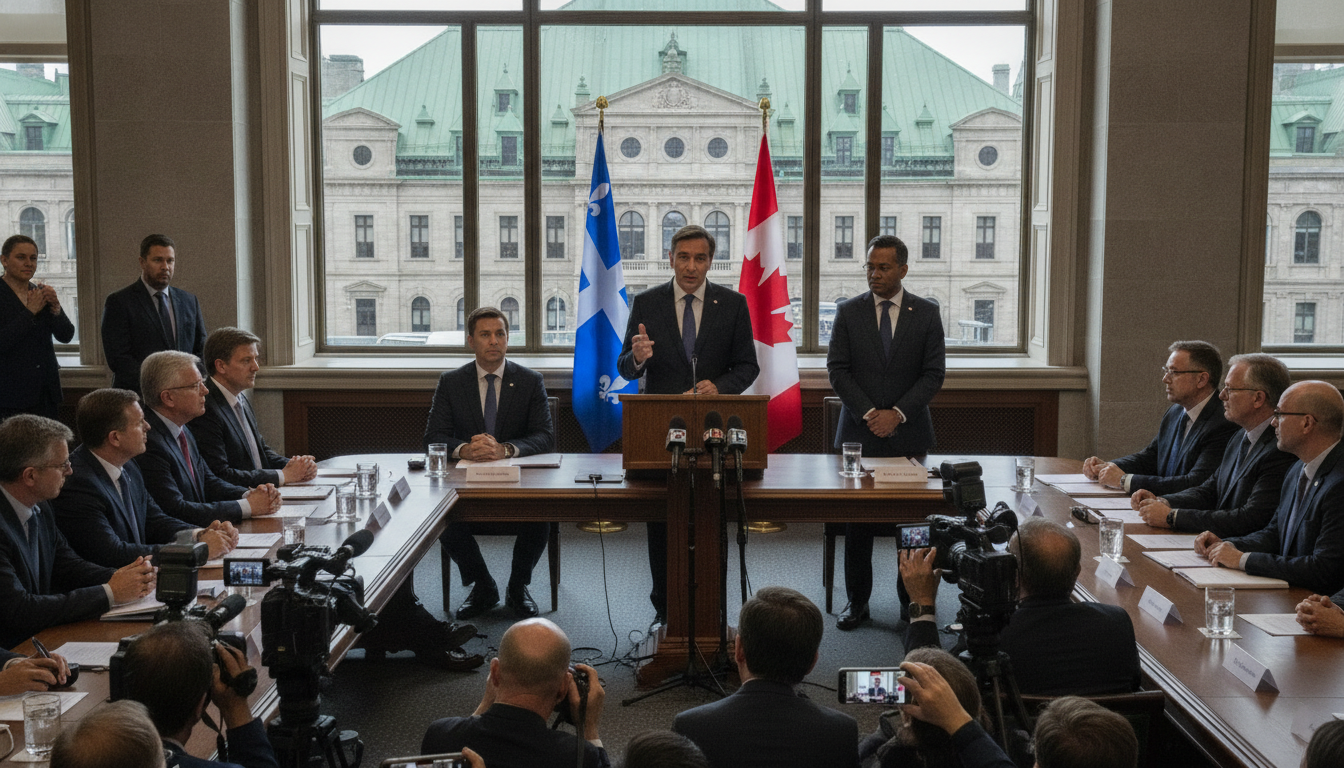
Homelessness in Quebec: Province Announces $12.5M Fund with $5M Earmarked for Montreal
Quebec is committing $12.5M to prevent and reduce homelessness in Quebec, with $5M for Montreal and targeted funding for women, Indigenous organizations and local service providers.
Quebec’s government has unveiled a $12.5-million investment aimed at prevention and frontline responses to homelessness across the province. The funding, announced by the minister responsible for solidarity and community action, will be distributed to regional tables and local organizations to expand supports and services. The package includes allocations ranging from $100,000 to $5 million, with Montreal, Capitale-Nationale and Laval handling their own disbursements at the municipal level. The plan also directs money to Indigenous health authorities, including the Commission of the Health and Social Services of the First Nations of Quebec and Labrador.
Breakdown of the provincial allocation
The $12.5-million envelope will be split among Quebec’s administrative regions, with individual grants varying according to local needs and proposals. Most regions will receive funds through their elected regional tables, while three metropolitan areas—Montreal, Laval and Capitale-Nationale—will manage the money through municipal administrations. The Montréal allocation is the largest single share at $5 million, reflecting concentrated demand in the city.
Officials say the funding is intended for both prevention efforts and immediate supports, including shelter capacity, outreach, case management and low-barrier services. Grants are designed to bolster community organizations already active on the ground and to support new initiatives that respond to emerging trends in homelessness.
Data pointing to a rising crisis
Provincial health ministry counts from 2025 indicate more than 12,000 people were experiencing visible homelessness in Quebec, a 20 percent increase compared with 2022. Roughly 5,000 of those individuals were estimated to be in Montreal, which has seen sustained pressure on shelter and outreach systems. The government framed the investment as a targeted response to that recorded growth.
Advocates and municipal leaders have warned for months about growing visibility of encampments and increased demand at shelters and food banks. The province’s funding announcement follows consultations with regional actors who have cited rising needs for housing supports, mental health services and coordinated access.
Montreal to receive the largest single share
Montreal’s city administration will receive $5 million from the provincial package, an allocation municipal leaders say will be used to strengthen supports for vulnerable groups. Claude Pinard, chair of the city’s executive committee and the municipal lead on homelessness, confirmed the municipality intends to channel much of the money toward services for women experiencing homelessness.
City officials indicated the sum will support community shelters, outreach teams and targeted projects addressing the particular safety and health risks faced by women living without secure housing. The mayor’s office said the funds will be distributed to organizations that demonstrate capacity to reach those most at risk.
Women increasingly at risk on the street
Local service providers and community groups have flagged a growing share of women among people experiencing homelessness. Data cited by Centraide du Grand Montréal show the proportion of women in homelessness rose from 23 percent in 2018 to 29 percent in 2022. Frontline workers report women are often more likely to experience violence, exploitation and precarious informal sleeping arrangements than men.
Michelle Patenaude, director general of CAP St‑Barnabé, said her organization has observed women in particularly fragile circumstances, especially at encampments such as the friche Notre‑Dame site in Montreal. She welcomed the provincial funding as a necessary infusion to expand outreach, safety-focused shelters and specialized programming for women.
Targeted supports and Indigenous funding
The provincial package also includes allocations to Indigenous health and social services authorities, recognizing that First Nations and Inuit populations face disproportionate barriers to housing. The Commission of the Health and Social Services of the First Nations of Quebec and Labrador will receive specific support to tailor prevention and intervention measures for Indigenous communities.
Ministry officials emphasized that funding is intended to be flexible, allowing Indigenous and local partners to design culturally appropriate responses and to coordinate with municipal and regional systems where needed. The province said it aims to strengthen partnerships across jurisdictions to reduce service gaps.
Frontline services and short-term actions
To accompany the funding announcement, Service Québec and community partners organized a mobile clinic in Montreal to offer immediate supports to people living outdoors. The clinic provided access to social assistance application help, employment resources and documentation services such as health and social insurance card applications. Organizers described the mobile clinic as a practical step to connect people with existing programs while longer-term investments take effect.
Community agencies stressed the importance of combining short-term outreach with durable housing solutions and wraparound supports. They said the new provincial funds should be paired with stepped-up coordination among shelters, mental health services and housing authorities to move people out of precarious situations.
The announcement marks a provincial effort to respond to a documented rise in visible homelessness and to channel resources to areas and groups facing the greatest risks. Continued monitoring of outcomes and close collaboration between provincial, municipal and Indigenous partners will determine whether the $12.5 million results in measurable reductions in street homelessness and improved supports for those affected.
