
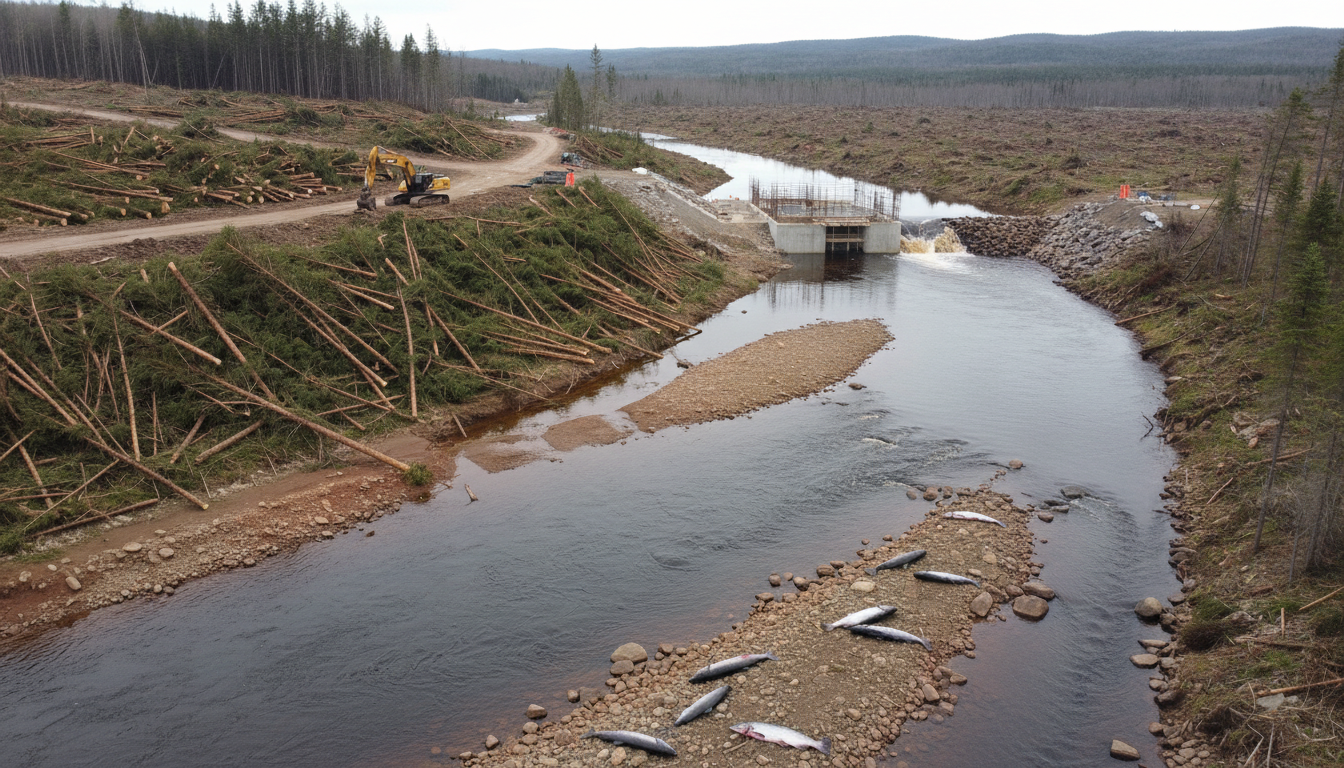
Ouelle River salmon habitat strained by farming, private land use and upstream logging
Ouelle River salmon habitat is degrading as agricultural clearing, private land use and upstream logging alter watershed flows and raise water temperatures, threatening runs.
Opening summary
The Ouelle River salmon habitat is showing signs of serious stress as changes across the watershed reduce shade, accelerate runoff and spike water temperatures. Local conservation groups and river managers warn that a combination of agricultural activity, private riparian practices and increased logging on public lands is undermining the conditions Atlantic salmon need to complete their upstream migration. Officials say climate change acts as an amplifier, making the habitat more vulnerable to these land-use pressures.
Salmon must cross agricultural lowlands
Unlike many Eastern Quebec rivers that originate in the Chic-Chocs, the Ouelle drains the lowlands of the St. Lawrence and forces migrating salmon to pass through long stretches of farmland. Fish heading to upstream spawning pools must navigate kilometres of fields and modified stream channels. That agricultural corridor reduces natural shading and increases exposure to warmer air and direct sunlight.
Riparian zones often absent on private land
Conservation coordinators note that riparian strips — the vegetated bands that shade rivers and stabilize banks — are frequently not respected along the Ouelle, particularly where the river runs through private property. Where buffers are removed, banks erode more quickly and runoff carries sediment and nutrients into the channel. The result is less complex habitat for juveniles and higher temperatures in pools that salmon use to rest and spawn.
Upstream logging reshapes water flow
Operations coordinators at regional conservation organizations point to repeated forest cuts and the spread of forestry roads on public land upstream as a major hydrological challenge. "Forests are not just the lungs of the earth; they act like a sponge that slows runoff," said Véronique Furois, operations coordinator at OBAKIR. She explains that when tree cover and organic soil layers are removed, spring snowmelt runs off faster and rainstorms send torrents into ditches and streams.
Hydrology shifts create temperature spikes
The altered flow regime produces sudden rises and falls in river levels, filling the river quickly then draining it just as fast. Those pulses flush fine sediments and depopulate colder refuges, while long shallow pools warm rapidly in summer. Warmer, slower-moving water increases physiological stress on salmon and can trap fish in isolated stretches unable to reach cooler upstream sections.
Management history and private access complicate protection
The Ouelle is predominantly on private land, which complicates coordinated stewardship compared with rivers managed by ZECs or outfitters elsewhere in Quebec. When the river was open to angling, local management relied on agreements between the Société de gestion de la rivière Ouelle and individual landowners for access and oversight. Today, fragmented ownership and differing priorities among farmers, landowners and public agencies create regulatory and practical gaps for protecting riparian and aquatic habitat.
Calls for watershed-scale responses
Local groups and river managers are urging watershed-scale planning that combines incentives for riparian restoration, stricter controls on forestry practices and better coordination with private landowners. Measures being discussed include reestablishing continuous vegetated buffers, minimizing the density of forest roads, and restoring wetlands to slow runoff and increase groundwater recharge. Supporters say such steps would reduce peak flows, lower summer temperatures and rebuild habitat complexity essential for salmon life stages.
The management coordinator emphasized that while climate change intensifies the problems, land-use decisions determine how resilient the river will be. Restoring shaded corridors and reducing landscape disturbance, she said, would buy time for the Ouelle River salmon habitat as regional temperatures rise.
