
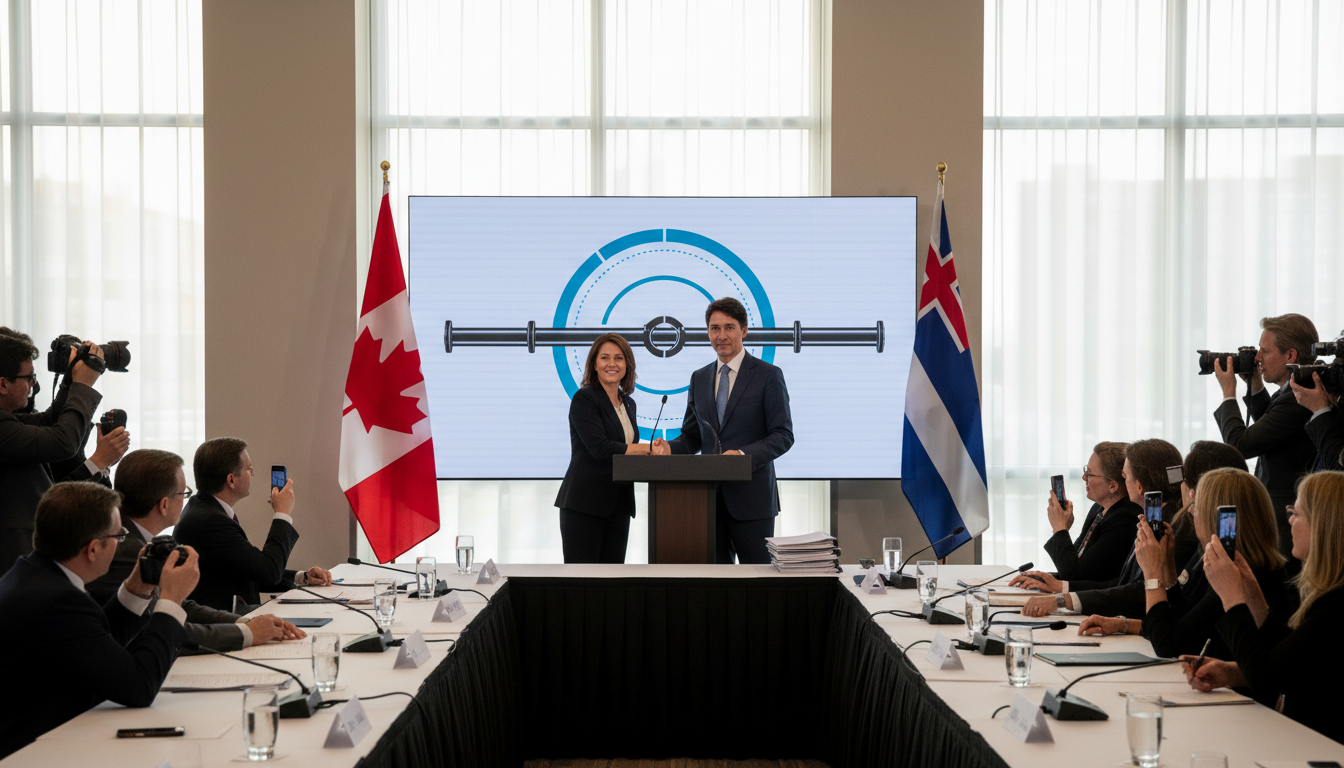
Carney and Smith unveil roadmap for new West Coast pipeline tied to carbon capture
Federal and Alberta governments set timelines for a new West Coast pipeline contingent on carbon capture plans, with construction targeted for Sept. 1, 2027.
Prime Minister Mark Carney and Alberta Premier Danielle Smith signed an agreement in Calgary that lays out a conditional timeline for a new West Coast pipeline, linking the project’s start to the successful roll-out of a large-scale carbon capture program. The plan sets firm milestones for regulatory and construction steps while making clear that the pipeline cannot move forward without the carbon capture framework in place. Ottawa and Edmonton say the initiative aims to balance market access and environmental safeguards, but several key agreements with industry partners remain outstanding.
Timeline set with conditional 2027 start
The governments established a sequence of dates to advance the project, beginning with a master plan submission on July 1, 2026 to the Bureau of Major Projects. Federal designation of the project as one of “national interest” is scheduled for October 1, 2026, and the parties say the ceremonial first shovel would take place on September 1, 2027. The overall in-service date for the pipeline is projected for 2033, subject to the successful deployment of the carbon capture system.
Carbon capture targets and phasing
The agreement makes carbon capture the linchpin of the project’s environmental strategy, with an initial capture target of six million metric tonnes per year by 2035. That capacity is planned to scale up over time toward a goal of 16 million tonnes annually, with higher capture phases phased in after initial operations. Officials emphasize that construction hinge‑points are conditional on demonstrable progress in building the capture infrastructure and securing necessary financing.
Alberta to act as project promoter
Unusually for a major energy corridor, the Alberta government will act as the project promoter to jump‑start the pipeline process, a role normally assumed by private developers. Provincial officials framed the move as a market signal intended to accelerate review and attract private partners, while avoiding direct long‑term ownership. The decision follows earlier public remarks that private financing was preferred, and the new role reflects a tactical shift to shepherd the project through early approvals.
Private sector interest remains uncertain
No trilateral agreement has yet been finalized with the Oil Sands Alliance, the industry consortium expected to carry the carbon capture program, leaving questions about private investment. Industry representatives say they are still assessing the plan’s financial floor and the risks of the accelerated schedule before committing capital. Business Council of Alberta president Adam Legge said the fast pace is meant to get the project into regulatory queues while the private sector evaluates costs and financing options.
Route, approvals and Indigenous consent
The preferred routing under consideration would run through northern British Columbia to facilitate access to Asian markets, but final alignment depends on provincial and Indigenous approvals. British Columbia’s support and agreements with affected First Nations are described as essential to any viable corridor, and federal and provincial officials say they will engage directly to resolve outstanding issues. Mark Carney indicated he plans follow‑up discussions with B.C. leadership to address regional concerns and advance cooperation.
Political and environmental backlash
The announcement prompted sharp criticism from opposition parties and environmental groups, who framed the move as a retreat on climate commitments. Bloc Québécois politicians called the plan a “climate capitulation,” while the NDP and advocacy groups warned the accord favors oil companies and weakens regulatory constraints. Environmental Defence Canada said the package represents a major policy reversal, expressing disappointment with the federal approach given Carney’s climate finance background.
Carbon pricing and regulatory trade-offs
As part of the broader package, Ottawa and Alberta agreed to a carbon pricing trajectory that would reach $130 per tonne by 2040, beginning with $100 per tonne next year. The federal government also confirmed it will not impose a strict sectoral emissions cap on oil and gas, preferring to lean on technological measures such as carbon capture and methane reduction targets instead. Alberta committed to cutting methane emissions by 75 percent over the coming decade, while critics argue that the lack of binding emissions ceilings shifts too much risk onto future technological performance.
Industry reaction was mixed: some business groups welcomed the predictability a stable carbon price may bring, while others remain concerned that maintaining an industrial carbon price will raise costs for producers. Analysts note the market has been burdened by a surplus of carbon credits in recent years, which pushed prices well below intended targets and undercut incentives for emissions reductions. Government officials contend that the new framework will restore price credibility and attract long‑term investment.
The coming months will test whether Ottawa, Alberta and industry can convert the signed intentions into binding contracts and bankable projects, particularly for the costly and unproven elements of large‑scale carbon capture. If agreements with the Oil Sands Alliance and First Nations are secured and the technical pilots meet targets, proponents say the timeline toward a 2027 groundbreaking and a 2033 in‑service date is achievable. Observers caution that financing, Indigenous consent and regulatory hurdles remain significant variables that will determine whether the West Coast pipeline proceeds on the schedule outlined.
