
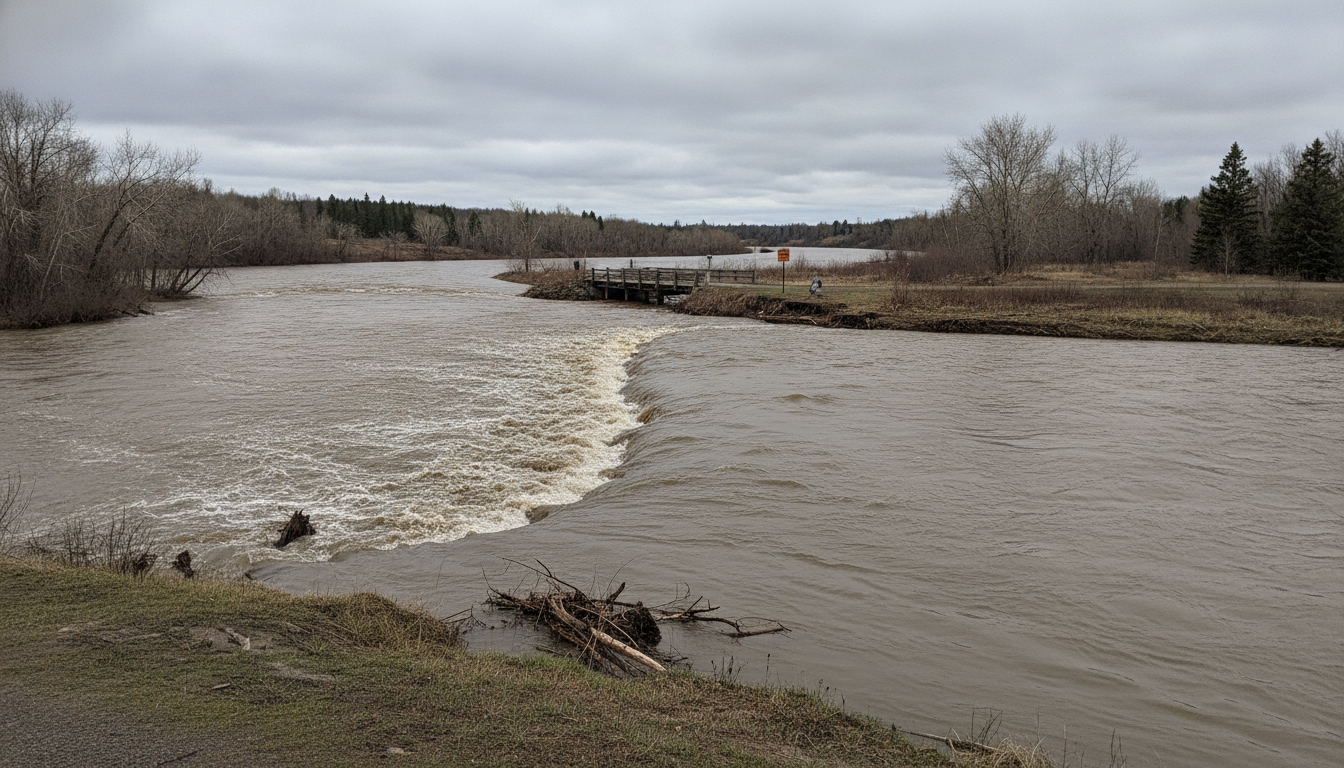
High stream flow advisories issued for North Saskatchewan River and tributaries near Edmonton
High stream flow advisories issued for the North Saskatchewan River and tributaries near Edmonton on June 27, 2026; residents urged to follow safety guidance.
High stream flow advisories were in effect on Saturday, June 27, 2026, for multiple waterways feeding the North Saskatchewan River in central and northeastern Alberta. The notices covered tributaries near Edmonton, stretches of the North Saskatchewan River from Devon downstream to the Saskatchewan border, and watercourses from Rocky Mountain House to Devon. Provincial and municipal agencies warned that higher-than-normal flows and fast-moving water could pose hazards to people, property and river infrastructure.
Affected waterways and communities
The advisories named a string of tributaries and creeks, including the Vermilion River, Sturgeon River, Waskatenau Creek and Redwater Creek, as well as tributaries near and downstream of Edmonton. Areas from Rocky Mountain House through Devon and onward to the Saskatchewan border were explicitly cited as at elevated risk. Local officials advised residents in low-lying and riverside neighbourhoods to prepare for rising water levels and to avoid entering or driving through moving floodwaters.
Extent of advisories along the North Saskatchewan River
Officials described the scope as spanning from upstream tributaries near Edmonton to the main stem of the North Saskatchewan River from Devon to the provincial border. Tributaries feeding into the river both upstream and downstream of Edmonton were included, reflecting a broad swath of the watershed. The advisory status indicates streamflows are above typical seasonal levels but have not necessarily reached major flood thresholds in all locations.
Municipal actions and emergency responses
Municipal authorities activated monitoring protocols and shared advisories through local alert systems on Saturday, June 27, 2026. Some municipalities advised against non-essential travel near affected waterways and positioned maintenance crews to inspect culverts, bridges and municipal drainage systems. Emergency management teams said they were coordinating with provincial water-management officials to assess vulnerable infrastructure and ensure timely public notifications.
Conditions driving the high stream flow advisories
The high stream flow conditions were attributed to a combination of seasonal runoff and recent precipitation across parts of the North Saskatchewan watershed. Rapid snowmelt in higher elevations and a series of rain events can quickly raise river levels and increase flows in tributaries. Hydrologists emphasized that localized intense storms or persistent rain can produce abrupt changes in flow even when larger rivers appear steady.
Public safety guidance and travel cautions
Authorities urged the public to heed advisories: stay away from fast-moving water, avoid walking or driving through flooded areas, and secure items that could be swept away. Boaters and recreational users were advised to postpone outings on impacted creeks and sections of the North Saskatchewan River until flows subside and conditions are declared safe. Motorists should respect road-closure signs and alternate routes, since water over roadways can hide damaged pavement and strong undercurrents.
Monitoring, forecasts and next steps
Provincial water-management agencies and municipal emergency operations centres said they will continue to monitor streamflow gauges and weather forecasts over the coming days. Residents are encouraged to follow local media, municipal alert systems and official social channels for updates about changing conditions. Authorities noted that rising or falling trends can change quickly; continued rainfall or a sudden melt could escalate risks, while drier conditions would help waters return toward normal levels.
Local officials stressed the importance of situational awareness and preparation for those living near the North Saskatchewan River and its tributaries. Stay tuned to official advisories and contact local emergency services if immediate danger is observed.
