
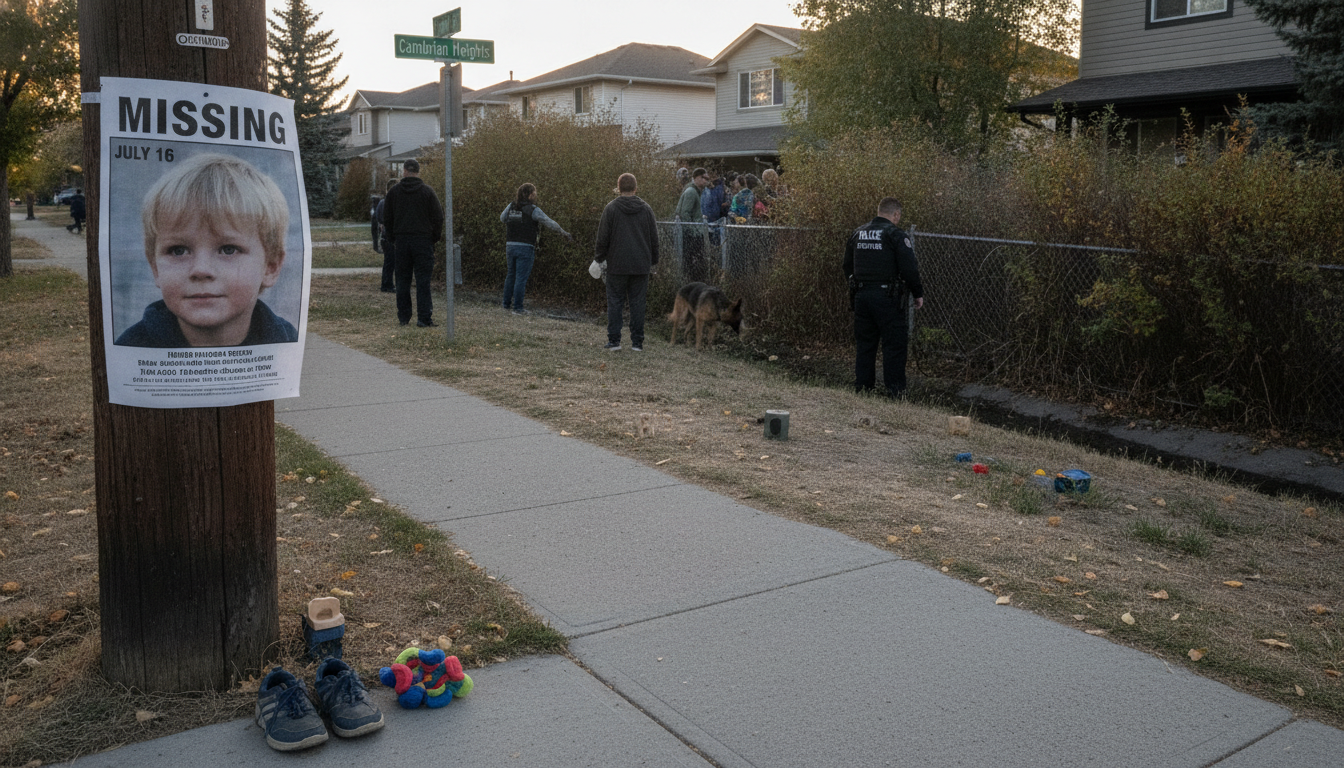
Missing autistic boy reported after leaving Cambrian Heights day home; no Amber Alert issued
Missing autistic boy reported after leaving a Cambrian Heights day home on July 16; authorities say no Amber Alert was issued as no abduction was suspected.
Parker, a non-verbal child on the autism spectrum, was reported missing after leaving a day home in the Cambrian Heights neighbourhood on July 16. The missing autistic boy’s disappearance prompted immediate concern from his family and local residents but did not meet the threshold for an Amber Alert. Police and officials said the decision rested on an absence of evidence suggesting abduction or foul play.
Circumstances of the disappearance
Parker was last seen leaving the day home where he was in care, according to the initial report. Family members notified the day home and emergency services when he failed to return as expected. Investigators have characterized the case as a missing person matter rather than a confirmed criminal incident.
Amber Alert criteria and the decision
Authorities indicated the case did not satisfy the established criteria for an Amber Alert because there was no credible information suggesting abduction. Amber Alert systems in Canada are activated when police have reasonable grounds to believe a child has been abducted and faces imminent danger. Without indicators of abduction, officials said an Amber Alert was not justified in this instance.
Search efforts and public appeals
Following the report on July 16, family members and neighbours mobilized to search nearby streets and green spaces in the Cambrian Heights area. Community members shared information on social media to raise awareness and asked anyone with possible sightings to contact authorities. Police confirmed they were conducting standard missing-person inquiries while urging the public to report relevant information rather than circulate unverified details.
Vulnerabilities of non-verbal autistic children
Non-verbal autistic children face particular risks when separated from caregivers because they may have limited means to communicate identity, address, or needs. Experts and advocates note that elopement — when a child with autism wanders away from a safe location — is a recognized safety concern that requires rapid but sensitive response. These vulnerabilities are part of why families and disability advocates often call for tailored protocols when a child on the spectrum is missing.
Calls for policy review and clarity
The decision not to issue an Amber Alert in cases involving autistic or otherwise vulnerable children has prompted debate in some communities about whether alert criteria adequately account for medical and communication vulnerabilities. Disability advocates argue that alert systems should better reflect the special risks that non-verbal or cognitively vulnerable children face when they go missing. Officials say any change to alert thresholds would require careful study to balance public safety, the effective use of emergency resources, and privacy considerations.
Practical guidance for caregivers and neighbours
Caregivers of children who are non-verbal or who may elope are advised to use preventive strategies such as identification bracelets, recent photographs, and consistent safety routines. Neighbours and bystanders who spot a child who appears lost should immediately contact local police and avoid confronting or chasing the child, which can escalate risk. Police typically guide search and response efforts and can also provide families with safety planning resources after a missing-person event.
The search for Parker remains an ongoing concern for his family and the Cambrian Heights community while investigators continue routine missing-person procedures. Anyone with information about Parker’s whereabouts is asked to contact local police so investigators can follow up and ensure the child’s safe return.
