
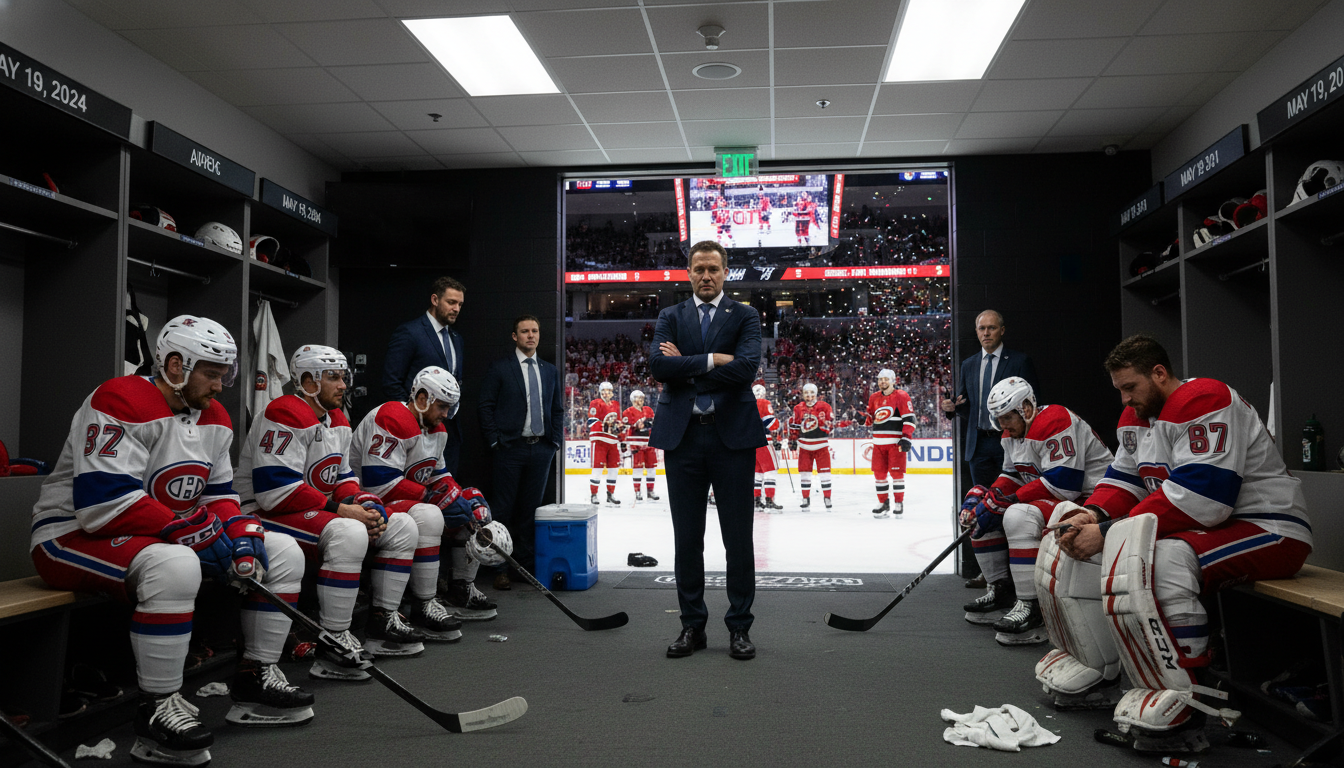
Canadiens eliminated in five as Hurricanes steamroll Montreal in decisive series
Montreal Canadiens eliminated in five by Carolina Hurricanes; series stats expose depth and defensive gaps overall despite Jakub Dobes’ standout playoff run.
The Montreal Canadiens’ impressive postseason ride ended Friday as the Carolina Hurricanes closed out the series in five games, leaving little doubt about the balance between the clubs. The Canadiens were outscored and outworked across the series, and the loss highlights structural issues that surfaced against one of the NHL’s deeper, more rested rosters. Montreal’s young core gained valuable experience, but the immediate takeaway is that improvements are required if the club wants to advance further.
Series statistics show one-sided Carolina control
Across the five games the Hurricanes outscored Montreal 18-11 and opened the scoring in every contest, setting the tone early and repeatedly. Carolina piled up 384 shot attempts to the Canadiens’ 222 and created 79 scoring chances to Montreal’s 30, numbers that underline how often Montreal was on the defensive. The Canadiens were also limited to a mere 89 shots on goal over the series, an unusually low total for a five-game matchup and a key indicator of the team’s offensive struggles.
Fatigue and scheduling magnified the gap
Montreal’s path to the third round required two grueling seven-game series, while Carolina entered with an 11-day layoff after sweeping its first two opponents. That rest provided the Hurricanes with recovery time and extra preparation, a contrast that left the Canadiens physically and strategically taxed. The scheduling disparity, combined with the demands of consecutive seven-game series, made the challenge for Montreal that much steeper from the opening puck drop.
Jakub Dobes emerged despite team limitations
Rookie goaltender Jakub Dobes was a rare consistent bright spot, delivering a stretch of high-quality performances that kept Montreal competitive through much of the postseason. Dobes posted excellent numbers in the run-up to and during the playoffs, and analytics indicate he prevented a significant number of goals relative to expectation. While his play bodes well for the club’s future stability in net, stellar goaltending alone could not offset the team’s lack of possession and limited offensive opportunities.
Top-line production evaporated in the postseason
Montreal leaned heavily on its top trio and on Lane Hutson for creative output during the regular season, but those sources of offense were subdued in the playoffs. Cole Caufield, Nick Suzuki and Juraj Slafkovsky finished the postseason with poor plus-minus marks and combined for very few five-on-five goals across 19 playoff contests. The Canadiens also discovered the urgent need for a dependable second-line centre to better support a young winger like Ivan Demidov and to alleviate pressure on the top unit.
Defensive depth and personnel questions loom for management
Defensively the Canadiens tightened up late in the season, but the playoff sample against three top-tier opponents made clear that the team must prioritize defensive depth going forward. Montreal recorded several of the lowest shot- and chance-related totals in long postseason stretches across recent months, and it conceded some of the highest attempt totals among playoff teams. That profile suggests the front office—led by general manager Kent Hughes and president of hockey operations Jeff Gorton—will be under pressure to upgrade both the middle of the lineup and the blue line.
Looking ahead, the Canadiens’ extended playoff run still serves as persuasive evidence of the club’s upside for potential free agents and trade partners. Young players gained experience in high-leverage moments and the organization can now point to postseason progress when recruiting reinforcements. The work for Montreal will be to convert lessons learned into roster moves and strategic adjustments that address depth, two-way balance and consistent scoring support.
The Hurricanes’ series victory was emphatic, but Montreal’s season should not be defined solely by this defeat; rather, it represents a clear next step in a rebuilding timeline. The Canadiens must now use the offseason to fortify weaknesses revealed in the postseason while preserving the core pieces that delivered a memorable and instructive playoff campaign.
