
Paramedics’ Tentative Agreement Rejected by Montreal and Laval Crews
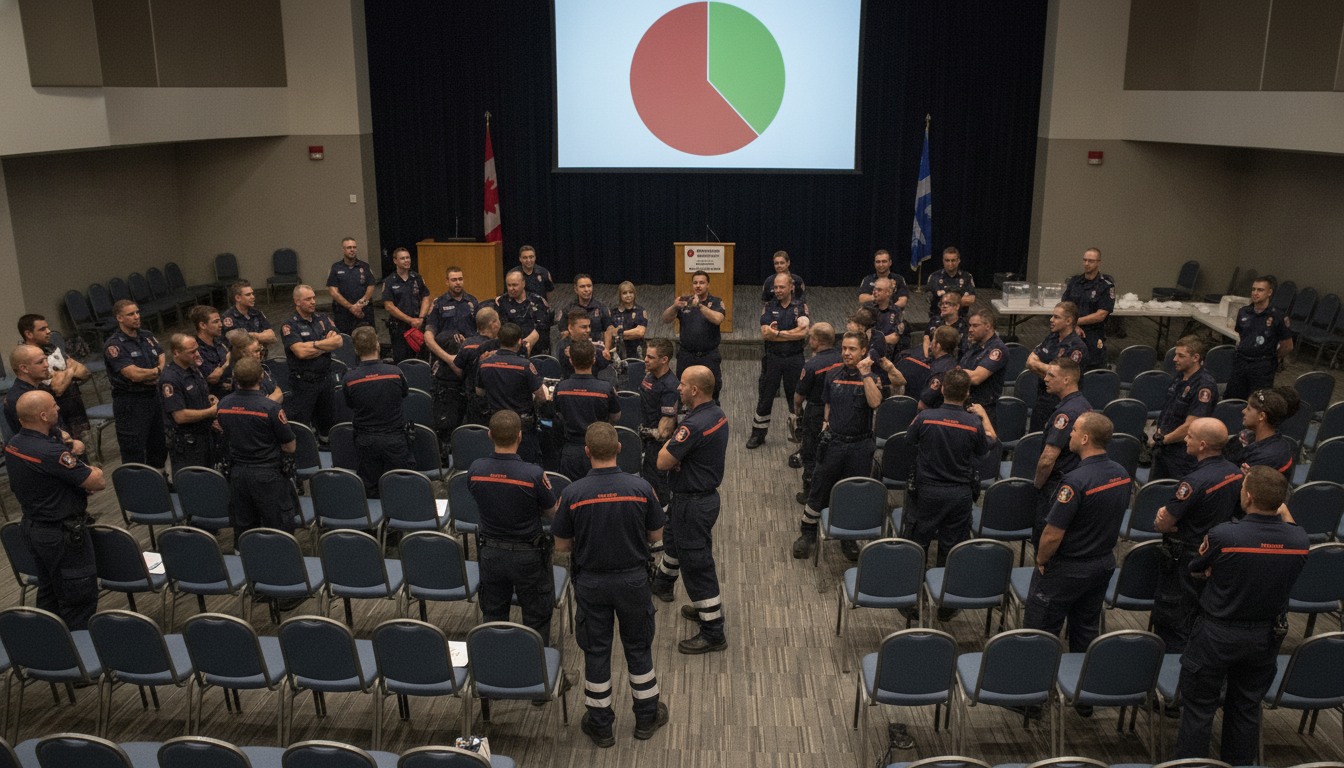
Montreal and Laval paramedics voted down a tentative agreement with Québec by 60%, signaling renewed uncertainty in talks over pay and overtime after months of labour pressure.
Montreal and Laval membership rejects deal
Members in the Montreal and Laval districts rejected the tentative agreement at rates that reflected deep dissatisfaction with the package presented after late-July negotiations. The vote was decisive in those two regions, with 60% of members casting ballots against the deal, according to union officials. Results from other regions have not yet been released, leaving the overall outcome for the province unresolved.
Union represents 3,500 prehospital workers without a contract
The Syndicat du préhospitalier, affiliated with the Fédération de la santé et des services sociaux (FSSS–CSN), represents roughly 3,500 ambulance technicians across Québec. More than 1,000 of those members work for Urgences-santé, Montreal’s major emergency medical service provider. Members have been operating without a collective agreement for over three years, a central factor behind escalating tensions at the bargaining table.
Core disputes center on wages and excessive overtime
Negotiations have focused primarily on compensation and the frequency of mandatory or excessive overtime shifts that paramedics say are unsustainable. Workers argue that pay levels have not kept pace with increased workloads and the rising cost of living, while employers point to operational constraints and budget limits. Both sides described the late-July discussions as intensive, but the breakdown in support in Montreal and Laval shows lingering gaps on key financial and scheduling issues.
Pressure tactics in 2025 escalated the dispute
Paramedics widened their labour actions earlier in 2025, moving from targeted refusals of overtime in June to a partial work stoppage in July that curtailed non-essential duties. Those measures were designed to press the government and employers back to the bargaining table without undermining core emergency responses. The union suspended its pressure tactics temporarily when negotiators announced a tentative agreement at the end of July, but the recent vote indicates members remained unconvinced that the deal adequately addressed their concerns.
Regional tallies and next bargaining steps are pending
With Montreal and Laval tallies now confirmed, union leaders are waiting for the remaining regional ballots to be counted before outlining a formal response. The rejection in the two largest urban districts strengthens the union’s leverage but also raises questions about service continuity if pressure measures are resumed. Québec’s government and employer representatives have not publicly outlined a revised offer, and both parties may be expected to re-engage in talks to avoid further escalation.
Implications for ambulance services and public safety
Service managers have emphasized that emergency response standards will remain a priority even as labour negotiations continue, but they acknowledged that prolonged disputes can strain scheduling and coverage. Urgences-santé and other operators must balance staffing shortages, overtime demands, and the need to maintain rapid response times in dense urban areas. Healthcare system officials have previously warned that unresolved labour disputes could complicate ambulance availability during peak demand periods.
The union has signaled it will consult members further and may consider renewed or alternative pressure tactics if bargaining does not produce a materially improved offer. Members in Montreal and Laval cited overtime and compensation shortfalls as decisive in their rejection, and union leaders say any new negotiations will prioritize concrete changes on those fronts. As regional results continue to come in, both sides face pressure to find a durable settlement that stabilizes emergency medical services while addressing long-standing workforce concerns.
