
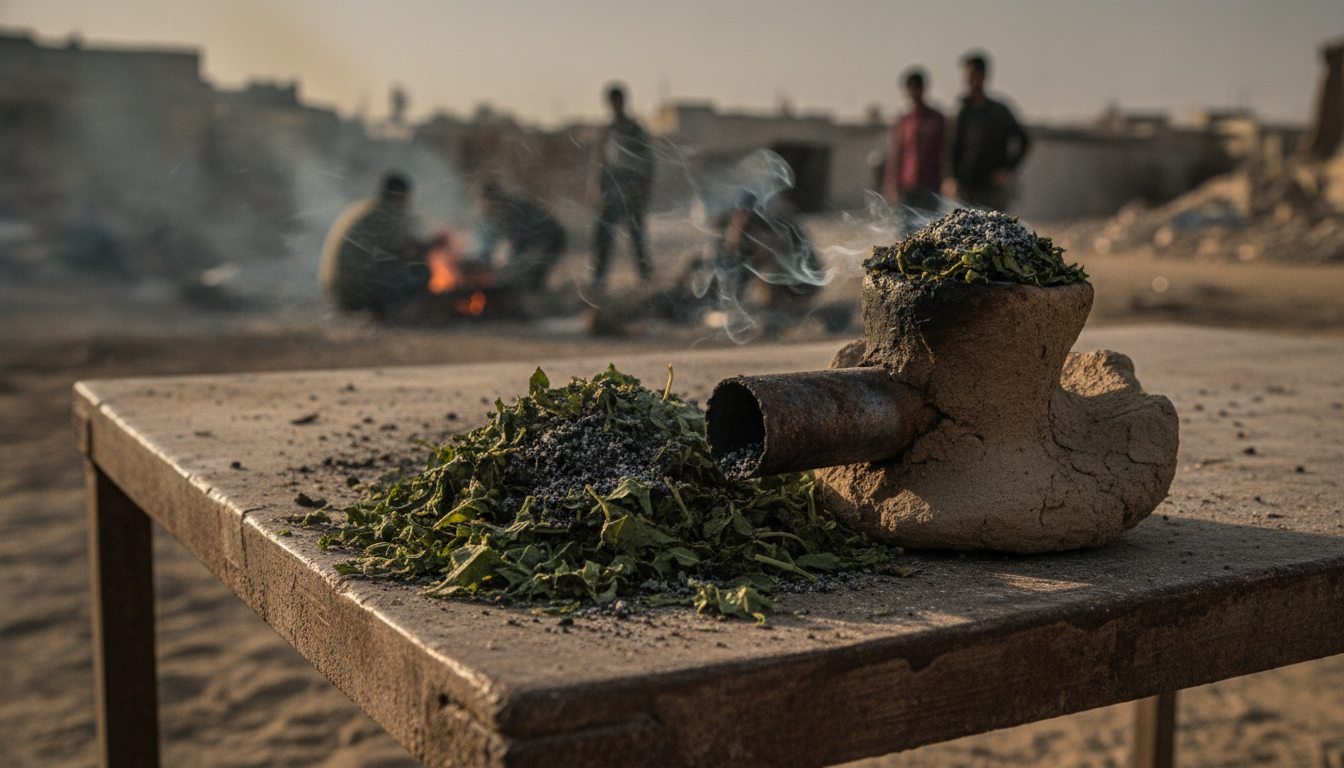
Molokhia Mixed with Nicotine Emerges in Gaza as Cigarette Prices Soar
Vendors in Gaza are mixing molokhia with nicotine as cigarette prices surge amid import restrictions, driving hazardous substitutes and economic desperation.
Rising substitution in Gaza’s informal tobacco market
Street vendors and small traders across Gaza report a sharp shift toward homemade smoking mixes, most commonly molokhia mixed with nicotine, as conventional tobacco becomes unaffordable and scarce. The practice has spread rapidly in marketplaces and informal networks, driven by dwindling supply and the collapse of purchasing power.
Sellers say the mixture is produced and sold openly in neighbourhoods where cigarettes once formed a modest but steady source of income. For many, the shift is not a preference but an improvised response to shortages and soaring prices.
Import curbs and price inflation reshape demand
Local tobacco sellers trace the disruption to long-running limits on tobacco imports imposed since the outbreak of hostilities, which have tightened access to commercial cigarettes and raw tobacco. Those restrictions, combined with wider constraints on food and goods, have pushed prices of legal cigarettes into levels most residents cannot afford.
Vendors report that a pack that once cost the equivalent of a few dollars now sells for hundreds in local currency, and single sticks fetch elevated sums on the street. The result is a collapse in demand for legal products and a parallel rise in demand for makeshift substitutes.
How molokhia nicotine mixtures are prepared and sold
According to market traders, the preparation is rudimentary: harvested molokhia leaves are dried, crushed and mixed with concentrated nicotine extracted or salvaged from other sources. The blend is then rolled or packed for smoking and distributed through informal retail channels.
Sellers describe molokhia as the preferred base because its texture and leaf structure appear to “hold” nicotine more effectively than other herbs. The production process lacks any safety controls, standardized dosages or quality checks, making each batch unpredictable.
Vendors’ voices: survival driving risky trade
Abdul Karim Heles, a 36-year-old tobacco seller from Shujayea now displaced to western Gaza City, says he has worked in tobacco for years and has limited alternatives for livelihood. He describes continuing sales throughout the conflict and adapting quickly to the market’s new realities.
Other vendors echo his account, saying the mixes are sold at lower prices than branded cigarettes but still command enough margin to sustain fragile family incomes. They also acknowledge the moral and legal gray areas of selling a substance they know to be dangerous.
Health alerts and reports of acute harm
Local traders and residents warn that the practice carries acute health risks. Nicotine in concentrated form is a toxic substance, and its unregulated use with dried herbs can produce life-threatening reactions, vendors say. Market anecdotes include reports of sudden collapses and at least two recent deaths allegedly linked to nicotine consumption in the informal market.
Public-health experts caution that improvised nicotine delivery systems can cause cardiovascular and neurological emergencies, particularly when doses are unknown and mixed with plant matter that may alter absorption. The trend raises concerns about a potential rise in poisoning cases and long-term respiratory harm among users.
Economic desperation, not choice, drives consumption patterns
Vendors and consumers interviewed frame the shift as driven largely by necessity rather than preference. With formal tobacco products pushed out of reach by price and supply restrictions, poorer households are turning to any available alternative, even when warned of the risks.
Sellers say they sometimes advise customers that the mixes are dangerous, while acknowledging that some users accept the risk because the choice is effectively between a hazardous substitute and going without. The dynamic underlines how economic pressure can reshape consumption in ways that undermine public health.
Humanitarian and regulatory implications for Gaza markets
Humanitarian agencies and health authorities face a complex challenge: restrictions on imports that contribute to shortages are entangled with long-term public-health consequences stemming from improvised consumption. Advocates argue that restoring regulated access to legal goods and strengthening market oversight would reduce incentives for hazardous substitutes.
At the same time, medical and relief organizations warn that immediate steps are needed to track poisoning incidents, raise public awareness about the dangers of concentrated nicotine, and provide support services for those exposed. Without such interventions, informal markets may continue to expand unsafe practices.
The situation in Gaza, where basic market functions have been disrupted by conflict and restrictions, illustrates how supply shocks and economic desperation can prompt rapid changes in consumer behaviour. As molokhia mixed with nicotine proliferates in streets and alleys, sellers, users and health responders confront a risky trade shaped by scarcity and survival.
