
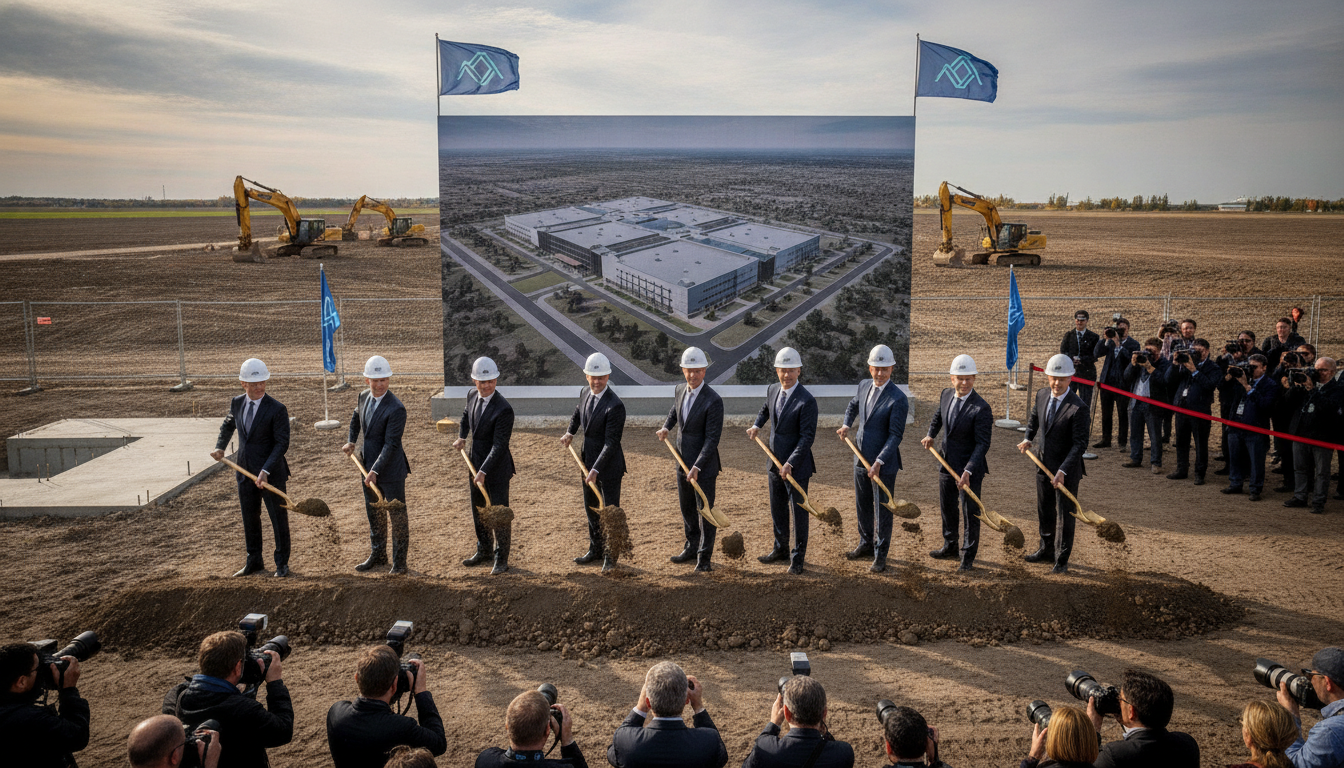
Meta data centre: Meta to invest over $13 billion in one‑gigawatt facility near Edmonton
Meta data centre confirmed as a $13B+ investment in Sturgeon County, pledging $60M for local infrastructure and using liquid‑cooling with dry cooling to eliminate operational water use.
Meta officials confirmed on Wednesday that the company will build a one‑gigawatt data centre in Sturgeon County, northeast of Edmonton, marking what it describes as the firm’s first data centre in Canada.
The announcement said Meta will invest more than $13 billion in the project and contribute $60 million toward local infrastructure improvements.
Company materials released at the Calgary news conference state the facility will employ a closed‑loop liquid‑cooled system and “dry cooling” methods designed to eliminate operational water use.
Alberta Premier Danielle Smith and Sturgeon County Mayor Alanna Hnatiw joined Meta representatives for the public announcement, which the company framed as a long‑term commitment to the region.
Meta confirms $13‑billion Sturgeon County data centre
Meta told reporters the project will be a one‑gigawatt campus on land in Sturgeon County, with the company calling it the first of its kind in Canada.
The announcement lists an investment exceeding $13 billion and a separate $60‑million commitment to local infrastructure, but it does not specify a construction timeline or the number of permanent jobs the company expects to create.
Meta said the facility will use advanced cooling technology intended to reduce water consumption during operations, a point the company emphasized repeatedly at the Calgary news conference.
Local officials present at the event described the investment as transformative for the region and signalled a cooperative relationship with the company as planning moves forward.
Project scale, cooling technology and water use claims
Meta described the planned site as a one‑gigawatt data centre, a scale that places it among the largest data infrastructure projects in North America.
The company said the data centre will rely on a closed‑loop liquid‑cooled system paired with dry cooling to eliminate operational water use, a design Meta presented as responsive to environmental concerns.
Closed‑loop liquid cooling circulates a coolant within sealed systems and keeps it from entering local water supplies, while dry cooling typically reduces reliance on evaporative cooling ponds or towers.
Meta framed the combination as a way to deliver high computing density while minimizing the facility’s water footprint, though independent technical reviews and permit processes will assess those claims in coming months.
Economic impact and local infrastructure commitments
Meta’s pledge of more than $13 billion places the project among the largest private investments announced in Alberta in recent years.
The company also committed $60 million to local infrastructure improvements, a sum local officials said will support roads, utilities and municipal services tied to the development.
Sturgeon County leaders have highlighted the prospect of expanded tax revenue, greater local contracting opportunities and indirect economic activity tied to construction and site services.
Meta has not provided a detailed breakdown of how the $60 million will be allocated, and municipal planning documents will be expected to clarify where those funds will be directed.
Regulatory approvals, land use and consultations ahead
Before construction can begin, the project will need to navigate provincial and municipal approvals, environmental assessments and any required permitting for large electrical and construction works.
Municipal land‑use bylaws, development permits and infrastructure agreements will be central to the next steps, and Sturgeon County’s planning office will play a key role in evaluating proposals.
Indigenous consultation and Crown permit processes may also apply depending on the site’s legal status and any potential impacts on traditional territories, and those consultations are typically scheduled early in the regulatory timeline.
Meta said it will work with local governments and stakeholders as the project moves forward, without providing a timetable for regulatory milestones.
Power demand, grid implications and potential sourcing
A one‑gigawatt data campus represents a substantial long‑term demand on the electrical grid and will require firm, reliable power supply arrangements.
Large cloud and hyperscale operators commonly pursue long‑term power purchase agreements, grid reinforcement projects and on‑site substations to secure the electricity such facilities consume.
Meta has not publicly detailed the project’s planned energy sources, generation mix, or whether the company intends to contract renewable energy to match its load.
Utility planners and provincial authorities will need to assess how the project integrates into Alberta’s transmission system and whether upgrades or new lines will be necessary.
Local reaction, opportunities and concerns
Local officials present at the announcement expressed support, citing the potential for job creation during construction and for expanded supplier networks in the region.
Municipal leaders also emphasised the prospect of long‑term property and business taxes that could fund community services and infrastructure.
At the same time, infrastructure projects of this size can raise concerns among residents and environmental groups over land use, traffic, noise during construction and long‑term energy consumption.
Meta’s pledge to eliminate operational water use through its cooling design was offered as an answer to one common criticism, but independent reviews and public consultations will test those assertions.
Timeline uncertainty and what remains undisclosed
Meta’s release highlighted the scale of the investment and its technical approach, but key details remain undisclosed, including exact timelines, workforce projections and finalized site plans.
Construction for projects of this magnitude often unfolds in phases, beginning with site preparation and utility work, followed by incremental building of data halls and supporting infrastructure.
The company did not provide a completion date at the announcement, leaving municipal officials and community stakeholders to await permit filings and development applications for greater clarity.
Officials from Meta indicated they would provide additional details as regulatory approvals are secured and planning advances.
Meta has presented the Sturgeon County project as the company’s first data centre in Canada, positioning the facility as a strategic foothold in the country.
The firm’s investment signals confidence in Alberta’s capacity to host large digital infrastructure, a sector that directly ties to cloud services, artificial intelligence development and the broader digital economy.
For the provincial government, the announcement represents a high‑profile corporate commitment that could attract ancillary businesses and technology suppliers.
For community stakeholders, the project raises immediate questions about land use, municipal capacity and the pace of development.
Environmental assessments and monitoring expectations
Environmental permitting processes will be central to the project’s trajectory, particularly around land disturbance, habitat impacts and emissions associated with construction and operations.
The company’s stated commitment to closed‑loop, dry cooling will be evaluated as part of any environmental assessment to confirm projected reductions in operational water use.
Air emissions, noise, light pollution and stormwater management are among the typical matters regulators examine when reviewing data centre proposals.
Monitoring and reporting requirements can be imposed as conditions of approval to ensure compliance and to provide transparency to local residents and agencies.
Economic development, workforce and regional planning
Large infrastructure projects often generate a mix of short‑term construction employment and a smaller number of permanent operations positions, plus opportunities for local contractors and suppliers.
Municipal workforce development offices and post‑secondary institutions may view the project as impetus to expand training programs in construction trades, electrical systems and data‑centre operations.
Local procurement policies and contracting agreements can channel portions of construction and service work to regional firms, increasing the economic footprint beyond direct employment.
Sturgeon County and neighbouring municipalities will likely consider updates to planning documents and service strategies to accommodate expected growth.
Comparisons with other hyperscale investments
While Meta’s project is notable for its scale and headline investment figure, major technology firms have undertaken similar large projects in other Canadian provinces and internationally.
Those prior developments often feature extended timelines, evolving regulatory negotiations and multi‑year community engagement processes.
Lessons from past projects suggest that transparent communication about timelines, environmental mitigations and community benefits can ease local concerns and expedite permitting.
Meta has indicated a willingness to work with officials, but the specific structure of agreements and timelines will shape public perception as the project advances.
Next steps for stakeholders and residents
In practical terms, residents and stakeholders can expect to see formal development applications, public notices and opportunities for comment once Meta submits detailed plans to Sturgeon County and provincial agencies.
Public information sessions, municipal council meetings and regulatory comment periods are typical stages where the community can review and respond to project materials.
Meta and local officials will also need to coordinate on traffic management, utility routing and potential upgrades to municipal services that accompany large campus builds.
Community groups and environmental organizations may use the permitting window to request additional studies or to raise specific concerns for regulators to consider.
Meta’s announcement underlines the growing demand for data infrastructure as companies expand computing capacity for cloud services and AI.
For Alberta, the project brings a high‑value investment and positions the province as a potential hub for future digital infrastructure development.
How the project proceeds will depend on regulatory reviews, utility planning, and ongoing dialogue between Meta, local leaders and community stakeholders.
As details emerge, residents and businesses in Sturgeon County will be watching for development applications, environmental approvals and the practical implications for services and land use.
The initial announcement marks the start of a multi‑stage planning and approval process, and the ways in which Meta’s claims about water‑saving cooling and infrastructure contributions are translated into binding commitments will be central to public scrutiny.
