
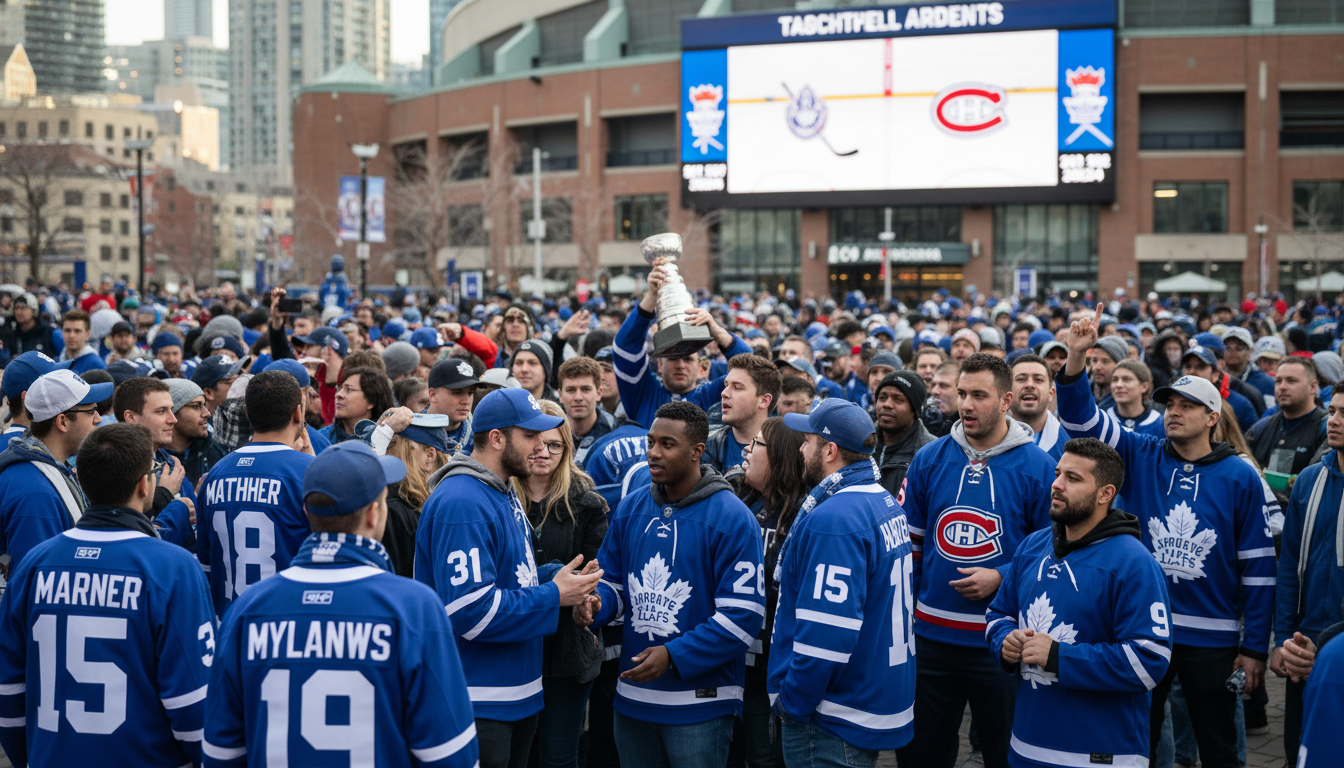
How Leafs Fans Would Handle a Canadiens vs Marner Cup Final
Exploring how a Canadiens vs Marner Cup final would ignite ticket demand, social-media debate and fierce fan rivalry while reshaping broadcast and city economies
The prospect of a Canadiens vs Marner Cup final would test loyalties and reshape the NHL conversation across two of Canada’s biggest hockey markets. The hypothetical matchup — centered on Maple Leafs star Mitch Marner’s role in a Toronto–Montreal championship clash — would trigger intense ticket demand and a booming media narrative. Fans, broadcasters and city officials would all face immediate consequences from the spectacle and scrutiny such a series would generate.
Ticket Demand and Arena Atmosphere
A Canadiens vs Marner Cup final would send ticket markets into a rapid frenzy, with prices likely surging and resale platforms filling within hours. Arena operators in Toronto and Montreal would be under pressure to allocate additional staff and tighten entry procedures to handle larger, more visceral crowds. The alternating nature of a final between these rivals would amplify home-ice advantages and create stark contrasts in atmosphere from game to game.
The matchup’s novelty would also draw casual viewers into live attendance, increasing the mix of season-ticket holders and one-off tourists. That blend tends to intensify chants, coordinated displays and spontaneous fan-led traditions. Venue security and crowd-management plans would likely be re-evaluated in real time as each game’s dynamics unfold.
Broadcast Narrative and Advertising Stakes
Broadcasters would seize the storyline of a Canadiens vs Marner Cup final as a marquee ratings driver and retool pregame and intermission coverage accordingly. National and regional feeds would amplify player profiles, historical context and fan voice segments to sustain viewer engagement over an extended series. Advertisers would rapidly reposition buys around key games, especially potential deciding contests, to capture peak viewership.
Production teams would also invest in remote and on-site capabilities to cover the heightened fan presence outside arenas, where much of the drama and spectacle plays out. That investment would extend to digital packages, pay-per-view offerings and enhanced streaming options aimed at younger, mobile-first audiences.
Fan Rivalry and Social Media Dynamics
A Canadiens vs Marner Cup final would transform social media into a battleground for pride, memes and coordinated chants, with hashtags and viral clips dominating feeds. Rival fan bases would push narrative frames — from player performances to perceived officiating calls — rapidly shaping public perception of the series. Platforms would serve as amplifiers for both celebratory and hostile exchanges, prompting moderation concerns for teams and leagues.
Organized fan groups would likely stage watch parties and citywide gatherings, increasing public visibility and civic momentum. Those events create powerful communal moments but also require coordination with municipal authorities to manage safety, sanitation and transportation impacts.
Economic Impact on Host Cities
Both Toronto and Montreal would see near-term economic benefits from an extended Canadiens vs Marner Cup final, with hospitality, retail and transport sectors experiencing spikes in demand. Hotels and restaurants near arenas tend to benefit most during playoff runs, and a cross-provincial final could increase overnight stays and intercity travel. Local governments would need to balance revenue opportunities with public safety planning and temporary service adjustments.
Longer-term impacts could include elevated city branding and tourism interest tied to high-profile hockey success. However, costs related to policing, transit strain and post-event cleanup could offset some municipal gains, prompting careful cost–benefit assessments by officials.
Player Storylines and Team Strategies
At the centre of the conversation would be Mitch Marner’s role in a Canadiens vs Marner Cup final, shaping tactical matchups and media coverage alike. Coaches on both sides would adjust lines, defensive schemes and special teams to neutralize key threats and exploit matchup edges. Player narratives — veteran leadership, emerging stars and injury management — would guide how each contest is framed.
A final between these teams would also spotlight depth, goaltending form and coaching adjustments across the series. Teams that adapt quickly to game-to-game shifts often gain decisive advantages in tightly contested playoff matchups.
Public Safety and Logistical Preparedness
Municipal authorities and team security departments would likely coordinate emergency plans, crowd-control protocols and transit contingencies in anticipation of a Canadiens vs Marner Cup final. High-profile rivalry games historically draw larger-than-usual public gatherings beyond arenas, requiring clear messaging and resource allocation. Stakeholders would aim to minimize disruptions while protecting fans and property.
Transportation agencies would be pressured to extend service hours and increase frequency around pivotal games to prevent bottlenecks. Effective pre-game communication about routes, entry points and public-safety measures would be essential to maintain order and reduce the risk of incidents.
A Canadiens vs Marner Cup final would be an instant cultural event with wide-ranging impacts on fans, media and host cities. The matchup would amplify long-standing rivalries while creating fresh storylines that reach beyond the ice into business, civic planning and social media. Ultimately, the series’ legacy would depend as much on the on-ice drama as on how institutions and supporters manage the heightened intensity surrounding a cross-country championship showdown.
