
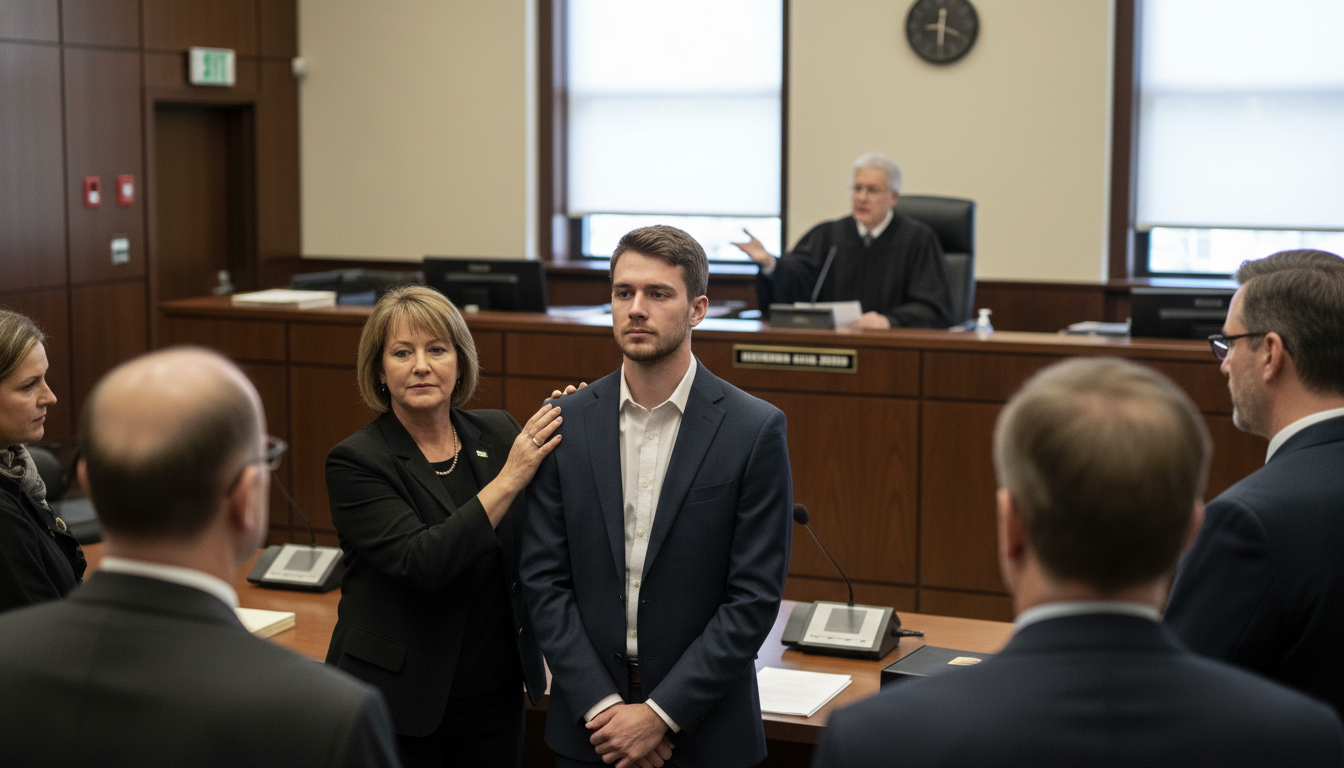
Nicholas Brashko acquitted in 2023 Edmonton killing of drug dealer Fred Kolybaba
Nicholas Brashko acquitted in the 2023 Edmonton killing of Fred Kolybaba after a judge found the Crown’s circumstantial case left reasonable doubt. Read ruling.
Edmonton — A Court of King’s Bench judge has acquitted Nicholas Brashko of all charges in the 2023 killing of Fred Kolybaba, concluding the Crown failed to prove his guilt beyond a reasonable doubt. The verdict follows a trial in which prosecutors relied heavily on circumstantial evidence tying Brashko to the scene and a suspected theft of silver coins. Justice John Henderson described parts of the case as suspicious but found gaps large enough to preclude a criminal conviction.
Details of the death and fire
Fred Kolybaba, 69, was discovered dead in the basement of his northwest Edmonton home after firefighters responded to an arson call in the early hours of Sept. 1, 2023. Emergency crews extinguished three small, deliberately set fires in the basement and reported that smoke detectors had activated prior to their arrival. Medical evidence showed Kolybaba had been repeatedly stabbed, including a fatal wound to his neck.
Evidence of Brashko’s presence before the killing
Prosecutors established that Brashko visited Kolybaba’s home the afternoon before the killing to buy Oxycodone and was seen briefly by a friend at the front door around 5:45 p.m. Cellphone records placed a call from Brashko to Kolybaba at about 8:07 p.m., with the connection routing through a tower near the deceased’s residence. Those timelines formed the factual backbone of the Crown’s argument that Brashko had been in the house during the evening hours.
Crown’s theory on motive and alleged theft
The Crown argued Brashko killed Kolybaba and stole a valuable collection of silver, a motive prosecutors said explained the alleged subsequent behaviour. Surveillance footage from nearby businesses captured a man carrying two heavy bags later that night, and a cab driver identified picking up an individual in the area who was holding clinking bags and dropping him near a church. Investigators also found a quantity of silver at Brashko’s residence, which the Crown presented as circumstantial support for its theft theory.
Forensic and identification weaknesses highlighted by the judge
Justice Henderson noted several evidentiary gaps that undermined the Crown’s account, including the absence of a recovered murder weapon and no trace of Kolybaba’s blood or DNA at Brashko’s home. The surveillance images did not clearly show the carrier’s face, and the clothing and footwear seen on the video did not match what Brashko was observed wearing earlier in the evening. Police also never located the bags seen on CCTV, nor could they produce blood-stained clothing linking Brashko to the scene.
Judge’s analysis and the reasonable doubt finding
While describing the totality of the evidence as “very suspicious,” Henderson concluded those suspicions did not amount to proof beyond a reasonable doubt. The judge weighed Brashko’s police statements, the cellphone and witness timelines, and the circumstantial chain urged by prosecutors, but found alternative explanations remained plausible. Henderson said convicting on the assembled evidence would be “too dangerous,” noting that the Crown’s inferences, though compelling, failed to eliminate reasonable doubt about the killer’s identity.
Background, arrests and next legal steps
Brashko was 44 at the time of his arrest and was living in precarious conditions, with utilities cut off at his residence when police executed a search. He was initially arrested days after the killing, treated for serious injuries in hospital, released, and then rearrested in February of the following year. Brashko’s lawyer declined to comment following the ruling, and court records do not record a statement from Kolybaba’s family in the decision.
The Crown now faces a decision on whether to seek leave to appeal the acquittal, a step available under Canadian law when a prosecutor believes an error of law or principle occurred at trial. Any appeal would focus on whether the judge properly assessed the circumstantial evidence and applied the standard of proof required for criminal conviction.
The judge’s decision underscores the high bar for criminal convictions in Canada: proof beyond a reasonable doubt, even where the facts create a suspicious picture. The court acknowledged the severity of the crime and the distress of the loss, but ultimately concluded that unanswered questions about identification, physical evidence and missing items prevented a safe verdict of guilt.
