
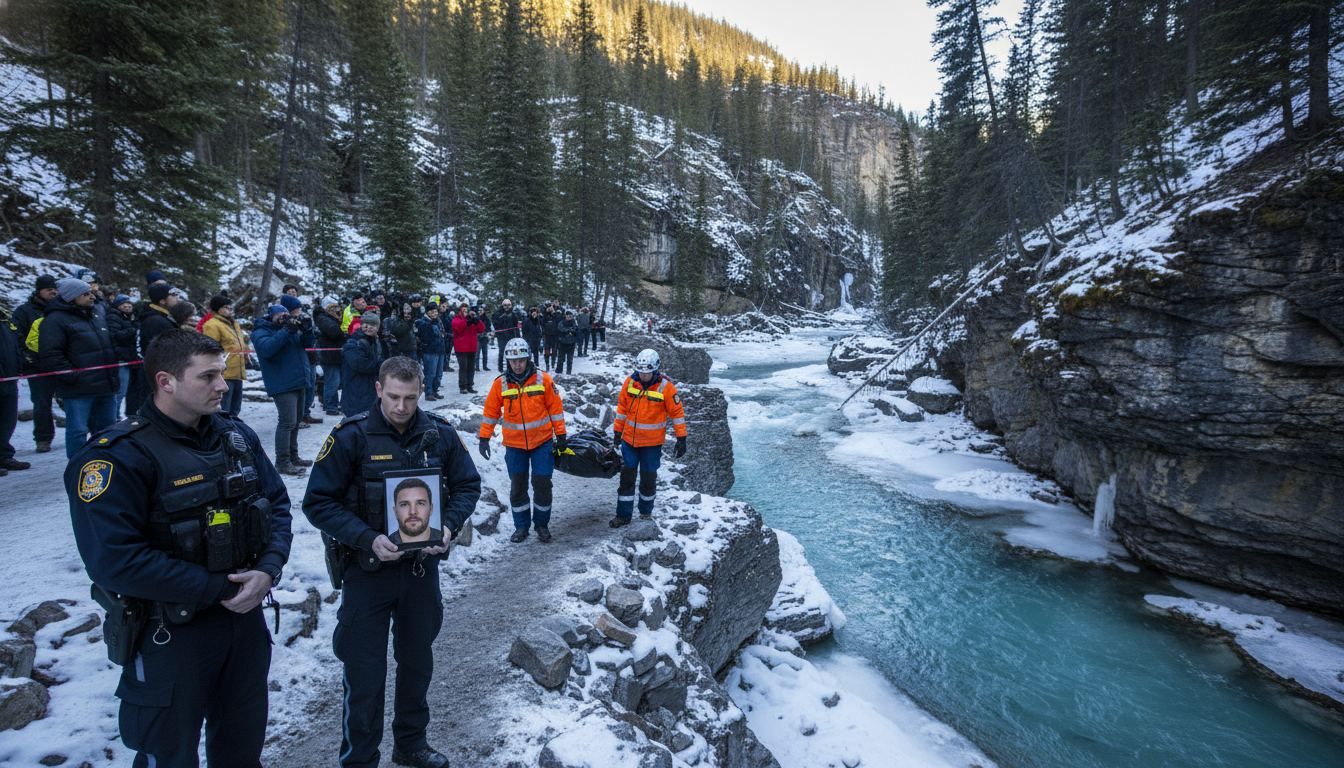
Johnston Canyon drowning: Parks Canada recovers body of 25-year-old Pavlo Shemchuk
Parks Canada recovered Pavlo Shemchuk’s body on May 26 after a Johnston Canyon drowning on May 1; the trail has reopened and officials warn of hazardous waters.
Nearly a month after the Johnston Canyon drowning that drew a large but ultimately halted search, Parks Canada confirmed the recovery of a body on May 26. Friends and family identified the man as 25-year-old Pavlo Shemchuk, who vanished after jumping into the fast-moving water near the lower falls on May 1. The discovery prompted the temporary closure of the popular trail, which was reopened following recovery efforts.
Recovery located downstream of Lower Falls and trail reopened
Mid-day on May 26, Parks Canada crews were notified of a body in Johnston Creek downstream of the lower pool beneath the Lower Falls. Officials said recovery operations were launched immediately and the nearby trail — about a 30-minute drive west of Banff townsite — was reopened to the public after the site was secured. Parks Canada extended condolences to Shemchuk’s family and loved ones in a statement released after the recovery.
Circumstances of the May 1 incident and identification
Friends said Shemchuk, a Ukrainian native who moved to the United States about a decade ago, was visiting Banff with his cousin and a close friend when he entered the water at the lower falls. According to people close to the visitor, he jumped into the canyon’s pool and did not resurface, prompting an immediate on-site response. Friends and family later identified him, and family members told reporters they had been waiting for official confirmation before beginning formal grieving.
Search efforts suspended earlier due to extreme water conditions
In the days following Shemchuk’s disappearance, Parks Canada and other agencies conducted search operations but suspended them after two days because of dangerously high flows and frigid temperatures. Officials cited rapid currents and hazardous ice-runoff conditions that made safe recovery impossible for ground crews and divers. The suspension left the family and community hoping for a private recovery, while authorities continued to monitor the canyon for changes that would permit a safe operation.
Family sought private recovery assistance from an experienced diver
After search efforts were paused, Shemchuk’s family sought help from an experienced recovery diver based in California, who had volunteered to assist in locating the missing man. Family members said the delay and uncertainty made it difficult to grieve, and they pressed for any safe opportunity to recover his remains. Parks Canada acknowledged the family’s pain and emphasized that public safety constraints had dictated the timing and scope of any earlier recovery attempts.
Officials and rescuers warn about hazards at Johnston Canyon
Rescue agencies reiterated that Johnston Canyon’s waterfalls and pools can be deceptively perilous, especially in spring when snowmelt raises flows and lowers water temperatures. Parks Canada and local authorities urged visitors to obey signage, stay on designated trails and avoid entering water at any point along the canyon. Seasonal conditions can change rapidly, turning familiar viewpoints into areas too dangerous for rescue teams to operate, the agencies said.
Community response and support for the grieving family
Local residents, park visitors and members of the Canadian and Ukrainian communities expressed sympathy for Shemchuk’s family in the wake of the recovery. Friends organized memorial posts and a GoFundMe campaign to assist with travel and related expenses as next steps are arranged. Community organizations in Banff and surrounding areas also offered support services for those affected by the loss and for visitors who witnessed the early days of the search.
Authorities have said they will continue to cooperate with the family and provide updates as appropriate, while maintaining that public safety considerations remain paramount in any work on the canyon. Investigative and administrative steps typically follow recoveries of this nature, and officials stressed the importance of clear channels for next-of-kin notification and handling of remains.
The Johnston Canyon drowning has renewed calls from park managers for heightened awareness of natural hazards in mountain environments. Park officials reiterated that even well-known tourist sites can present lethal risks under certain conditions, and they urged visitors to plan trips with current conditions in mind and to check park advisories before entering wilderness areas.
