
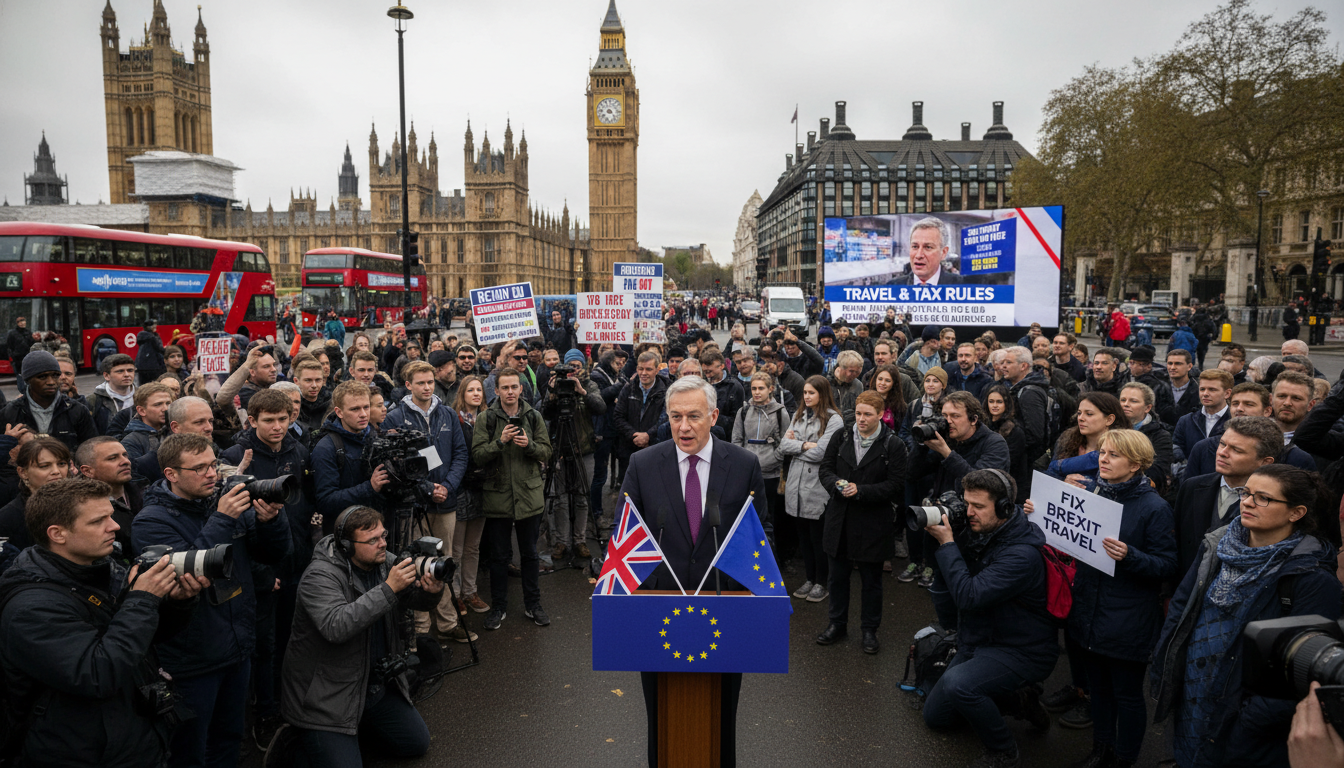
Brexit debate resurfaces as DJs, businesses and Labour leaders clash over EU ties
Brexit debate resurfaces in 2026, unsettling UK politics and small businesses as customs costs and leadership bids raise questions about returning to the EU.
Johnny Skates, a 66-year-old record stall owner and DJ, says post-Brexit customs rules have turned routine trips to perform in Europe into a fiscal headache, underscoring how the Brexit debate has moved from abstract politics to everyday costs for traders and cultural workers. His account in Lambeth, south London, coincides with renewed public and political discussion after heavy local election losses for the ruling Labour Party in early May 2026. As Labour figures argue over whether to press for closer ties with the European Union, small businesses and migrants report higher logistics and border expenses that are reshaping local views on the 2016 referendum.
DJ travel and trade friction
Johnny Skates says that declaring the value of records at borders is now unavoidable and that penalties follow when officials suspect goods are for sale rather than performance use. He describes a change from freer movement prior to the June 23, 2016, referendum to a system where carrying instruments, merchandise or even a prized vinyl can trigger duties or administrative delays. For itinerant performers and market traders, those added steps translate into extra cost, paperwork and uncertainty about whether a bag of records will clear customs on time.
Other vendors and shop workers report similar experiences at British borders, with some choosing to ship gear ahead or cut back on cross-border gigs to avoid complications. The practical burdens on individual traders have become part of a wider narrative that opponents and some former leave voters now cite when reassessing the consequences of leaving the EU.
Labour leadership and public repositioning
Prime Minister Keir Starmer has pledged to rebuild Britain’s relationship with Europe, casting his government’s foreign and trade policy as focused on “putting Britain at the heart of Europe,” a promise aimed at mending ties almost a decade after the 2016 vote. Several senior Labour politicians have since weighed in, reopening a debate within the party about whether the UK should aim for closer alignment with the EU or even discuss rejoining in the long term. The conversation has intensified amid leadership speculation following Labour’s May 2026 local election setbacks.
Wes Streeting, a former health secretary, described Brexit as a “catastrophic mistake” and argued publicly that rejoining the EU could help repair the economy and trade ties, while other figures in the party — including Culture Secretary Lisa Nandy and Deputy Prime Minister David Lammy — have been more cautious or reticent. That split reflects wider tensions in a party whose membership is largely pro-EU but whose leadership must navigate electorates exposed to varying views on immigration and economic policy.
Electoral shifts and the rise of Reform UK
The political environment is complicated by a growing challenge from Reform UK, which has surged in recent polling and local contests and is seen by many as the most likely beneficiary if a general election were held soon. Analysts observe that the EU would be unlikely to engage in serious talks about UK re-entry if anti-EU parties are leading polls ahead of the next scheduled general election in 2029. That calculation, they say, reduces the immediate feasibility of any swift move toward membership even as internal Labour debate intensifies.
Greater Manchester Mayor Andy Burnham has described Brexit as damaging, though he has stopped short of proposing a reversal, and polling by some research organisations indicates he could outperform Reform UK under certain leadership scenarios. The shifting dynamics are prompting strategists to warn that any serious push toward rejoining the EU would carry substantial political risk and uncertainty.
Local businesses report rising logistics costs
Retailers and small importers say transportation and administrative costs rose after the UK exited the EU, with higher fees for customs filings, delays at ports and increased compliance burdens. Noufal, a 29-year-old shop worker who moved from India four years ago, told reporters that delivery and transportation expenses climbed after Brexit and that employment prospects and cross-border opportunities had narrowed for some workers. For firms operating on tight margins, those increases can determine whether a route to market remains viable.
Economists who predicted trade frictions before the 2016 referendum say that while trade continued, the cumulative impact on living standards and business margins has been material. For individual businesses, the combination of higher logistics costs and new paperwork has reshaped supplier relationships and forced many to absorb or pass on additional charges to consumers.
Experts on the practical and political costs of rejoining
Jonathan Portes, a public policy specialist, has argued that the political context matters as much as economics: the EU would be reluctant to negotiate membership while UK politics remains volatile and anti-EU forces command notable support in some areas. He notes that some outcomes of Brexit — including shifts in migration patterns and pressure on living standards — have paradoxically bolstered parties that oppose rejoining, complicating any quick path back to the bloc.
Piers Ludlow, a historian of international relations, warns that a decision to seek EU membership would be slow, administratively complex and politically expensive at home, given how deeply Brexit shaped identities a decade ago. He says that the remain-and-leave divide left durable political scars and that rebuilding trust and negotiating terms would be a lengthy process even if domestic politics aligned behind a re-entry agenda.
The revival of the Brexit debate in 2026 has turned a referendum-era argument into a live policy challenge for politicians, traders and households alike, and any decision about Europe will require both deep domestic consensus and patient diplomacy with counterparts across the continent.
