
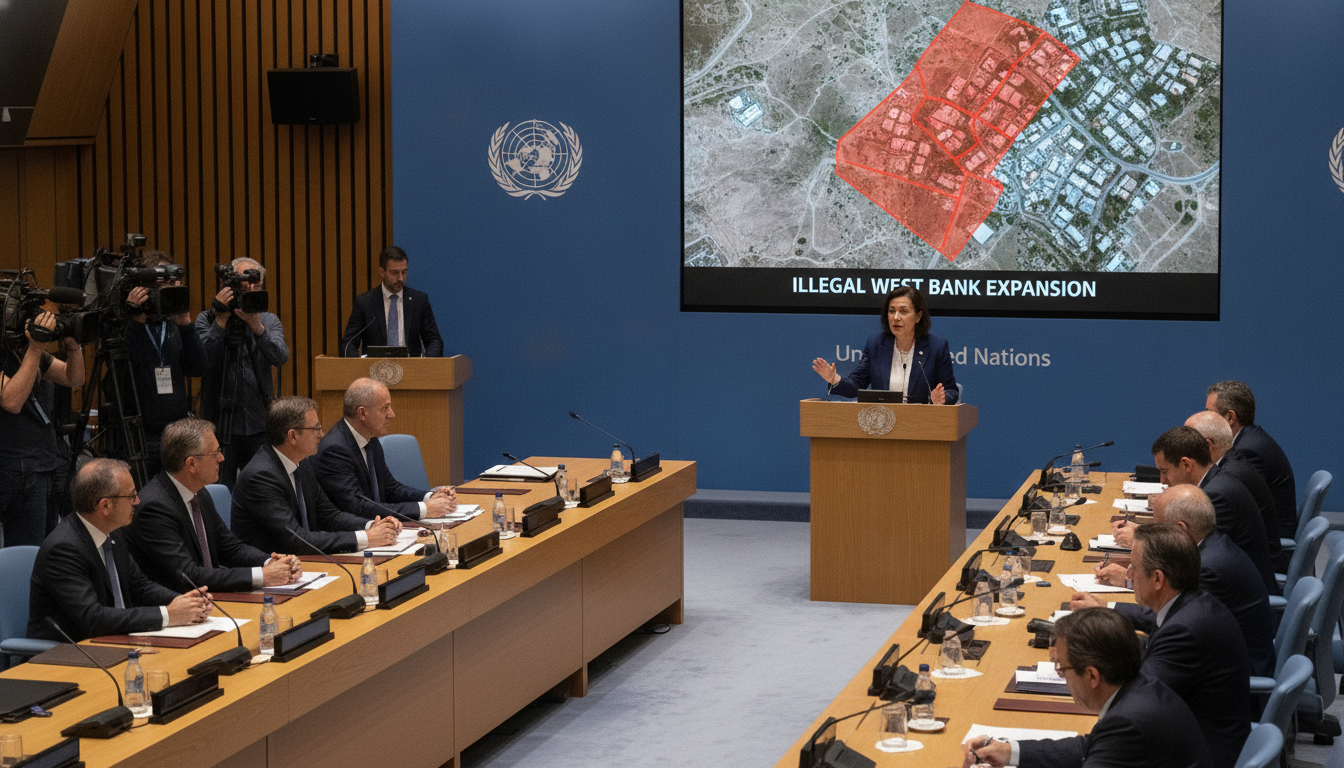
West Bank settlement surge fuels political scramble ahead of Israel October 2026 election
West Bank settlement surge before Israel’s October 2026 election prompts UN alarm over rising settler attacks and fast growing outposts in occupied territory.
As Israel heads into national elections scheduled for October 2026, a significant West Bank settlement surge has prompted warnings from the United Nations and intensified international concern. The UN issued an alert in late July 2026 that settler attacks and the establishment of new illegal outposts had reached record levels, a development that is reshaping the political landscape. Officials and analysts say the surge is tied to a concerted push by the settler movement and its political backers to solidify control in the occupied West Bank ahead of the vote.
UN issues warning about record settler attacks
In a statement issued in late July 2026, United Nations officials said attacks carried out by Israeli settlers and the erection of unlawful settlements and outposts rose sharply in recent weeks. The UN assessment described both the frequency and the severity of incidents as at an all time high compared with previous reporting periods. United Nations representatives linked the escalation to expanding infrastructure and increased coordination on the ground that critics say amounts to de facto annexation.
Approvals and new projects accelerate settlement expansion
Senior Israeli ministers have publicly framed recent approvals as routine planning, while critics say the measures are intended to entrench settlements. Defence Ministry figures cited at a late July 2026 political meeting claimed approval since 2022 of more than 100 new settlement locations and scores of associated farms and outposts. In August 2025, Finance Minister Bezalel Smotrich announced the revival of the E1 project near East Jerusalem, a step he described as effectively burying the idea of a Palestinian state.
Administrative changes lock in settler influence
Over the past three years, the government has shifted authority over parts of the West Bank from military administration to civilian agencies, a move that supporters say improves planning and critics say cements control. In 2023, the Settlements Administration was established inside the Defence Ministry and was formally embedded by legal measures in mid 2026. That embedding makes reversal of decisions more difficult and increases the influence of pro settlement officials in policy and permitting processes.
Electoral strategy drives sudden intensification
Political strategists say the settlement surge is intertwined with electoral calculations as parties on the hard right jockey for position ahead of October 2026. The Religious Zionist Party of Finance Minister Smotrich has been a leading voice for accelerated settlement, yet multiple opinion polls indicate the party may struggle to meet the parliamentary threshold. Analysts describe intensified settlement activity and public statements as a campaign to mobilize settler voters and to make the expansion irreversible before ballots are cast.
Prime ministerial calculus and coalition pressures
Prime Minister Benjamin Netanyahu faces competing pressures from his right wing allies and from a broader electorate that values security and economic stability. Observers note that Netanyahu’s need to preserve a political bloc, including hard right and ultra Orthodox partners, shapes his public responses to violence and settlement policy. Commentators at think tanks have said the prime minister has been cautious about alienating settlers while also managing the political expectations of other coalition components.
Surge translates into a severe human toll
The escalation on the ground has had immediate effects for Palestinian communities across the West Bank. Palestinian Authority monitoring bodies reported 2,256 incidents of violence in July 2026, including more than 1,400 incidents involving Israeli security forces and nearly 800 attributed to settlers, according to the PA commission. Rights groups have reported not only an increase in numbers but also greater brutality in attacks, and they say the participation of state security actors in some operations exacerbates the humanitarian impact.
Diplomatic and legal ramifications multiply
International legal authorities and diplomatic missions have reiterated that establishing settlements in occupied territory violates long standing international law, and the latest surge has prompted fresh calls for accountability. The UN warning in late July 2026 has been echoed by several governments and rights organisations urging restraint and adherence to legal obligations. As the campaign season progresses, diplomats say the international fallout could complicate Israel’s bilateral relations and future negotiations over the status of the West Bank.
The West Bank settlement surge is now a central factor in Israel’s October 2026 election campaign and in daily life across the occupied territory, reshaping political alliances and intensifying humanitarian concerns. As parties and leaders manoeuvre for votes, the situation on the ground is likely to remain volatile, with long term consequences for any prospects of a negotiated settlement.
