
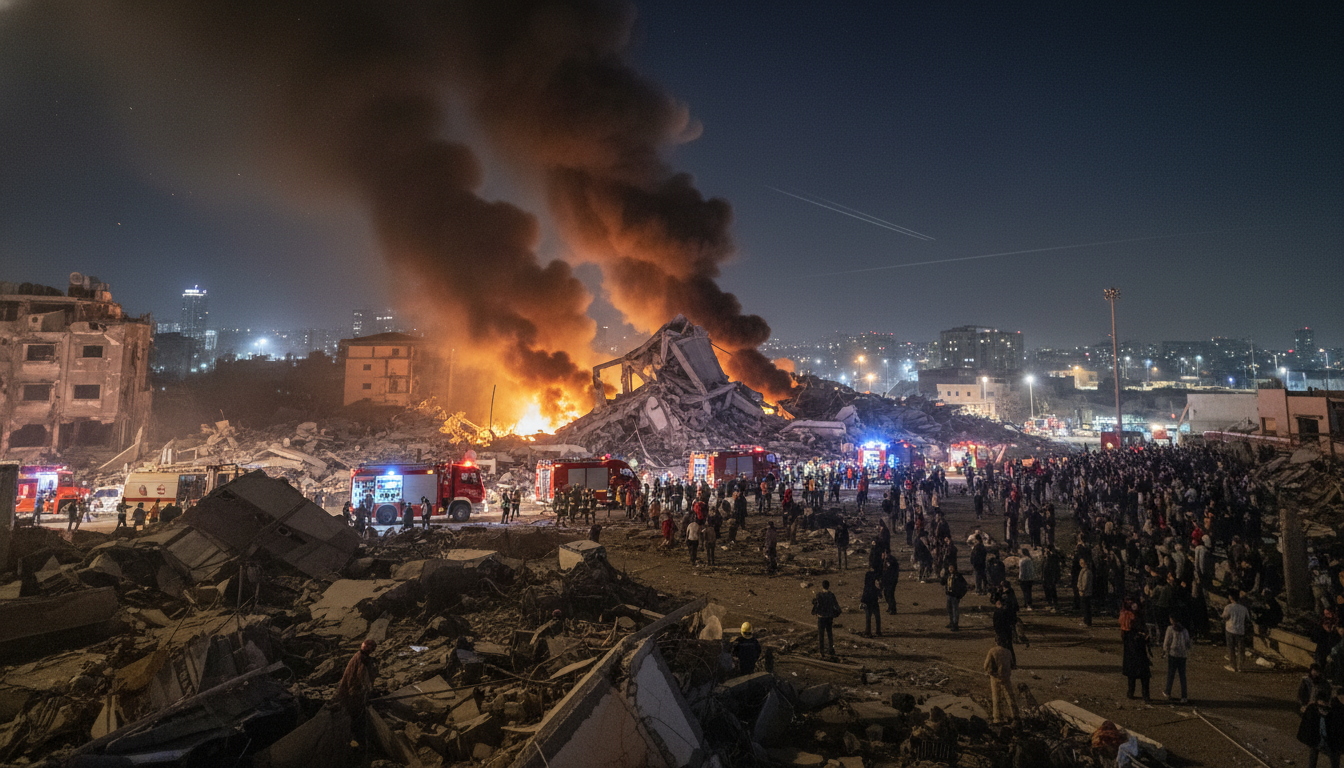
Israel-Lebanon conflict escalates as Israeli strikes hit Beirut’s southern suburbs
France urges UN emergency meeting as Israel-Lebanon conflict deepens; strikes on southern Beirut and a deeper Israeli incursion prompt civilian flight and regional alarm.
The Israel-Lebanon conflict intensified on Monday as Israeli forces struck the southern suburbs of Beirut, a Hezbollah stronghold, and expanded ground operations into Lebanese territory. Israeli officials said the strikes targeted what they described as military positions, while residents and aid workers reported mass evacuations and mounting civilian distress. International actors, including France and the European Union, called for urgent restraint as diplomatic efforts ramped up to prevent a wider regional conflagration.
Strikes ordered on Beirut’s southern suburbs
Israeli authorities announced strikes early Monday against sites in the southern suburbs of Beirut, citing repeated violations of ceasefires and attacks on Israeli communities. Military statements framed the operations as efforts to neutralize groups the government deems terrorist threats within the Hezbollah-dominated area. Local witnesses described explosions and an exodus of families carrying belongings by foot and vehicle, underscoring the immediate human impact of the raids.
Eyewitnesses and journalists reported long queues of residents leaving the southern suburbs with pillows and bags, seeking safety away from targeted neighborhoods. Hospitals and aid groups in Lebanon warned of growing pressure on medical facilities already strained by weeks of conflict. The Israeli government said the actions followed what it characterized as ongoing strikes and cross-border launches by Hezbollah fighters.
UN Security Council convened after French request
France requested an emergency meeting of the United Nations Security Council to address the latest escalation, saying nothing justifies a renewed major offensive in southern Lebanon. Diplomats said the session was called to press for de‑escalation and to discuss measures to protect civilians and preserve a fragile ceasefire posture. The European Union publicly urged Israel to halt further military escalation in Lebanon and to avoid actions that could broaden the war.
UN officials highlighted the diplomatic urgency as the fighting threatened to unravel weeks of stalled efforts to stabilize the border. International envoys pressed both sides to consider ceasefire arrangements, while noting the difficulty of negotiating terms amid continuing cross-border exchanges of fire.
Hezbollah strikes and cross-border exchanges continue
Hezbollah claimed responsibility for missile attacks on northern Israeli targets, including an assault near Tiberias, signaling the persistence of the group’s capability to strike deep into Israeli territory. The movement also continues to target positions in southern Lebanon, where Israeli forces have stepped up operations. Israel’s defense minister warned there would be no calm in Beirut without a cessation of Hezbollah violence, framing a halt to attacks as a precondition for reduced military pressure.
Analysts said the tit-for-tat dynamic between Israeli forces and Hezbollah risks escalating beyond localized exchanges, especially as both sides speak publicly of major operational shifts and territorial objectives. Military spokespeople on both sides have underlined that the current period represents one of the most intense phases of fighting since the 2006 war.
Capture of Beaufort marks deeper Israeli advance
Israeli officials announced the capture of the Beaufort fortress in the south of Lebanon, describing it as a strategic gain that opens routes for further advances toward the Nabatieh region. The medieval citadel, long recognized for its historical value, sits on high ground overlooking parts of southern Lebanon and northern Israel. Military analysts said control of Beaufort provides a tactical vantage point and may facilitate ground movements deeper into Lebanese territory.
The operation to take the fortress has symbolic as well as military implications, contributing to a narrative of momentum that Israeli leaders used to justify expanding their incursion. For Lebanon, the loss of such a site and the prospect of a widened ground campaign has fueled alarm among civilians and political leaders alike.
Human toll and mass displacement reported in Lebanon
Lebanese authorities say the conflict has produced thousands of casualties and displaced more than a million people since early March, when hostilities intensified after cross-border attacks. Major previous strikes in April and May resulted in significant death tolls, and aid agencies warn that repeated bombardments have devastated civilian infrastructure. Hospitals and humanitarian corridors are under strain, and residents in Beirut’s southern suburbs reported immediate flight from their homes following Monday’s strikes.
The conflict’s human cost extends beyond fatalities, with widespread displacement and damage to schools, clinics, and utilities threatening longer-term recovery. Relief organizations have called for unimpeded access to deliver food, water, and medical supplies to affected communities across southern Lebanon and the Beirut outskirts.
Diplomatic pressure from Tehran, Washington and Brussels
Iran, engaged in parallel negotiations aimed at shaping the broader regional dynamics, reiterated that any durable agreement to halt fighting would hinge on a ceasefire in Lebanon. Washington and other Western capitals signaled intense diplomatic activity, with U.S. officials pressing both sides to step back from further escalation while exploring frameworks that might curb hostilities. The European Union urged restraint and renewed calls for protection of civilians and respect for international law.
Lebanese political leaders condemned the latest operations and described them as aggressive, while Israeli officials insisted their actions were defensive measures against a persistent threat. Diplomatic channels in Washington, Paris and Brussels were reported to be working simultaneously to contain the crisis and to explore possible terms for reducing violence along the border.
International observers warned that without an immediate reduction in hostilities, the Israel-Lebanon conflict could broaden, drawing in regional actors and complicating separate diplomatic efforts to stabilize the wider Middle East. Continued fighting risks exacerbating an already dire humanitarian situation across southern Lebanon and parts of Beirut.
As military operations continued and diplomats convened, civilians remained the most vulnerable, moving to seek safety while international mediators sought any opening to halt the fighting and prevent further regional spillover.
