
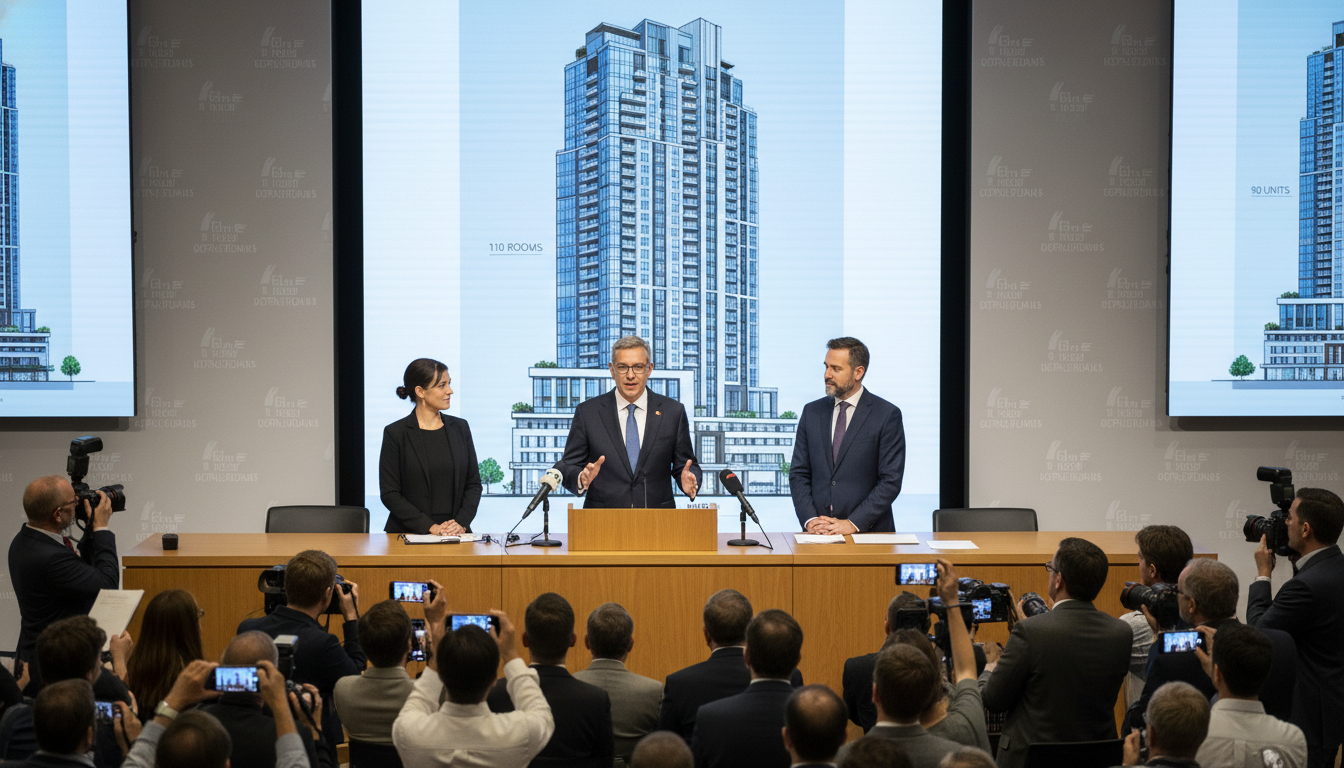
Developers propose 23-storey mixed-use development in underused office tower
Developers plan to convert a vacant office building into a 23-storey, 230,000 sq.ft mixed-use development with 110 hotel rooms, 90 units and public dining.
The developers behind a proposal to transform an underused office building say the site would be reborn as a 23-storey mixed-use development combining hotel, residential and hospitality space. The applicants — identified as Petiot with partners Maggie Bowles and Myles Winnicki — envision a roughly 230,000 sq.ft project split almost evenly between hotel and housing. The plan calls for restaurants and bars on the ground floor, the second level and at the building’s uppermost floor, creating a layered public offering.
Developers outline 23-storey proposal
Petiot and his partners presented a concept that would replace underused office space with a taller, denser structure rising to 23 storeys. The proposal frames the site’s conversion as a reuse strategy to meet market demand for both short-stay accommodation and long-term units. Developers say the scale is intended to optimize a central urban lot while activating multiple street-facing levels.
Project composition and floor area
The scheme totals about 230,000 square feet, with the gross floor area divided roughly 50-50 between hospitality and residential uses. That balance is intended to support both transient visitors and local residents while generating continuous activity throughout the day. The design proposes public-facing food and beverage spaces at key building levels to attract street-level foot traffic and provide animation to the surrounding block.
Hotel and residential breakdown
Under the plan the hotel component would include approximately 110 rooms configured for a mix of short and medium-length stays. The residential portion would deliver around 90 units, ranging from compact apartments intended for one- and two-person households to larger layouts for small families. Developers say the two programs are complementary and that shared building services would allow operational efficiencies while maintaining distinct access points where appropriate.
Dining and amenity programming
Hospitality features are concentrated on the ground and second floors, with an additional bar or restaurant proposed at the top of the tower to capitalize on views. The layout anticipates a mix of casual and more formal dining options, supporting both guests and residents as well as attracting outside visitors. Amenities for residents and guests could include fitness and lounge spaces, though final programming would depend on design refinements and municipal requirements.
Zoning, approvals and projected timeline
The proponents have described the submission as a redevelopment concept that will require municipal review, zoning adjustments and permitting before construction can proceed. No formal approval has been reported at this stage, and the developers have indicated that public consultation and regulatory steps will guide revisions to the plan. If the project proceeds through city processes on a typical schedule, proponents expect a multi‑stage review that could take several months to a year before a decision is reached.
Economic and neighbourhood implications
Supporters argue the conversion will repurpose underutilized office inventory and generate permanent and temporary jobs through construction, hospitality operations and retail activity. Neighbours and community groups will likely scrutinize impacts such as shadowing, traffic and noise, particularly given the proposed hospitality programming on multiple levels. The project’s 50-50 split between hotel and residential space aims to address both tourism accommodation gaps and housing demand in the area.
The developers say further design work will follow any formal application, including refined architectural drawings, transportation assessments and community engagement sessions. The proposal positions the site as a mixed-use development that could activate a dormant parcel, but its future will hinge on municipal approvals and local feedback.
