
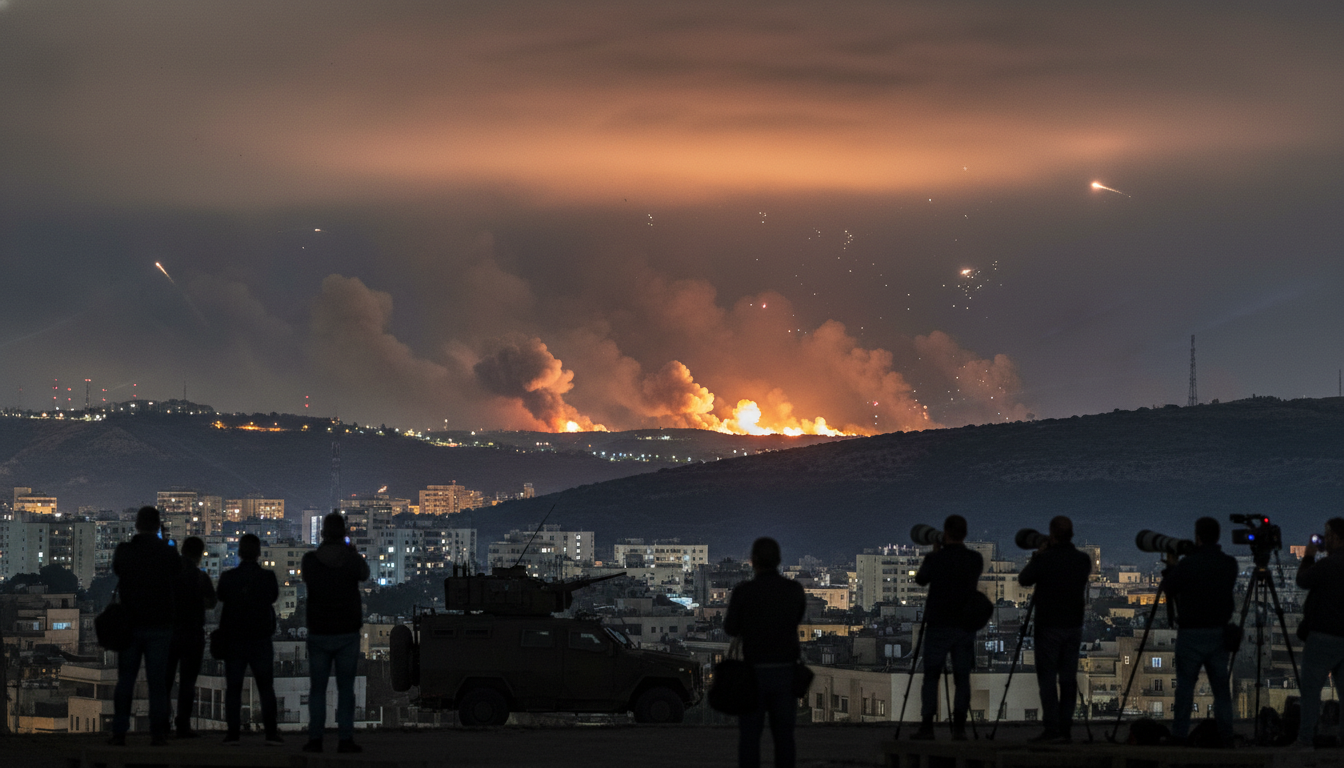
Israel launches fresh strikes on Lebanon, hitting southern outskirts of Beirut
Israeli strikes on Lebanon hit southern outskirts of Beirut and Hezbollah sites in the south on May 28, 2026, the first attacks near Beirut in three weeks.
The Israeli military launched airstrikes on the southern outskirts of Beirut on Thursday, marking the first strikes close to the Lebanese capital in three weeks and signaling a renewed phase of cross-border hostilities. Israeli authorities said the operation also targeted militia infrastructure and positions in southern Lebanon, identifying Hezbollah as the primary focus of the action. Details on casualties and the scale of damage were not immediately released by either side as tensions along the Israel-Lebanon frontier rose anew. International observers and regional capitals voiced concern about the potential for wider escalation.
Airstrikes near Beirut mark renewed escalation
The strikes on May 28 occurred after a lull in major strikes around the capital that lasted roughly three weeks, according to military accounts. Israeli officials framed the operation as a precision response to threats originating from southern Lebanon, while noting the strikes were limited in scope.
Analysts say the choice to strike near Beirut underscores a shift in operational reach and intent, sending a message to both domestic and regional audiences. Military spokespeople emphasized they aimed to degrade specific capabilities rather than to trigger broad urban fighting.
Israel identifies Hezbollah sites as targets
The Israeli military characterized the operation as directed at Hezbollah infrastructure in southern Lebanon, saying the group’s positions and weapon stockpiles were primary objectives. The military did not provide detailed maps or a full inventory of damaged targets in its initial statements.
Hezbollah, for its part, has in past exchanges denied responsibility for many cross-border incidents while also warning that attacks on Lebanese territory would be met with retaliation. On Thursday there were no immediate comprehensive statements from the group confirming the extent of damage to its facilities.
Beirut outskirts struck after three-week pause
Residents and local reporters in Beirut described explosions and aircraft activity concentrated on the city’s southern periphery, an area that has periodically been affected during past flare-ups. The strikes represented the first major Israeli action so close to Beirut in roughly three weeks, ending a short period of relative quiet.
Local authorities had yet to publish a consolidated casualty list when Israeli forces released their initial account, and hospitals in the greater Beirut area were reported to be monitoring for potential wounded. Emergency services in southern neighborhoods were placed on alert as residents sought shelter amid renewed fear of instability.
Civilian impact and damage assessments
Early reports from the scene indicated infrastructural damage in some neighborhoods near the strikes, including shattered windows and debris in public streets, though a full damage assessment was pending. Aid groups cautioned that repeated cycles of attack and counterattack risked deepening humanitarian strains already present in Lebanon.
Humanitarian agencies monitoring the situation urged restraint and called for unfettered access to affected communities, noting that even limited strikes can have disproportionate effects on civilian life, critical services and displacement. The longer the exchange of hostilities continues, the greater the risk of spillover into wider civilian suffering.
Regional and international reactions
Capitals across the region and beyond expressed concern about the resumption of significant strikes near Beirut and the potential for rapid escalation between Israel and Lebanese actors. Diplomatic actors urged both sides to avoid steps that could broaden the conflict and to pursue restraint through established channels.
United Nations officials typically call for de-escalation in such episodes to prevent further civilian harm, and international mediators have historically pressured both parties to respect ceasefire lines. On Thursday, several foreign ministries issued statements urging immediate restraint and the protection of civilians.
Security implications for Lebanon and Israel
Security analysts warned that renewed strikes near Beirut could complicate internal Lebanese politics and amplify pressure on Lebanese institutions struggling with economic and governance challenges. For Israel, targeting sites near Beirut signals a willingness to act across a wider geographic scope to disrupt perceived threats.
Both sides face a strategic calculation: limited operations can achieve short-term tactical goals but also risk creating cycles of retaliation that are harder to control. Military planners in the region will be watching for patterns in target selection and any changes in rules of engagement that might indicate a shift toward broader confrontations.
As investigations and assessments continue, the immediate priorities remain clarity on civilian impact and confirmation of damage to the sites cited by Israel. Independent verification of the strikes’ effects will be important for understanding whether this episode is an isolated incident or the start of a sustained campaign of cross-border attacks.
The coming days will likely determine whether diplomatic channels can reinstate a measure of calm or whether the exchanges will harden into a prolonged security crisis along the Israel-Lebanon frontier.
