
Hydro-Québec Churchill Falls documents ordered released after years of redactions
Commission orders Hydro-Québec to disclose Churchill Falls documents, ending long redactions and renewing scrutiny of the 1969 power contract and stalled talks.
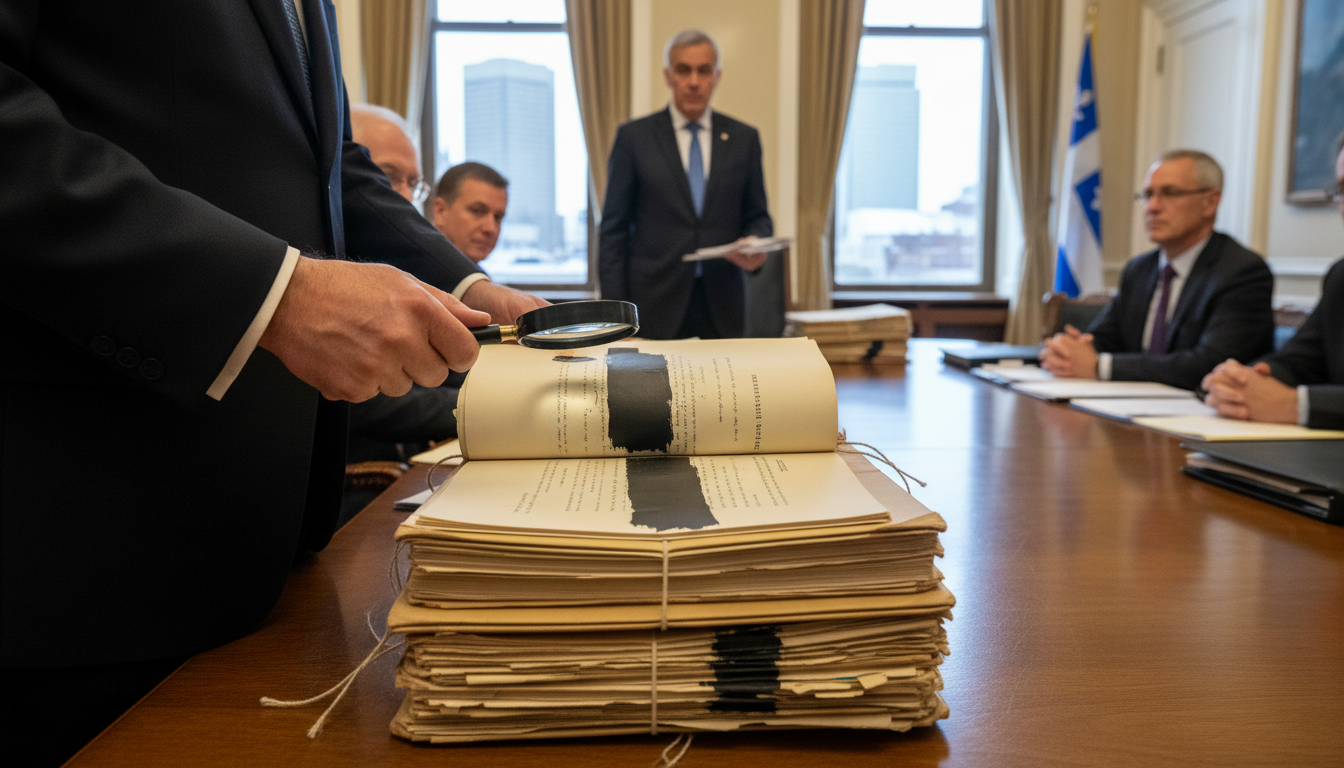
Hydro-Québec has been ordered to provide decades-old correspondence related to a proposed aluminum smelter and Churchill Falls after an administrative tribunal rejected the crown corporation’s bid to keep the records secret. The ruling follows a public-access request by ÉNAP researcher Marie-Claude Prémont and a multi-year legal contest over redacted pages dating to the 1960s. The dispute has resurfaced questions about the 1969 Churchill Falls power contract and its role in negotiations between Quebec and Newfoundland and Labrador.
Researcher challenges redactions under access law
Marie-Claude Prémont first sought the records in 2022 while researching Quebec’s dealings with a French aluminum company that considered locating a smelter in Sept-Îles.
She invoked Quebec’s access-to-information law to request internal Hydro-Québec correspondence from 1967 that referenced electricity arrangements tied to the proposed project.
Hydro-Québec released documents with numerous censored passages, prompting Prémont to appeal the redactions and bring the matter before the Commission d’accès à l’information du Québec.
Tribunal hearing found redactions unjustified
Hearings before the commission began in late 2023 under the adjudication of Normand Boucher.
In a decision rendered in July 2024, the tribunal concluded that Hydro-Québec’s redactions could not be justified as commercially sensitive given the age and historical character of the material.
The commission ordered that the unredacted documents be provided to Prémont, rejecting the crown utility’s arguments that disclosure would harm ongoing provincial negotiations.
Hydro-Québec cited negotiation risks with Newfoundland and Labrador
Hydro-Québec argued to commissioners that releasing certain passages would reveal negotiation strategies and its pricing “modus operandi,” potentially undermining talks with Newfoundland and Labrador.
Company lawyers and interim legal director Stéphanie Assouline told the commission the records referenced an intergovernmental letter of intent that led to the 1969 contract now at the centre of attempts to renegotiate or terminate terms.
Those representations formed the core of Hydro-Québec’s claim that even half-century-old documents could affect sensitive discussions over Churchill Falls power.
Court noted 1969 contract still shapes energy landscape
The 1969 agreement gives Hydro-Québec the right to purchase the bulk of electricity produced at the Churchill Falls facility at rates that have been widely criticized as well below market value.
That contract remains in force for power deliveries through 2041 and continues to influence regional energy supplies; the Churchill Falls complex supplies a significant share of Quebec’s electricity.
The tribunal observed that commentary about the interprovincial letter of intent should not be suppressed from the historical record simply because the agreement remains a matter of political negotiation.
Company sought removal of commission comments and destruction of copies
After the commission’s ruling, Hydro-Québec asked the body to expunge parts of the decision that discussed its negotiations with Newfoundland and Labrador, and even sought orders that any existing copies of the decision held by Prémont or counsel be destroyed.
The commission rejected those requests in an October 2024 decision, reaffirming that the adjudicative record must remain available to the public.
Hydro-Québec subsequently told reporters it no longer believed disclosure would compromise its negotiating position, though it did not immediately publish the unredacted files to its standard access-to-information repository.
Public interest groups and journalists push for disclosure
Brent Jolly, president of the Canadian Association of Journalists, criticized Hydro-Québec’s effort to withhold the material as disproportionate and an attempt to control public understanding of a pivotal chapter in Canadian energy history.
Journalists and historians maintain that correspondence from the 1960s is properly treated as archival evidence that informs how the Churchill Falls deal was reached and how it continues to affect policy debates.
Prémont has offered to show the unredacted material in person to news organizations, while continuing to resist sharing the final copies more broadly until formal release mechanisms are completed.
Negotiations between Quebec and Newfoundland and Labrador aimed at modifying or replacing the 1969 framework remain paused, according to the commission’s decisions, and provincial governments have signalled further study of an advisory report produced by an expert panel late in 2024. The unredacted correspondence is now ordered released, and its publication is poised to sharpen public scrutiny of both historical decisions and current talks over the Churchill Falls contract.
