
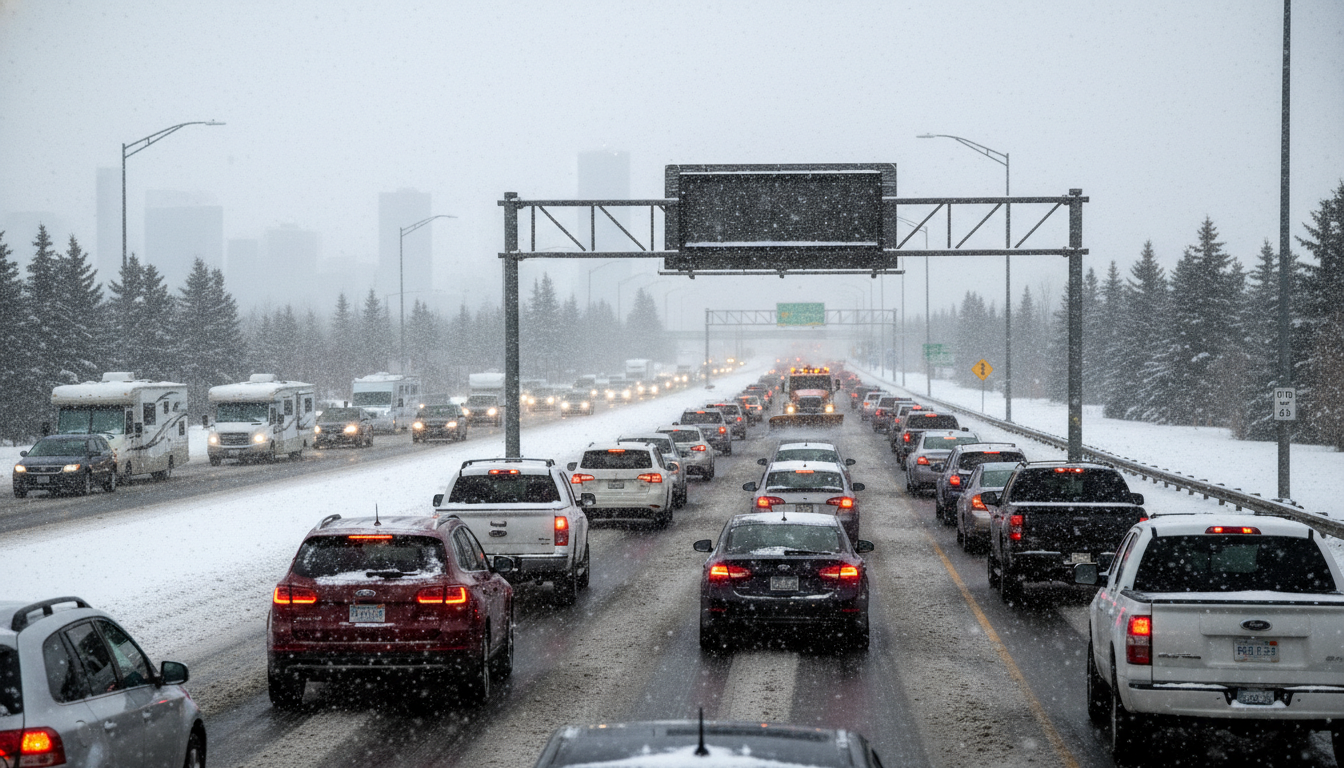
Environment Canada Warns of May Long Weekend Snowfall Threatening Calgary Travel
Environment Canada warns May long weekend snowfall may reach Calgary and mountain areas, with up to 20 cm in high terrain and travel impacts on Trans-Canada
Calgary-area residents and travellers have been warned to prepare for a May long weekend snowfall that could affect travel and outdoor plans across the Rockies, foothills and as far east as Calgary. Environment Canada issued the alert Thursday, saying the system could bring its heaviest snow on Saturday and produce uncertain but locally significant accumulations. The forecast raises concerns for recreational visitors and commuters alike during one of the region’s traditionally busy holiday weekends.
Environment Canada forecast and timing
Environment Canada’s statement says snow will begin in the mountains and foothills late Thursday and could extend into the Calgary area by Saturday morning. Meteorologists emphasized uncertainty in exact amounts but noted higher terrain and routes along the Trans-Canada Highway west of Calgary are most likely to see the largest totals. The agency singled out Saturday as the peak day for snowfall, with snow persisting through much of the weekend in mountain-adjacent zones.
Expected snowfall amounts and geographic spread
Forecasters estimate up to 20 centimetres of snow is possible in higher terrain, with lesser but still impactful amounts across lower foothills and valley corridors. The phrase “up to 20 cm” reflects localized variability that depends on elevation and storm track, meaning some valley towns may see a few centimetres while passes and ridgelines pick up deeper totals. The system’s eastward reach could bring wet, accumulating snow to parts of Calgary if the core of the storm shifts slightly farther inland.
Impacts on highways and long weekend travel
Authorities are cautioning drivers that travel along the Trans-Canada Highway west of Calgary could be hazardous, particularly during Saturday’s expected heaviest snowfall. Reduced visibility, slippery surfaces and the potential for sudden winter-like conditions are primary concerns for commercial and recreational traffic. Transportation officials generally advise checking road reports, planning for longer travel times and avoiding non-essential trips during peak snowfall hours.
Risks to mountain communities and parks
Mountain and foothill communities that depend on seasonal tourism will face disrupted plans as trails, access roads and recreational facilities contend with snow and possible closures. Agencies responsible for national and provincial parks typically assess trail safety and vehicle access as conditions evolve, and some trailheads or low-elevation routes may be temporarily restricted. Residents in these communities should be ready for short-notice service changes and prepare for winter conditions despite the holiday timing.
Preparation advice for drivers and outdoor users
Drivers should ensure vehicles are equipped for winter conditions, including proper tires, emergency kits and a charged phone, and should plan extra travel time. Motorists travelling through passes are advised to carry chains where required and to reduce speed to account for slick roads and variable visibility. Hikers, campers and other outdoor enthusiasts should monitor park advisories, carry waterproof and warm gear, and consider postponing exposed backcountry activities until conditions stabilize.
What to watch for through the weekend
The immediate variables to watch are the storm’s exact track and overnight temperature profiles, both of which will determine whether snow melts on contact or accumulates on roadways and infrastructure. If temperatures remain near or below freezing at higher elevations, surfaces are likely to retain snow, increasing the window of travel disruption. Environment Canada updates and local road-service bulletins will provide the most current information as the system approaches.
Municipal and provincial emergency services recommend keeping informed through official channels and are standing by to respond to weather-related incidents. Travellers and residents should check the latest forecasts before departing and be prepared to alter plans if conditions deteriorate.
Residents and visitors planning to travel during the May long weekend are urged to monitor Environment Canada advisories, follow guidance from transportation authorities, and prioritize safety when deciding whether to proceed with holiday journeys.
