
Huawei Shanghai R&D campus blends Swiss shuttle, European facades and a Soviet-style tower
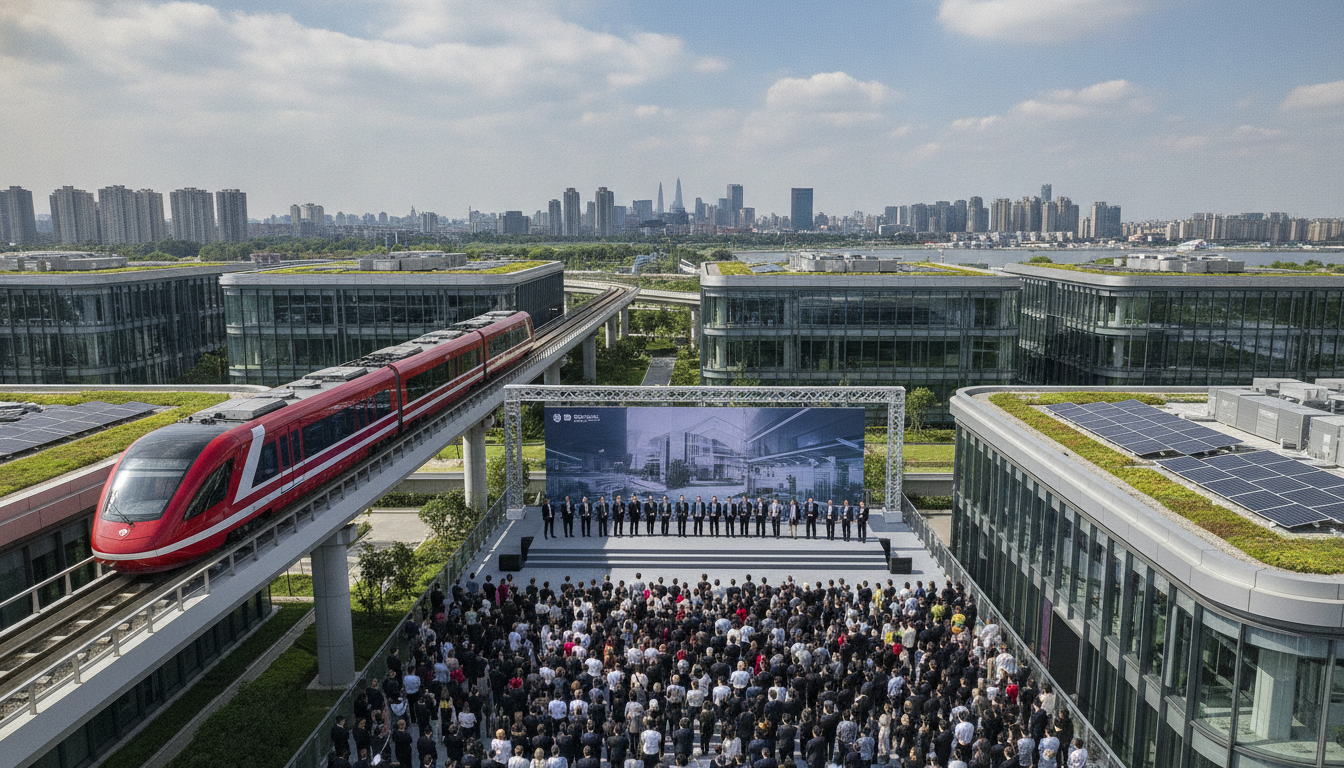
Huawei’s Shanghai R&D campus blends international architecture with a Swiss-style shuttle train and integrated employee transit across the site, public plazas.
Campus character and first impressions
The Huawei Shanghai R&D campus presents an eclectic mix of architectural motifs that contrast with the surrounding urban landscape. Visitors encounter a recreation of an Austrian castle, a tower evoking Soviet-era massing, and a bright red Swiss-style shuttle that circulates through the site. The shuttle operates at frequent intervals and connects core office clusters with a central hub known on-site as the "Central Station" and a secondary stop called "Watertown." The overall effect is both theatrical and functional, designed to guide flows of people while establishing a distinctive campus identity.
On-site transit and employee circulation
A red shuttle train runs minute by minute around the campus, ferrying staff between research buildings and communal areas. The vehicle links immediate workspaces with the Central Station and Watertown, creating short, scheduled hops that reduce pedestrian congestion. Transit pathways are integrated with plazas and green spaces, allowing quick access from rail stops into building entrances without long surface walks. The arrangement reflects an emphasis on efficient, sheltered movement for large numbers of R&D employees within a compact site.
Architectural choices and symbolism
The campus architecture deliberately borrows European and historic references to create a varied streetscape for employees and visitors. Replicated facades and stylized volumes introduce recognizable visual anchors rather than uniform tower blocks. The presence of a Soviet-style tower provides a counterpoint to the smaller-scale, European-inspired elements and helps articulate the campus skyline. Design choices appear aimed at producing visual diversity and wayfinding cues, rather than conforming to a single corporate aesthetic.
Workspace layout and research functions
Interiors are organized around nodes served by the campus shuttle and the Central Station, with laboratories, offices and collaborative spaces positioned for easy interconnection. The distribution suggests a campus model that prioritizes interdisciplinary mobility, enabling engineers and scientists to move quickly between teams. Common amenities and meeting hubs are sited near major transit stops to concentrate interaction points and informal exchange. This physical layout supports a research-and-development culture that values rapid iteration and cross-team collaboration.
Employee amenities and public spaces
Landscaped plazas and pedestrian routes line the shuttle corridor, offering outdoor areas for breaks and informal gatherings. The campus plan emphasizes both covered transit and open public spaces, blending circulation with places for rest and small events. Facilities around Central Station appear intended to serve as focal points for company life, hosting dining, meeting and exhibition functions. The mix of enclosed and open amenities aims to balance concentrated research work with moments of respite and social connection.
Context within Shanghai and corporate strategy
Positioned in a major Chinese metropolis, the campus contributes to Shanghai’s growing roster of corporate R&D hubs while reflecting Huawei’s continued investment in on-site research infrastructure. The visual distinctiveness of the buildings and the internal shuttle system make the campus memorable in a cityscape often dominated by glass towers. For the company, the project appears to be part of a broader effort to craft workplaces that attract talent and facilitate close collaboration among technical teams. The design and mobility features underscore a strategy of creating self-contained environments that reduce friction in everyday research activity.
Logistics, security and operational considerations
Operating a frequent shuttle loop and maintaining varied architectural facades create operational demands for maintenance, scheduling and crowd management. Security and access control are likely concentrated at transit hubs and building thresholds to ensure protected research spaces while permitting flow in public plazas. Coordination between facilities teams and research managers is essential to keep transit timings aligned with shift patterns and meeting schedules. These practical considerations shape how the campus functions day to day and influence its long-term sustainability.
The Shanghai R&D campus combines theatrical architecture with practical transit to shape daily life for researchers and staff, using built form and movement to encourage collaboration and ease of access across a dense site.
