
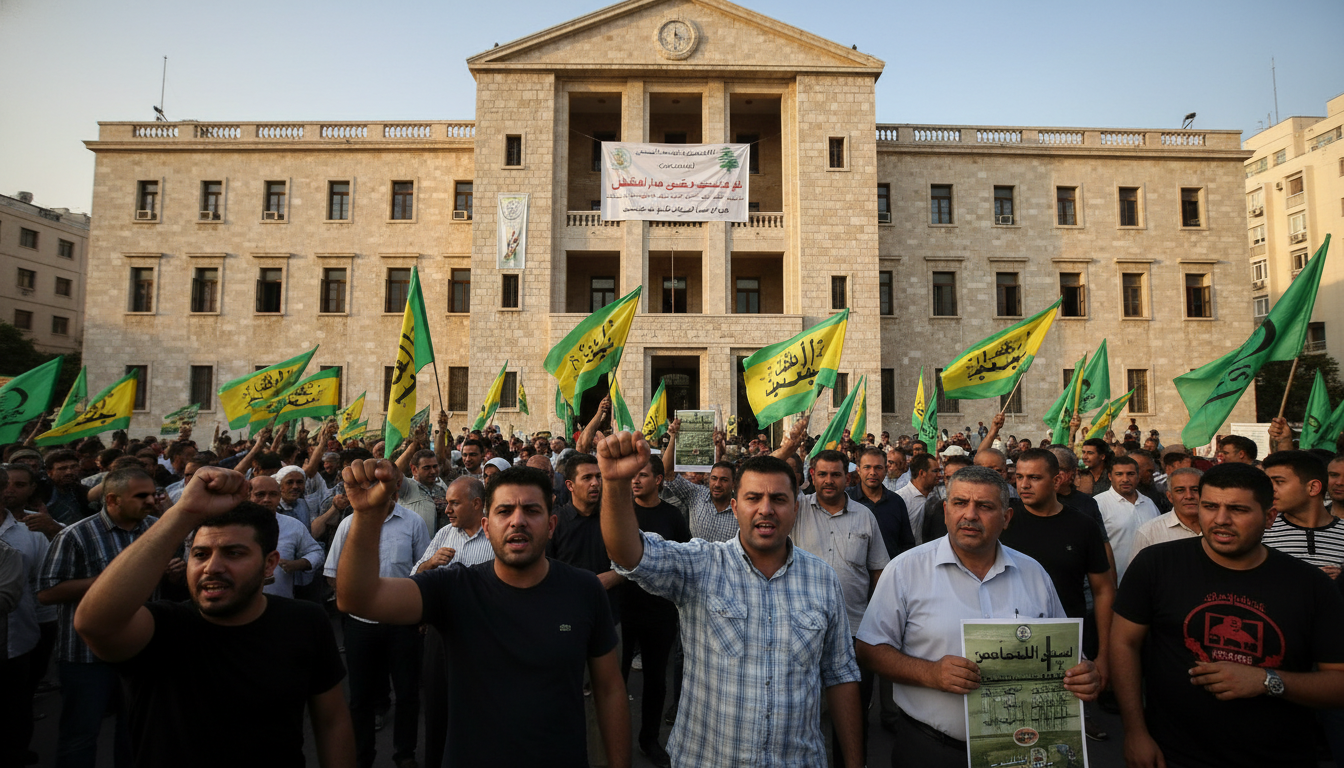
Hezbollah rejects Washington ceasefire, demands Israeli withdrawal and vows continued attacks
Hezbollah rejects U.S.-brokered ceasefire announced in Washington, demanding full Israeli withdrawal and warning of continued attacks as talks falter.
Hezbollah rejects Washington ceasefire
Hezbollah leader Naim Qassem on Thursday publicly rejected a ceasefire agreement announced in Washington between Israel and the Lebanese government, calling the deal unacceptable without an Israeli withdrawal.
Qassem said the proposal would amount to "surrender" for his movement and insisted any truce must include the withdrawal of Israeli forces from southern Lebanon. (theprint.in)
Terms of the U.S.-brokered deal
The United States said the agreement reached at the State Department would be implemented only if Hezbollah halted fire and evacuated operatives from areas south of the Litani River, and if the Lebanese army took control of designated "pilot" security zones.
The joint statement also left open details about how those security zones would be established and how long transitional arrangements would last. (apnews.com)
Qassem calls agreement ‘humiliating’ and demands full withdrawal
In a televised written statement read on state-aligned channels, Qassem described the negotiations as "absurd, humiliating and insulting" and warned that the group would not accept terms he said served Israel’s objectives.
He emphasized that northern Israel would not be secure while towns and villages in southern Lebanon remained under attack, framing withdrawal as a precondition for any lasting calm. (theprint.in)
Fighting persists: strikes, soldier and UN peacekeeper deaths
Despite the Washington announcement, violence continued across the border, with Israeli air and artillery strikes and ongoing exchanges between Israeli forces and Hezbollah units.
Local authorities and journalists reported multiple civilian casualties in southern Lebanon and confirmed that a U.N. peacekeeper was killed in a mortar attack, while Israel reported a soldier killed in combat. (apnews.com)
Regional implications and Iran’s involvement
Diplomacy aimed at wider stabilization faces another hurdle: Tehran has made clear any regional deal must include Lebanon, insisting Israeli operations there end as part of a broader settlement.
Allied groups in the region, including movements in Yemen, have signalled coordination with Hezbollah, raising concerns among diplomats that a Lebanon agreement alone may not halt wider escalation. (theprint.in)
Lebanese government response and military deployments
Beirut’s government, which took part in the Washington talks, said it would press ahead with implementing the agreement even as it awaited Hezbollah’s formal reply through intermediaries.
Prime Minister Nawaf Salam announced plans to deploy the Lebanese army in selected southern "pilot" zones, a step intended to displace armed groups from areas close to the border and create conditions for a broader ceasefire. (washingtonpost.com)
The immediate outlook remains uncertain: the U.S.-brokered text depends on compliance by a powerful non-state actor that has rejected the terms, while Israeli officials have said they will continue operations until the threat from Hezbollah is neutralized.
Diplomats and analysts warn that without credible verification mechanisms and clear timelines for withdrawal and Lebanese army deployment, any agreement risks remaining on paper while fighting continues on the ground.
