
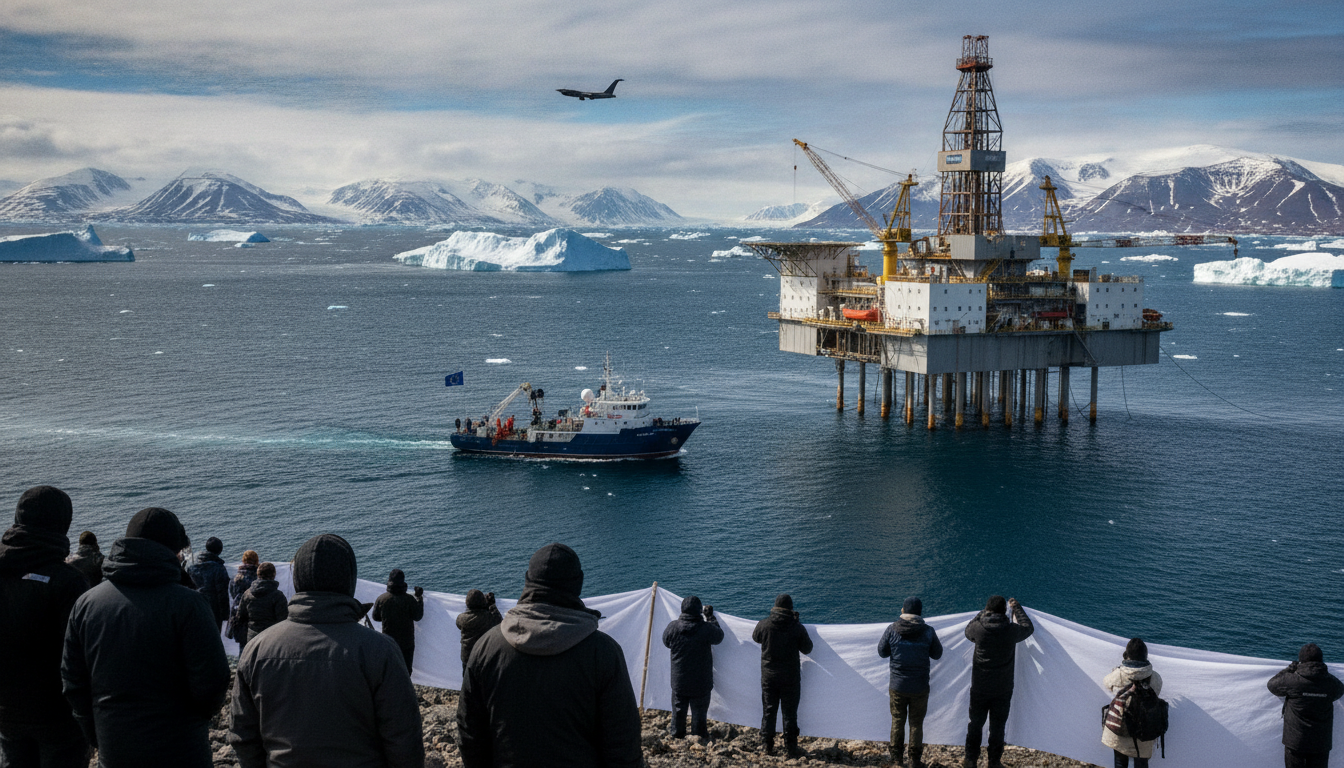
Greenland oil drilling project raises environmental, legal and geopolitical alarms
Greenland oil drilling project by Greenland Energy prompts environmental and legal concerns; Canadian suppliers, Dr. Phil ties and local opposition slow timeline.
The Greenland oil drilling project proposed by Texas-based Greenland Energy and its British partner 80 Mile has reignited environmental, legal and geopolitical debate over exploratory activity in Jameson Land. The company plans to drill two exploratory wells to test claims that the basin may hold commercially viable crude, a proposal that has drawn scrutiny from local leaders, researchers and national authorities. The word “Greenland” has become a flashpoint in diplomatic discussions after recent public endorsements by U.S. figures and the involvement of Canadian contractors.
Greenland Energy and 80 Mile plan Jameson Land wells
Greenland Energy, formed in 2025, entered into an agreement with 80 Mile to pursue exploration in the remote Jameson Land field on eastern Greenland. The joint plan would see Greenland Energy hold a 70 percent interest after raising roughly US$70 million through a public offering in April 2026. Company executives have described the work as limited, focused on two exploratory boreholes to confirm resource estimates.
The firms estimate substantial potential resources in the area and have compared expected crude quality to that found in the Black Sea. Greenland Energy says the program would follow applicable rules and timelines, but opponents note that any move to exploit the resource would require considerably more approvals.
Permits, moratorium and legal status
Permits covering parts of Jameson Land were originally issued between 2014 and 2018 to White Flame Energy A/S, later acquired by 80 Mile, and remain valid through the end of 2028. Greenland’s government put a formal moratorium on new oil and gas licensing in 2021, but it has clarified that previously granted rights are still legally in force. Officials have warned that unilateral revocation of those permits could amount to expropriation.
Even with legal title, the project must proceed through environmental and social impact assessments and public consultations before drilling can begin. Greenland’s government has repeatedly reminded promoters that transport and field operations cannot start until all regulatory clearances are secured.
Ecological concerns in Jameson Land
Scientists warn Jameson Land contains fragile wetlands and species found nowhere else, raising conservation alarms if exploratory drilling proceeds. Mikaa Blugeon-Mered, a senior researcher at the Hydrogen Research Institute at the University of Quebec at Trois-Rivières, has highlighted the presence of unique flora and fauna and urged caution. Environmental groups and local residents say the landscape’s ecological sensitivity makes any industrial activity high risk.
Supporters of the project counter that modern drilling techniques and stringent mitigation measures can limit environmental damage, but critics argue that the sheer remoteness and lack of infrastructure magnify risks. The proposed exploratory workforce of about 50 people, for example, would represent a significant population influx relative to the nearest village.
Political ties and U.S. endorsements
The Greenland oil drilling project has taken on a political dimension after public promotional ties to high-profile U.S. figures. Greenland Energy has engaged Philip McGraw, known as Dr. Phil, to help promote the venture while producing a documentary that frames the area as “the last oil frontier.” Company leaders and Dr. Phil have echoed geopolitical language about competition with other powers, a line that mirrors previous U.S. political commentary about Greenland.
Roderick McIllree, chief executive of 80 Mile, has denied that the project is driven by political motives, but the connection to prominent U.S. backers has stoked concerns about external influence. Recent statements from U.S. political figures claiming Greenland could produce large-scale volumes of oil have further amplified debate about the strategic implications of development.
Canadian companies contracted for equipment and logistics
Two Canadian firms have been named among service providers for the proposed exploration program, drawing attention at home. Calgary-based Stampede Drilling reportedly received CA$4 million to adapt a drilling platform for Greenland’s extreme weather conditions, while Quebec-based DesGagnés was named as the intended marine transporter for equipment out of Montreal. Both companies have issued statements that no equipment has yet been moved and that no transport will occur until permits are in place.
The involvement of Canadian suppliers highlights the cross-border industrial footprint of Arctic projects and raises questions about export controls, insurance and regulatory compliance when operating in Greenlandic waters. Industry sources say adapting rigs for polar conditions requires substantial lead time and certification.
Local opposition and government pushback
Local leaders have mobilized against planned drilling after meetings with project promoters. Community representatives in nearby settlements, including Hans Brønlund, have urged residents to oppose exploration, while Avaaraq Olsen, mayor of Sermersooq municipality, publicly criticized what she called a mixed message from developers. The Greenland government itself has issued warnings after equipment movements allegedly occurred under an expired authorization.
In a recent development, authorities dismissed an optimistic industry timeline that anticipated drilling as early as October and said operations could not commence during the 2026–2027 winter season. Regulators now indicate the earliest realistic window for exploration activity is winter 2027–2028, pending completion of required assessments and consultations.
A potential social impact extends beyond environmental concerns: the small workforce envisioned for exploration could significantly alter local dynamics in isolated communities such as Ittoqqortoormiit. Researchers caution the influx could prompt economic dependency and infrastructure strains if production ever scaled up.
The unfolding controversy surrounding the Greenland oil drilling project reflects intersecting priorities — environmental protection, community rights, legal contract certainty and great-power geopolitics. As regulatory timelines lengthen and public debate intensifies, project backers and opponents alike acknowledge that any move from exploration to production would be a complex, drawn-out process.
