
Great Peace of Montreal treaty goes on display at Pointe‑à‑Callière until Sept. 20, 2026
Pointe‑à‑Callière presents the only known 1701 treaty of the Great Peace of Montreal until Sept 20, 2026, showcasing Indigenous pictographs and artifacts.
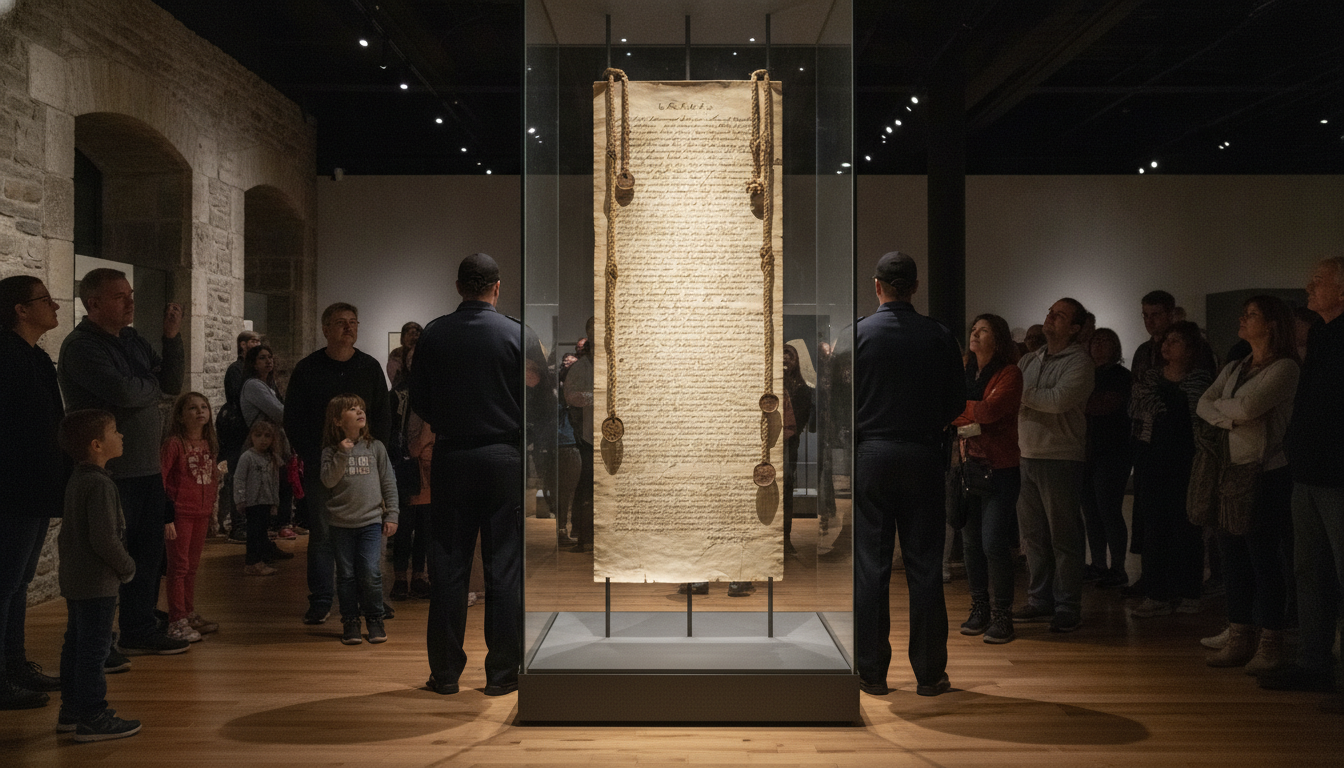
The only known copy of the 1701 Great Peace of Montreal treaty is on temporary loan to Pointe‑à‑Callière, where the fragile seven‑page document is displayed vertically and can be viewed from both sides. The exhibition, open from June 20 to Sept. 20, 2026, highlights the pictographic signatures of dozens of Indigenous nations that pledged to end decades of regional warfare. Museum curators describe the presentation as a rare opportunity to examine an artefact that helped reshape diplomacy in northeastern North America.
Original 1701 treaty on display in Montreal
The treaty on view at Pointe‑à‑Callière is an expedition copy sent to France shortly after the August 4, 1701 signing, and it remains the only known surviving exemplar of that document. Conserved for centuries in French archives, it has not been publicly exhibited in Montreal for a quarter of a century. The current display places the document behind protective glass and lit to reveal both text and the pictographic marks made by Indigenous delegations.
Conservators and the museum team emphasize the fragility of the paper and the constraints of the loan, which lasts three months before the treaty returns to France. The vertical presentation is a first for the treaty and allows visitors and scholars to study inscriptions and drawings on both faces without handling the pages. Curators say that seeing the animal pictographs side by side with the text offers a fuller sense of the document’s diplomatic purpose.
A diplomatic summit that reshaped North America
Montreal in the summer of 1701 was transformed from a fortified town of about 1,200 residents into the site of a continental convocation. From late July into early August, roughly 1,300 delegates representing nearly 40 nations travelled by canoe and overland from territories ranging from Acadia to the Great Lakes and the Mississippi valley. Chiefs, orators, interpreters and French officials met, exchanged gifts, and negotiated a peace intended to halt long cycles of raids and reprisals.
The resulting agreement aimed to stop hostilities, resolve questions about captives, reopen trade routes and set procedures for mediating future disputes. While France and the Haudenosaunee were central parties, Indigenous nations negotiated as autonomous actors with their own priorities and diplomatic customs. Historians point out that the Great Peace established a working balance of power that fostered decades of relative stability in the region.
Years of negotiation and the role of Kondiaronk
The conference in Montreal was the culmination of several years of diplomatic engagement, emissary missions and personal ties that linked colonial and Indigenous leaders. Intermediaries who spoke multiple languages and lived among different communities helped build the networks necessary to bring distant delegations together. Those relationships, museum staff say, were essential to forging mutual confidence ahead of the 1701 meetings.
A pivotal figure in the run‑up to the treaty was the Wendat leader Kondiaronk, who argued that prolonged warfare served no community’s long‑term interests. Ill when the assembly convened, Kondiaronk delivered a final speech on August 1 and died soon after, but his interventions helped propel the negotiations to completion. His participation, and the highly public nature of his funeral rites, reinforced the solemnity of the enterprise and encouraged delegates to conclude the settlement.
Animal pictographs as diplomatic signatures
What draws many visitors to the treaty are the pictographic marks placed at the bottom of the pages—tortoises, bears, wolves, cranes, fish, foxes and other symbols that stand for nations, clans or individual delegates. Far from decorative doodles, these images functioned as binding signatures, each mark representing the authority and commitment of the people or leader who affixed it. The rat muskrat symbol, for example, is linked to Kondiaronk, while other animals denote specific nations such as Sauk and Fox.
The treaty text itself is concise compared with the breadth of negotiation it represents, but the pictographs and the ceremonial exchanges recorded in other museum displays make clear that signing was only one element of a broader diplomatic ritual. Delegates publicly read and translated the text, presented wampum belts and gave gifts—practices that reinforced obligations more visibly than ink alone.
Kahnawà:ke as the preparatory hub for delegates
Before arriving in Montreal, many delegations made a diplomatic stop at Kahnawà:ke in July 1701, where they were received at the longhouse of the calumet chief. That gathering served as a staging point to align schedules, settle disputes and prepare for the larger conference. Scholars say the Kahnawà:ke waypoint underlines that the Great Peace was built on a network of Indigenous political practices and inter‑nation diplomacy, not solely on negotiations with the French.
Accounts of the period indicate the stopover allowed complex logistical and ceremonial work to be carried out in safer, familiar surroundings. The Kahnawà:ke interlude also highlights the multi‑layered nature of the peace process, where local and regional customs shaped how agreements were proposed, heard and ratified.
Museum exhibition links objects to ceremonial practice
Pointe‑à‑Callière’s exhibition frames the treaty within a wider material culture of peace, displaying wampum beads, a calumet fragment and other objects recovered during excavations on the former site of the governor’s residence. These artefacts illuminate how words were paired with objects and gestures to make commitments tangible. Curators describe the seven interpretive stations in the museum as stages of a peace‑building process: making peace, exchanging, agreeing, moving together, negotiating, committing and keeping faith.
The museum program also includes contemporary Indigenous perspectives through video installations and public programming, underscoring that the treaty’s legacy continues to resonate. Organizers stress that the Great Peace did not erase colonial ambitions or prevent later conflicts, but it did engender a long interval of relative calm and a precedent for multilateral diplomacy in the region.
Three hundred twenty‑five years after the signing, the treaty’s worn pages and animal marks remain a powerful reminder that dozens of autonomous peoples, despite rivalries and external pressures, chose dialogue and reciprocity. The exhibition at Pointe‑à‑Callière offers residents and visitors a rare chance to see that history up close and to reflect on the complex forms of diplomacy that once governed the continent.
