
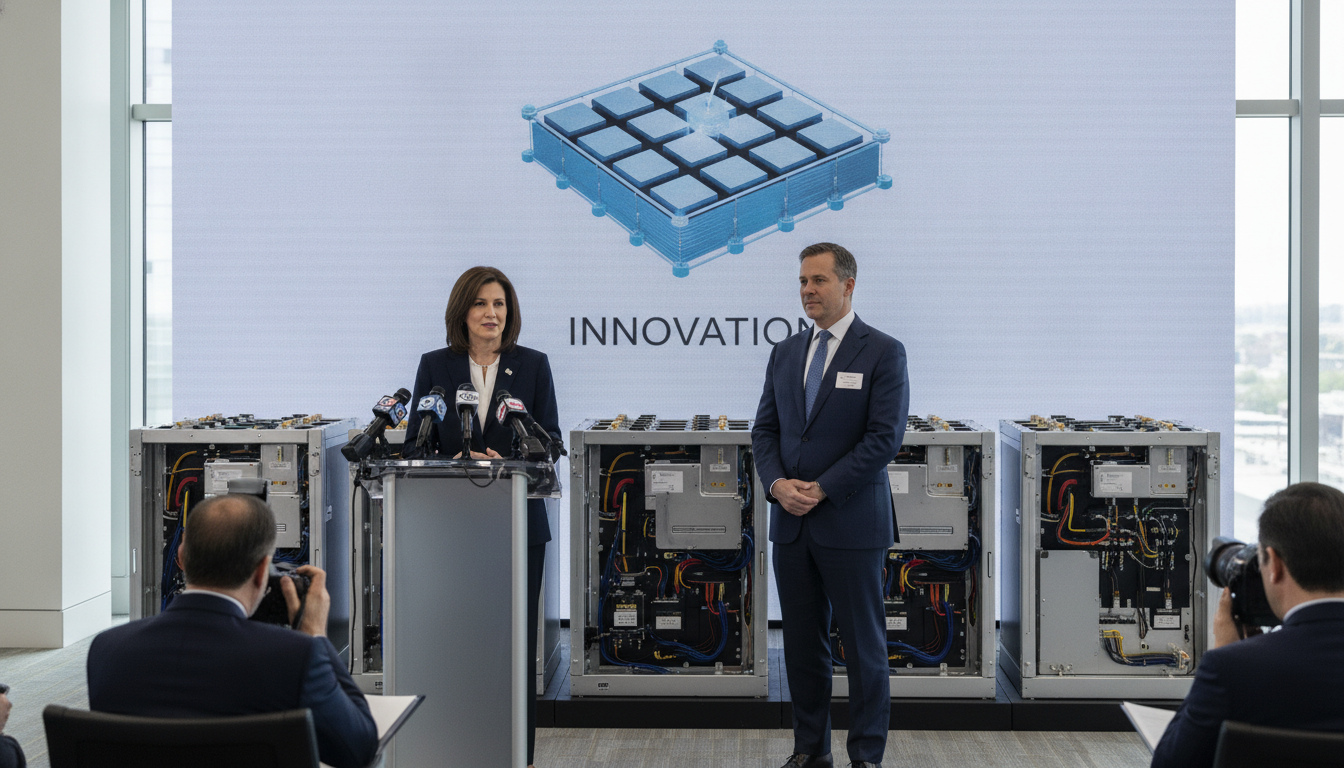
GM unveils GM sodium-ion batteries for grid storage with Peak Energy, LG and Redwood partnerships
GM unveils sodium-ion batteries for grid storage, partnering with Peak Energy, LG and Redwood. Trial production of GM cells is planned at a 2028 dev center.
General Motors announced a broad push into the energy-storage market this week, centering on the development and commercialization of GM sodium-ion batteries for grid-scale applications. The automaker said it will supply new sodium-ion cells to Peak Energy while continuing interim sales of lithium iron phosphate cells to LG Energy Solution and expanding work with Redwood Materials. The moves signal a strategic shift by a major automaker to deploy alternative battery chemistries outside the traditional electric-vehicle channel.
GM partners with Peak Energy to develop sodium-ion cells
GM is collaborating with startup Peak Energy to tailor a new sodium-ion battery chemistry specifically for utility and industrial storage systems. The partnership will see GM develop cells that Peak will integrate into its grid-scale hardware, leveraging the chemistry’s cost and safety characteristics.
Company executives positioned the effort as an entry into the broader energy-storage market rather than a vehicle-focused application. GM’s vice president of battery and sustainability has framed the sodium-ion approach as well suited to stationary storage where size and weight are less limiting.
Chemistry trade-offs and performance characteristics
Sodium-ion batteries replace key materials used in lithium-based chemistries, lowering raw material costs and reducing certain thermal risks. That chemistry tends to be heavier and larger for a given energy capacity, but proponents emphasize longevity and reduced fire risk as compelling advantages for grid deployments.
Because sodium-ion cells have lower thermal runaway potential, systems can omit active cooling and some fire suppression infrastructure, which reduces initial capital outlays and ongoing maintenance. Peak Energy’s designs already reflect these differences, claiming simplified system architecture and lower lifecycle costs compared with equivalent lithium-ion installations.
Production timeline and the Battery Cell Development Center
GM expects its first sodium-ion cells to enter trial production at its Battery Cell Development Center in 2028, a facility the company says will accelerate battery commercialization timelines. The development center is part of a broader, previously announced investment of roughly $900 million dedicated to new battery chemistries and related infrastructure.
Executives said the center will help shorten development cycles and reduce costs associated with bringing new cells to market. Trial production in 2028 will precede larger-scale manufacturing and will give partners time to adapt system designs to the new cells’ electrical and mechanical profiles.
Interim strategy: LFP sales to LG and expanded recycling with Redwood
While sodium-ion cells are being developed, GM will supply lithium iron phosphate (LFP) cells to LG Energy Solution for integration into energy-storage systems. LG already works with GM through their Ultium joint venture on EV battery production, and this interim supply arrangement leverages those commercial ties.
Simultaneously, GM is expanding its relationship with Redwood Materials, sending used battery packs and manufacturing scrap to the recycler and purchasing a 7.2 megawatt-hour system for use at a Michigan plant. Redwood has operated a second-life-pack microgrid at a Crusoe data center and will adapt its offerings to serve industrial sites where batteries reduce peak demand charges and provide backup power.
Economic and operational rationale for factory installations
GM framed the Redwood deployment as a step toward wider adoption across its manufacturing network, arguing the systems deliver both resilience and cost savings. Company estimates suggest installations like the 7.2 MWh purchase could save millions over a system’s lifetime while improving plant reliability.
At factories, batteries are likely to be used primarily for peak shaving and uninterruptible backup rather than continuous smoothing of GPU-driven loads typical at data centers. That operational distinction shapes system design choices, from power electronics to energy management strategies, and informs the selection of battery chemistry.
Market context and competitive landscape
Outside China, automakers have largely avoided announcing sodium-ion cell programs until now, making GM’s plan notable in the industry’s race to secure energy-storage markets and supply chains. Other firms have repurposed EV batteries for stationary use or launched LFP efforts, but sodium-ion positions GM on a less trodden path for Western manufacturers.
As hyperscale computing and AI workloads drive growing demand for reliable, cost-effective energy at data centers and industrial sites, automakers and battery startups are increasingly competing to provide tailored storage solutions. GM’s multi-pronged approach—developing new chemistry, selling LFP cells, and expanding recycling partnerships—reflects an effort to address near-term needs while planning for longer-term disruption.
The company’s announced commitments and partnerships suggest a strategy built on diversifying revenue streams from battery technology and leveraging existing manufacturing scale. How quickly GM sodium-ion batteries move from trial to wide commercial use will depend on pilot performance, manufacturing economics, and how system integrators adapt designs to the new cells.
Looking forward, GM expects its combined initiatives to reduce energy costs at its own facilities and create new supply relationships in the stationary storage market. The coming years, beginning with trial production slated for 2028, will test whether sodium-ion cells can deliver the anticipated cost, safety and lifecycle advantages at utility scale.
