
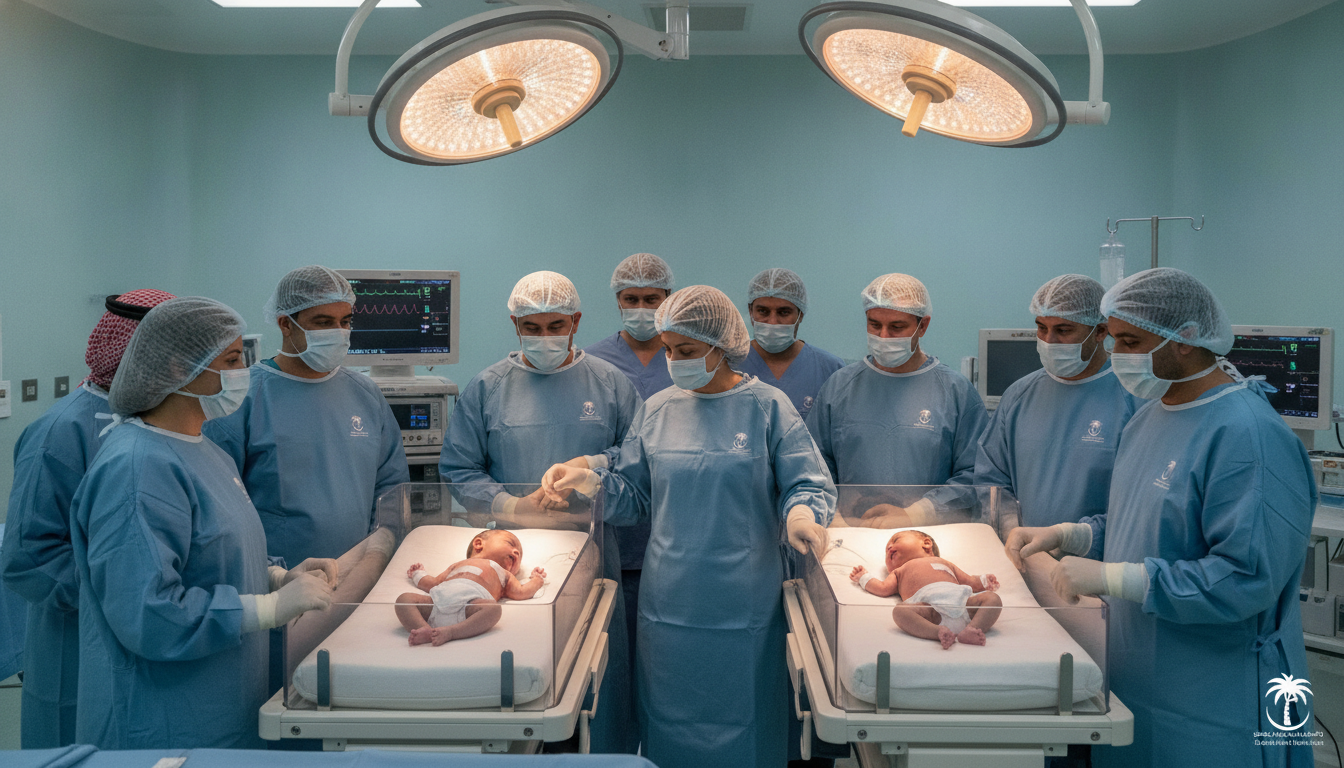
Filipino conjoined twins Olivia and Gianna separated in Saudi Arabia after six-hour surgery
Filipino conjoined twins Olivia and Gianna were successfully separated on June 18, 2026, during a six-hour operation in Saudi Arabia carried out in six stages by a 22-member specialist medical team.
The separation of Olivia and Gianna concluded after a carefully planned, multi-stage operation in which surgeons and support staff worked in coordinated shifts. The medical team completed the procedure without immediate public reports of major complications, and both children were moved to postoperative care for close monitoring. The successful separation marks a significant milestone for the twins and their family, who have followed the case from the Philippines.
Six-stage operation led by 22 specialists
Surgeons described the intervention as a six-stage operation, with each phase designed to address specific anatomical connections and ensure patient safety throughout the process. A multidisciplinary group of 22 specialised medical staff — including surgeons, anaesthetists, nurses and support teams — rotated through the procedure to manage critical tasks.
The coordinated staffing allowed for simultaneous work on different aspects of the separation and reconstruction, reducing time under anaesthesia and enabling careful control of blood loss and organ protection. The operation’s six-hour duration reflected both the complexity of the separation and the efficiency of the planned sequence.
Procedure staged across six phases
Hospital sources outlined that each phase focused on discrete objectives such as initial access, separation of shared tissues, preservation of vital structures, and final reconstruction and closure. The staged approach is a common strategy in complex paediatric separations, allowing teams to reassess and adapt between phases.
Surgeons typically take incremental steps to detach shared anatomy while maintaining circulation and monitoring function. After separation, teams concentrate on reconstructive work to repair and rebuild any affected structures to support recovery and future development.
Immediate postoperative monitoring and care
Following the operation, both Olivia and Gianna were transferred to an intensive postoperative care unit where clinicians monitor vital signs, neurological status and wound integrity. Continuous observation in the hours and days after separation is critical to identify complications early and to manage pain, fluid balance and infection risk.
Medical staff will also schedule imaging and laboratory tests to confirm the success of separations and the stability of reconstructed areas. Early recovery milestones generally include stable breathing and circulation, controlled pain, and gradual reintroduction of feeding when appropriate.
Support and logistics for the twins’ ongoing care
The twins’ family and medical teams must now coordinate a complex programme of follow-up care, including physical rehabilitation, nutritional support and specialist outpatient visits. Long-term recovery often requires staged reconstructive procedures and ongoing assessments by paediatric surgeons, physiotherapists and developmental specialists.
Logistical arrangements for travel, accommodation and medical documentation are frequently handled in collaboration with hospital social workers and, when relevant, diplomatic or community organisations supporting families living abroad. Such coordination helps ensure continuity of care as the children progress from intensive monitoring to rehabilitation.
International medical expertise and collaboration
Cases like Olivia and Gianna’s typically draw on a broad range of subspecialties and international best practices in paediatric surgery, anaesthesia and nursing. The presence of a large, specialised team reflects the complexity of conjoined-twin separations and the need for coordinated expertise across multiple disciplines.
Hospitals that undertake these operations often combine local surgical skill with protocols refined through experience and collaboration, enabling teams to manage rare and technically demanding procedures. The successful outcome in this instance underscores the importance of meticulous planning and teamwork.
Anticipated rehabilitation and long-term outlook
Recovery timelines vary, but clinical teams generally plan for weeks to months of hospital-based rehabilitation followed by extended outpatient therapy tailored to each child’s needs. Reconstructive goals, mobility support and developmental monitoring will shape the twins’ ongoing medical pathway and education planning.
Medical professionals caution that while initial separation can be successfully completed, long-term outcomes depend on a range of factors including the extent of shared anatomy, any organ involvement, and timely access to rehabilitative services. The medical team will provide regular updates as the twins progress through their recovery.
The successful separation of Olivia and Gianna on June 18, 2026, represents a major step in the twins’ care; attention now turns to recovery, rehabilitation and the sustained medical support that will guide their next stages of development.
