
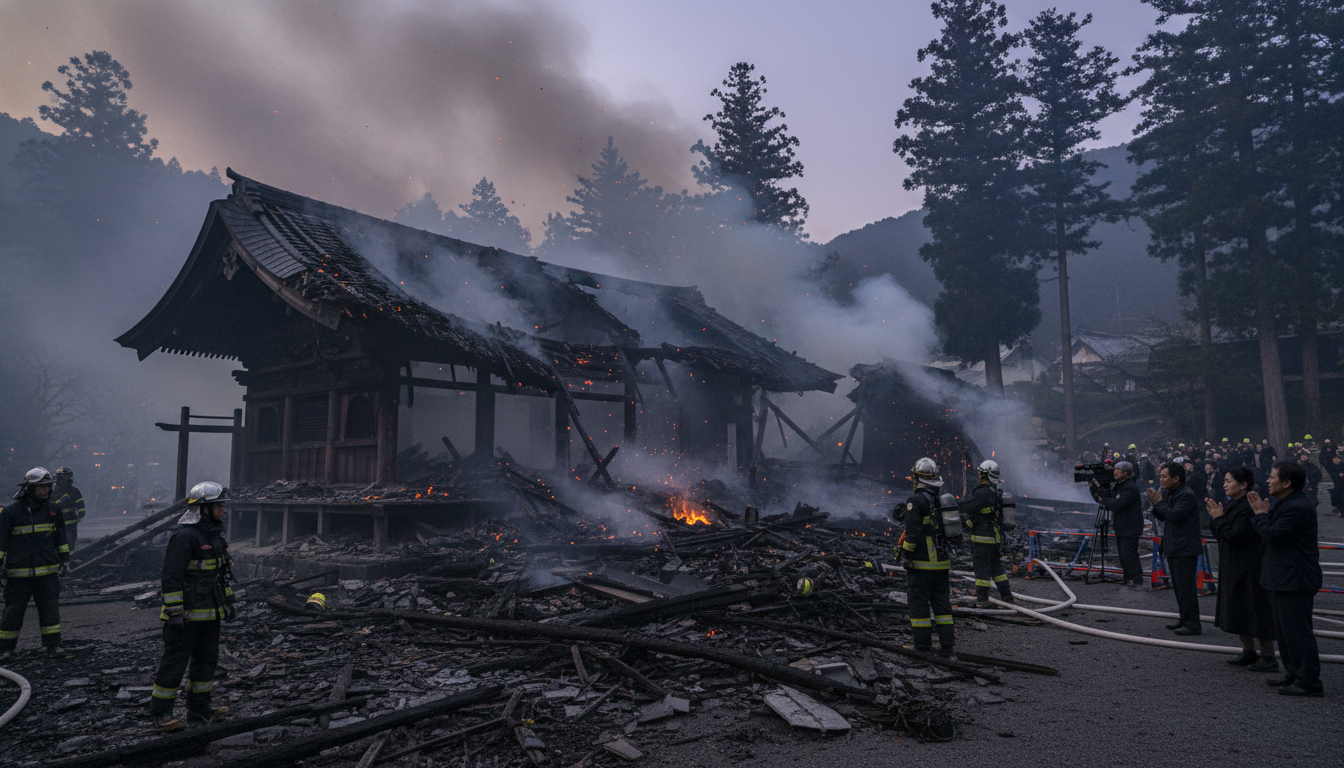
Hall of ‘Eternal Flame’ Burns Down in Southwestern Japan
A sacred flame said to have burned for more than 1,200 years was consumed when the hall that housed it caught fire on Wednesday, May 21, 2026, in southwestern Japan.
Fire Destroys Hall Housing ‘Eternal Flame’
A wooden worship hall that contained a long-held “eternal flame” burned on the afternoon of May 21, 2026, according to local reports and statements from Buddhist spiritual leaders. Footage circulated on social media and by regional news outlets showed flames and heavy smoke engulfing the building before the fire was brought under control.
Officials and religious authorities confirmed the blaze affected the central structure that protected the flame, a site that had drawn pilgrims and visitors for generations. At the time of initial reporting, authorities did not provide a detailed inventory of what was lost inside the hall.
Ancient Sacred Flame and Its Significance
Buddhist spiritual leaders have described the fire as striking at a symbol of continuity, saying the flame was first lit more than 1,200 years ago and had been tended as part of longstanding ritual practice. The “eternal flame” served both as an object of veneration and as a living link to the temple’s historical lineage.
Eternal flames in Japanese Buddhism often mark sites of remembrance, purification and ongoing worship, and they can be central to annual rites and community ceremonies. The destroyed hall had been an anchor for those practices, drawing both local worshippers and visiting pilgrims.
Eyewitness Footage and On-the-Ground Reports
Video from the scene captured the rapid spread of flames across the hall’s roofline and the heavy column of smoke that rose above the temple complex during the fire. The images prompted swift attention online, where local residents and visitors shared footage and accounts of the scene.
Local authorities and media outlets reported that emergency responders arrived at the location as the blaze intensified, coordinating efforts to prevent the fire from spreading to neighboring structures. Information released in the immediate aftermath focused on damage containment rather than on a final assessment of losses.
Religious Leaders and Community Reaction
Temple officials and Buddhist clergy expressed deep sorrow at the destruction of the hall and the threat posed to the historic flame, calling the damage a heavy blow to the religious community. Statements from spiritual leaders emphasized the flame’s role in the temple’s rituals and in the spiritual life of worshippers across the region.
Community members gathered near the temple grounds in the hours after the fire, where some offered prayers and others spoke of the historical importance of the site. Planners and caretakers of the temple signaled that preserving whatever remains would be a priority in the coming days.
Heritage Preservation Concerns and Wider Implications
The loss underscores the vulnerability of historical wooden structures and ritual sites to fire, a long-standing concern for heritage preservation in Japan and elsewhere. Many temple halls are built from timber and contain artifacts that are difficult or impossible to replace once damaged by flame or smoke.
Conservation experts have for years emphasized preventive measures such as fire detection upgrades, controlled access during dry seasons, and digitization of archives to mitigate such losses. The destruction of a building housing an artifact described as more than a millennium old sharpens discussions about how best to protect living cultural heritage.
Next Steps: Investigation and Restoration Prospects
Local authorities, in coordination with temple custodians, indicated that an investigation into the cause of the fire would proceed, with forensic teams and heritage specialists likely to be involved. The initial focus will be on determining origin and assessing structural stability before any restoration planning begins.
Temple leaders and community groups are expected to meet to consider whether elements of the site can be salvaged and how rituals connected to the flame might be maintained or adapted. Long-term restoration of a damaged historic hall typically requires fundraising, specialist craftsmen and permits from cultural-affairs bodies.
The blaze that consumed the hall on May 21, 2026, has left worshippers and heritage officials confronting the loss of a site tied to centuries of religious practice, and it has prompted renewed calls for measures to safeguard vulnerable cultural treasures.
