
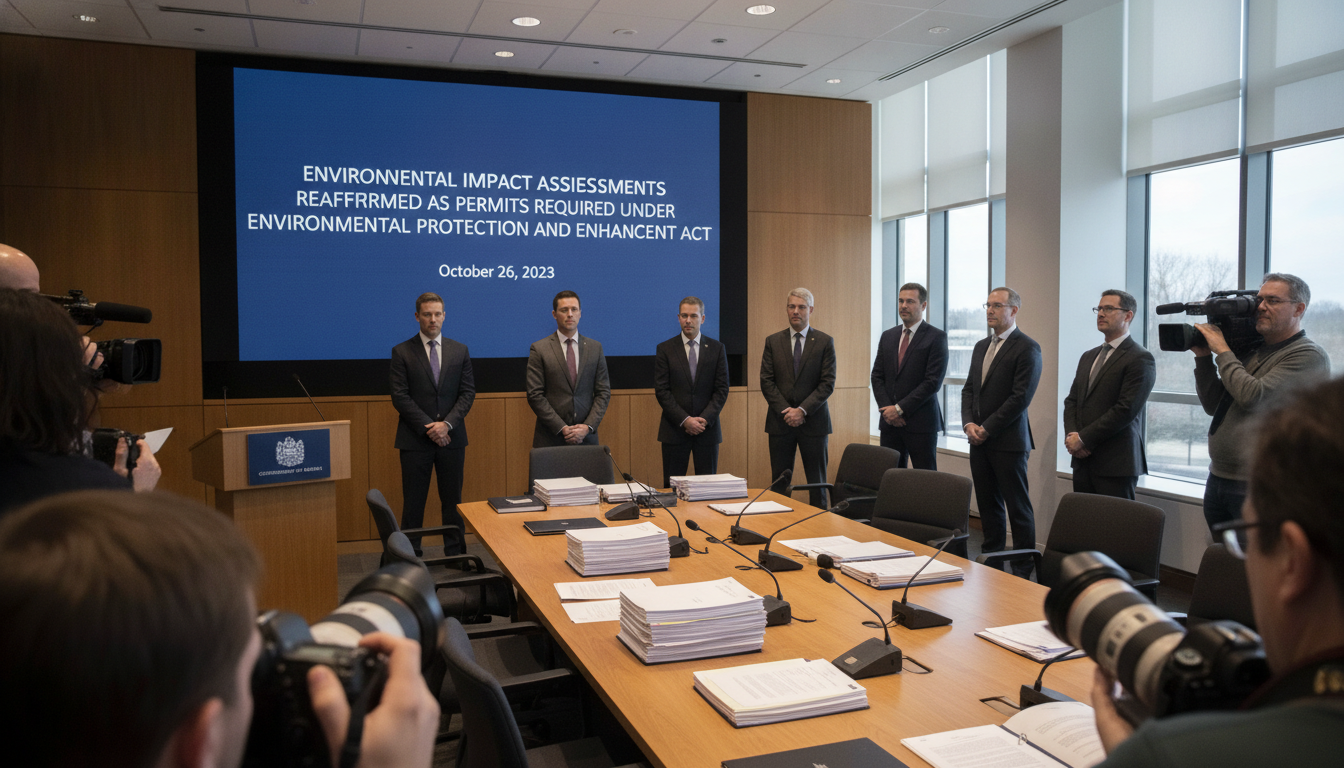
Government reiterates environmental impact assessment obligations under Environmental Protection and Enhancement Act
Officials: environmental impact assessments (EIA) follow legal triggers under the Environmental Protection and Enhancement Act; proponents must secure permits.
A government statement restated that any environmental impact assessment is determined through established legal processes under the Environmental Protection and Enhancement Act. The statement emphasized that even where an EIA is not triggered, project proponents remain obliged to obtain all required permits and meet regulatory standards. Officials said proponents must provide detailed technical assessments on impacts to air, land and water and demonstrate that projects can be built and operated safely before work proceeds.
Government statement clarifies EIA process
In its statement, officials described the EIA decision as a statutory determination rather than an administrative preference. That means whether a full environmental impact assessment is required turns on criteria set out in the Act and associated regulations. The government said assessment thresholds and triggers are applied to individual proposals to determine the appropriate level of review.
Legal triggers under the Environmental Protection and Enhancement Act
The Environmental Protection and Enhancement Act establishes the legal tests that determine when an environmental impact assessment is required. Officials noted that those tests consider project type, scale, location and potential for adverse effects. Decisions that a proposal does not trigger an EIA do not remove other legal obligations for proponents.
Permits and regulatory obligations remain mandatory
Authorities underscored that absence of an EIA trigger does not exempt proponents from obtaining permits or approvals. Proponents must still submit permit applications and supporting technical documentation to demonstrate compliance with air, water and land protection requirements. Regulators said permits will only be issued after review confirms a project can meet environmental and safety standards.
Technical studies to assess air, land and water impacts
The statement highlighted that proponents must provide thorough technical assessments addressing impacts to air, land and water. These studies are expected to include modelling, baseline data collection and proposed mitigation measures tailored to the project’s footprint. Regulators review those studies to determine permit conditions and any additional monitoring or mitigation required.
Timing, review and operational safeguards
Officials said projects cannot proceed until all regulatory approvals and permit conditions are satisfied, and that safety and environmental safeguards must be demonstrable. Where a formal EIA is required, proponents face a more detailed public and technical review that can extend timelines. Regulators also retain the authority to impose conditions, require adaptive management plans and conduct follow‑up monitoring once projects are underway.
Implications for proponents and local communities
For project proponents, the reiterated guidance means diligence is required at the earliest planning stages to assemble technical evidence and secure permits. For communities and stakeholders, the process provides defined opportunities for review when an EIA is triggered and for comment through permit consultations. Officials said clarity about legal triggers aims to ensure consistent application of standards while preserving public and environmental protections.
The government’s statement framed the environmental impact assessment framework as a legal safeguard that operates alongside permitting regimes, ensuring projects address environmental risks before construction or operation begins.
