
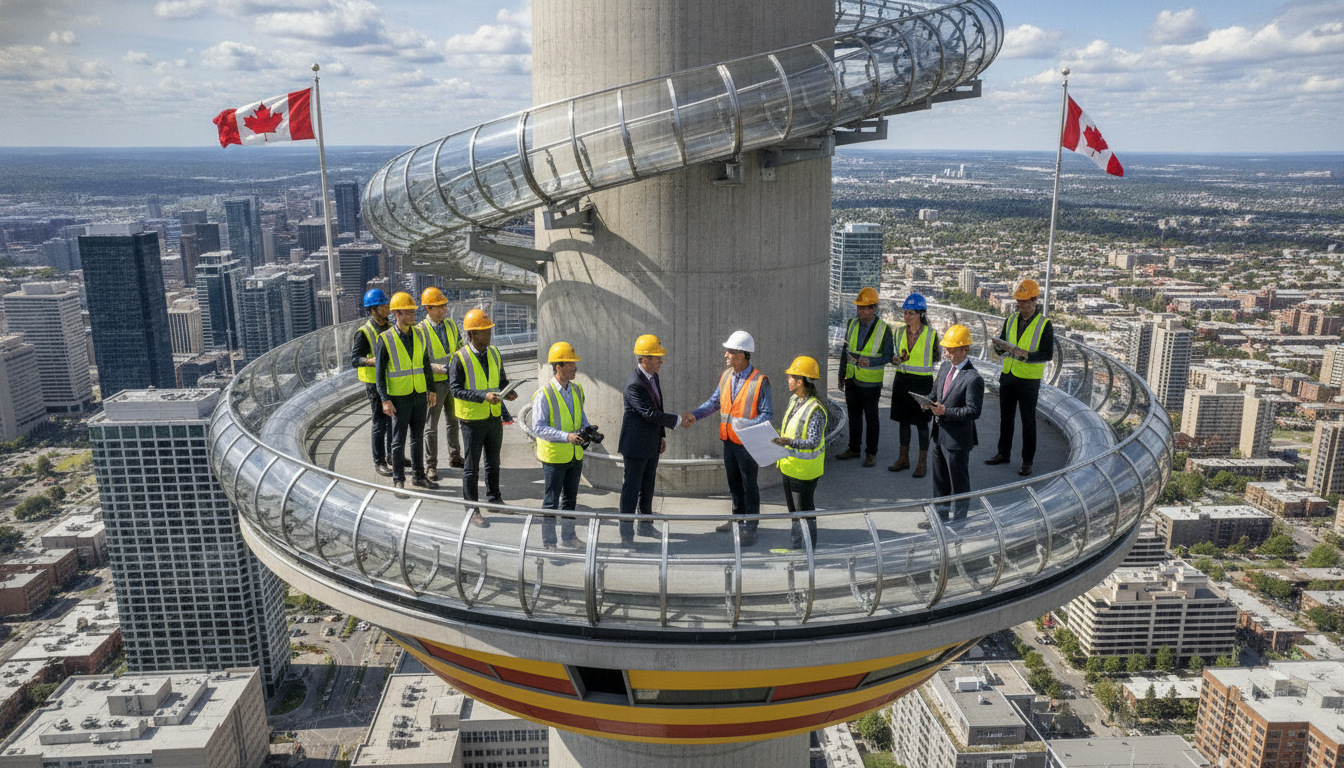
Engineer Says Calgary Tower Slide Is Technically Feasible, Sparks Safety Debate
Engineer says Calgary Tower slide could be built from top to ground; the feasibility claim raises safety, regulatory and tourism questions for Calgary officials.
A local engineer has told reporters that a Calgary Tower slide — a spiral slide running from the tower’s observation level to street level — would be technically feasible to build. The remark, citing engineering principles and structural possibilities, has quickly focused attention on safety, regulations and the role of attraction design in the downtown skyline. The claim has prompted a mix of curiosity, enthusiasm and concern among Calgarians and municipal officials. That debate is now shaping early conversations about whether such a concept could ever move beyond theory.
Engineer outlines technical feasibility of a Calgary Tower slide
From an engineering point of view, the idea is straightforward, the engineer said, noting that slides of significant length can be designed to meet structural and load requirements. He illustrated his point by saying a spiral slide around the structure could, in principle, allow riders to descend from the top to the ground safely. The comment emphasized that feasibility depends on rigorous design, materials selection and adherence to building codes rather than on the basic possibility of construction. The engineer framed the slide as an engineering challenge rather than an immediate proposal.
Safety and regulatory obstacles identified
Any proposal for a Calgary Tower slide would encounter strict safety scrutiny from municipal and provincial regulators, experts say. Authorities would demand proof of safe speeds, fall protection, evacuation plans and emergency access, as well as certification for materials and construction methods. Public safety officials and building inspectors would require extensive modelling and testing before permits could be considered. Those layers of oversight are likely to be decisive in whether the concept could ever be approved for a landmark site.
Design, materials and structural considerations
Designers would need to account for wind, temperature variation and the tower’s existing structural envelope when attaching any external element. Materials must resist UV degradation, thermal expansion and repeated impact while remaining lightweight enough not to overstress the tower’s supports. Engineers would also have to integrate dampening systems to control rider speed and to prevent resonance or vibration from affecting occupants and visitors. A successful design would balance spectacle with redundancy and conservative safety margins.
Insurance, cost and liability questions
Beyond technical work, the financial implications would be significant, insurers and legal advisers say. Premiums for a high-profile attraction attached to a major tower would likely be steep, reflecting perceived risk and public visibility. Operators would face complex liability frameworks requiring waivers, mandatory safety briefings and real-time monitoring systems. Those costs would factor into any business case, where revenue projections from tourism must be weighed against ongoing operational and compliance expenses.
Tourism potential and public reaction
The notion of a Calgary Tower slide has captured popular imagination and generated lively public discussion on social media and in community forums. Proponents argue such an attraction could boost downtown foot traffic and add a distinctive feature to Calgary’s tourism portfolio. Critics counter with concerns about aesthetic impacts to the skyline, noise, and the potential commercialization of a civic landmark. Local hospitality and tourism stakeholders will likely study any proposal for market viability and alignment with broader destination strategies.
City response and next steps for any proposal
City officials have not received a formal application for a slide and emphasize that hypothetical ideas require detailed plans before municipal review can begin. Any developer or engineering team would first need to submit feasibility studies, environmental assessments and a permit application to start the statutory review process. Public consultation would be expected as part of the approvals, giving neighbourhoods and stakeholders a voice on such a high-profile change. Until formal documents arrive, municipal staff say they will treat the concept as an inquiry rather than an active project.
The engineer’s description of a Calgary Tower slide highlights how engineering imagination can collide with regulatory reality, and it foregrounds the questions that would need answers before a bold attraction could move from concept to construction.
