
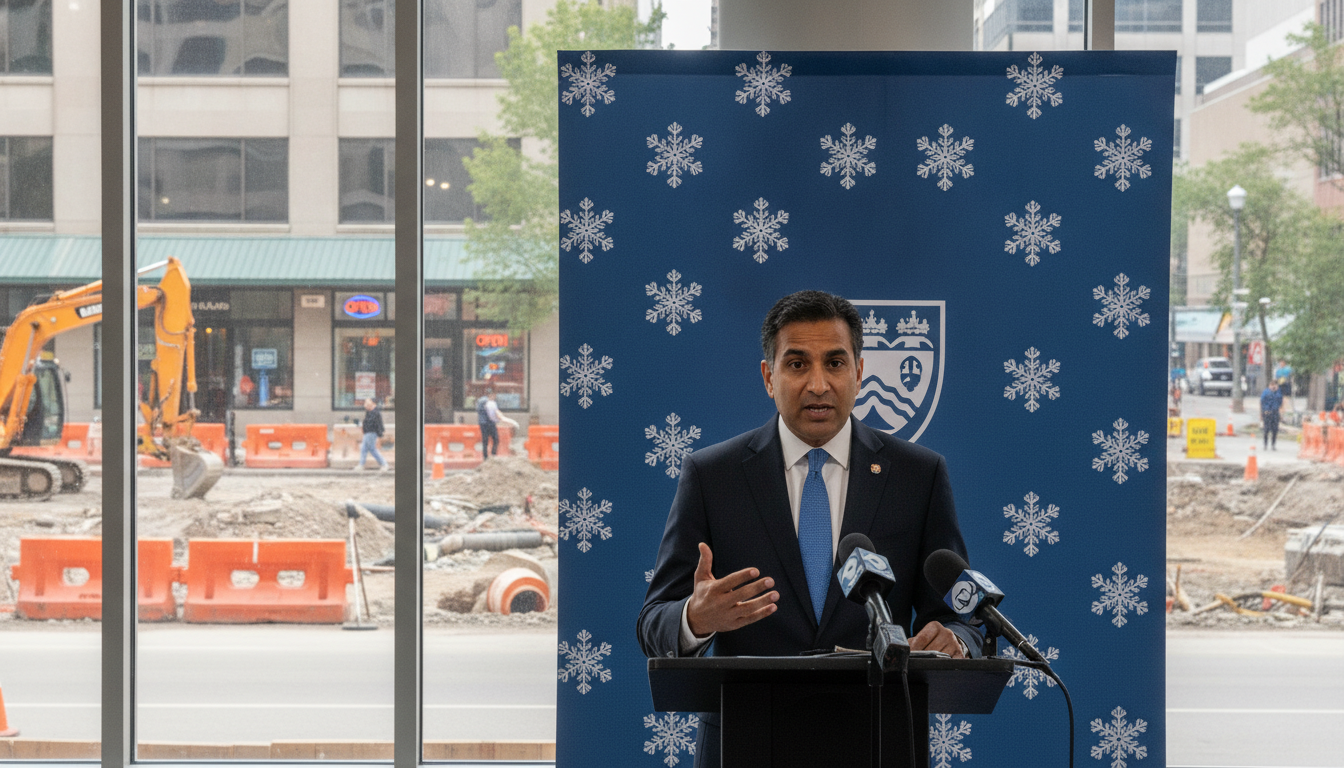
Edmonton downtown construction blamed for restaurant closures as mayor unveils support measures
Edmonton downtown construction blamed for restaurant closures as Mayor Andrew Knack pledges targeted support, safety steps and accelerated work to help struggling core businesses.
Edmonton downtown construction has been cited by restaurateurs as a key factor in a recent wave of closures, and Mayor Andrew Knack says the city is stepping up with a mix of expedited schedules, enhanced safety patrols and efforts to boost downtown residency. Two established eateries announced exits this month, prompting business groups to call for immediate, tangible changes. The mayor acknowledged more work is needed and described recent measures as the beginning of a longer recovery effort.
Mayor outlines steps to aid businesses
The mayor told reporters the city has moved quickly to respond to concerns about access and economic strain in the core. He highlighted investments already in motion, including pilots for faster construction windows and additional transit enforcement personnel focused on downtown corridors.
Knack emphasized these actions are not a final solution but the start of "continuous and ongoing work" to stabilize the business environment. He framed the approach as a combination of construction management, public-safety improvements and initiatives to attract residents back to the downtown area.
Construction timing and accelerated work
City officials say they tested near round-the-clock construction in specific locations last year to shorten project timelines and reduce overall disruption. One resurfacing and infrastructure block at 104 Street and 102 Avenue, conducted under a compressed schedule, was completed roughly two weeks ahead of its original timeline.
Business owners still criticize overlapping projects, arguing simultaneous LRT work and street upgrades have made customer access unpredictable. City councillors have asked administration to formalize a "business-friendly construction" policy to prioritize compressed schedules where feasible and minimize concurrent impacts.
Business leaders demand urgent action
Local business advocates have described the current pattern of closures as evidence of a deeper crisis, calling for intensified political attention. The chair of a downtown revitalization coalition urged council to postpone its summer recess until concrete plans are in place to support affected merchants.
Owners cited a mix of causes for recent shutdowns: construction-related access issues, rising operating costs, parking and patio fees, and higher taxes. Those factors, combined with shifting consumer habits, contributed to decisions by long-running venues to close their doors, according to operators speaking publicly about their exits.
Safety and downtown livability measures
In response to concerns about safety, the mayor announced the hiring of 30 additional transit peace officers who will focus largely on downtown routes and hubs. Council members said they are also pressing provincial partners to address mental health and addiction pressures that intersect with public safety and perceptions of the core.
Coun. Anne Stevenson, representing Ward O-day’min, pointed to new residential projects and park development as part of a broader strategy to populate the downtown with residents who will keep streets active beyond business hours. She noted that while challenges remain, downtown growth and recent construction activity indicate momentum in the real-estate and housing sectors.
Economic pressures on restaurants and retailers
Operators say the construction burden compounds existing economic headwinds in food and beverage, including higher food costs and changing alcohol consumption trends. One restaurateur described the attrition as "death by a thousand cuts," citing cumulative regulatory and cost pressures that have eroded margins.
Some business owners have urged the municipality to halt new construction approvals for a limited period to allow the downtown to recover its foot traffic. Others called for coordinated timing of projects and improved communications so businesses can plan around unavoidable disruptions rather than be surprised by overlapping work.
City officials said they understand the frustration and that recent accelerated schedules are one model for reducing total disruption. They also signaled ongoing dialogue with business groups to refine permitting, fee structures and support programs aimed at keeping core businesses solvent during extended infrastructure work.
Andrew Knack and councillors are now balancing short-term relief measures with longer-term strategies to rebuild investor and consumer confidence in the downtown. Investments in public spaces, transit oversight and housing are being pitched as complementary tactics to sustain activity as construction projects complete.
The municipality and business representatives have committed to continued meetings in the coming weeks to finalize operational changes and monitor outcomes from the accelerated work pilots. Stakeholders say the next steps will be judged by whether closures decline and customer access improves as projects finish.
