
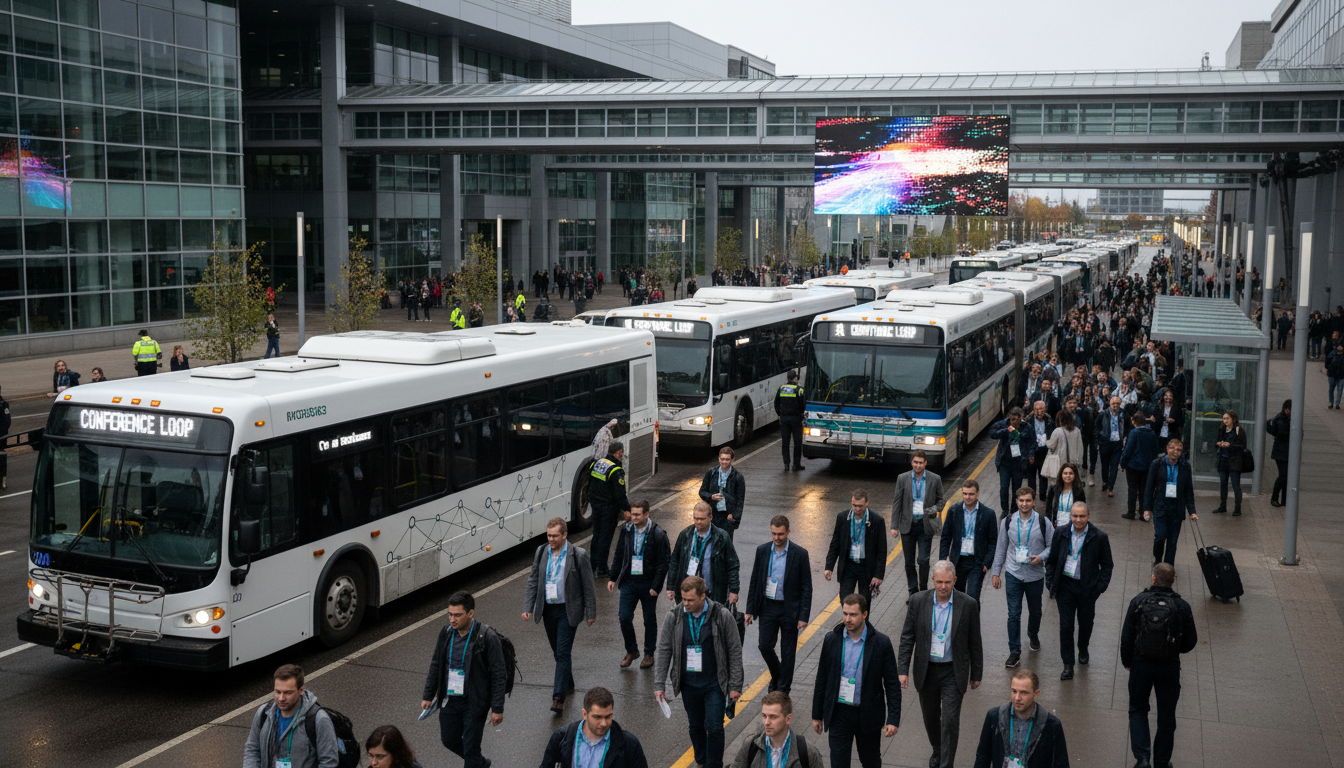
Edmonton municipal conference rolls out shuttle and transit plan to move delegates
Edmonton municipal conference rolls out modified transit and shuttle plans to help delegates reach policy sessions, an Edmonton-focused trade show and evening networking mixers. City officials and event organizers say the changes are intended to reduce travel time and improve connections across downtown venues. Delegates will also take part in discussions on national municipal policies, attend a trade show highlighting Edmonton priorities, and join receptions for women in local government, francophone leaders and rural, northern and remote representatives.
Organizers announce modified transit and shuttle strategy
The conference’s transit plan includes dedicated shuttle routes designed to link hotels, conference centres and trade show venues with minimal wait times. Organizers say shuttles will operate on a high-frequency loop during peak session changes and will supplement regular public transit to keep delegates on schedule. Signage, wayfinding volunteers and real-time digital updates will be deployed at key stops to help attendees navigate between programmed events.
Event logistics have been coordinated with the city’s transportation team to reduce congestion around major venues. Organizers confirmed priority loading zones for shuttles and temporary curbside changes where needed to maintain flow. The aim is to balance shuttle access with pedestrian safety and local traffic needs while accommodating a wide range of mobility requirements.
Delegates to debate national municipal policies
A central element of the agenda is a series of plenaries and breakout sessions focused on national municipal policy priorities. Delegates from across the country will discuss topics such as infrastructure funding, local housing strategies and intergovernmental collaboration. Panels will feature municipal leaders, policy experts and sector representatives who will present evidence-based options for local governments.
Organizers said sessions are timed to allow delegates to move between debates and exhibit floors without missing key presentations. Policy workshops will include facilitated Q&A segments and working groups aimed at producing action-oriented recommendations. The format is intended to ensure that outcomes are practical for municipal councils and local administrators.
Edmonton-focused trade show to highlight local industries
The Edmonton trade show component will showcase municipal services, urban innovation and regional economic opportunities. Exhibitors include technology firms, infrastructure suppliers and community organizations highlighting projects that could be replicated in other municipalities. The trade show is scheduled to run alongside the policy program, giving delegates hands-on opportunities to evaluate new tools and vendor solutions.
Organizers have zoned the exhibit hall to make it easy for visitors to find industry clusters and themed pavilions. Demonstration areas are set up for live presentations while one-on-one meeting spaces will let delegates discuss procurement and partnership opportunities. The trade show is being promoted as a practical complement to the policy discussions, linking ideas to market-ready solutions.
Networking mixers emphasize inclusion and regional voices
Evening programming will include targeted mixers and receptions designed to amplify underrepresented voices in local government. Confirmed events include a women in local government reception, a francophone networking session and a reception for rural, northern and remote municipal representatives. Organizers said these gatherings are intended to foster cross-jurisdictional relationships and spotlight challenges unique to different communities.
Each reception will be moderated to encourage substantive conversations and to connect delegates with resources and peer networks. The mixers are scheduled at staggered times to allow delegates to attend multiple events across several evenings. Organizers have also included quieter networking spaces for one-on-one meetings and small-group conversations.
Accessibility, safety and information services for delegates
Accessibility considerations are built into the transit and venue plans, with shuttles featuring wheelchair access and designated seating areas for those with mobility needs. Information booths and customer-service staff will be positioned at all major transfer points to assist with route planning and accessibility requests. City and event staff emphasised that safety protocols and crowd management plans have been reviewed to ensure smooth movement between sessions.
Digital tools will support the logistics effort with mobile updates on shuttle locations, venue entry points and event schedules. Attendees will receive clear guidance on where to board shuttles and how to access accessible routes between venues. Organizers also recommend that delegates plan travel time between sessions and consult event maps ahead of arrival to minimize delays.
Delegates are expected to take advantage of the coordinated transit options to maximize time on the agenda and in networking opportunities. The integrated approach aims to reduce the friction of moving across multiple downtown sites during a dense program schedule.
City leaders have described the transit measures as a practical response to the complexity of hosting a national municipal gathering in a compact urban core. They said lessons learned from this conference will inform future event planning and could be adapted for other large-scale meetings.
The conference schedule, maps and shuttle details are being distributed to registered delegates ahead of the first session to ensure everyone has the information they need to participate fully.
