
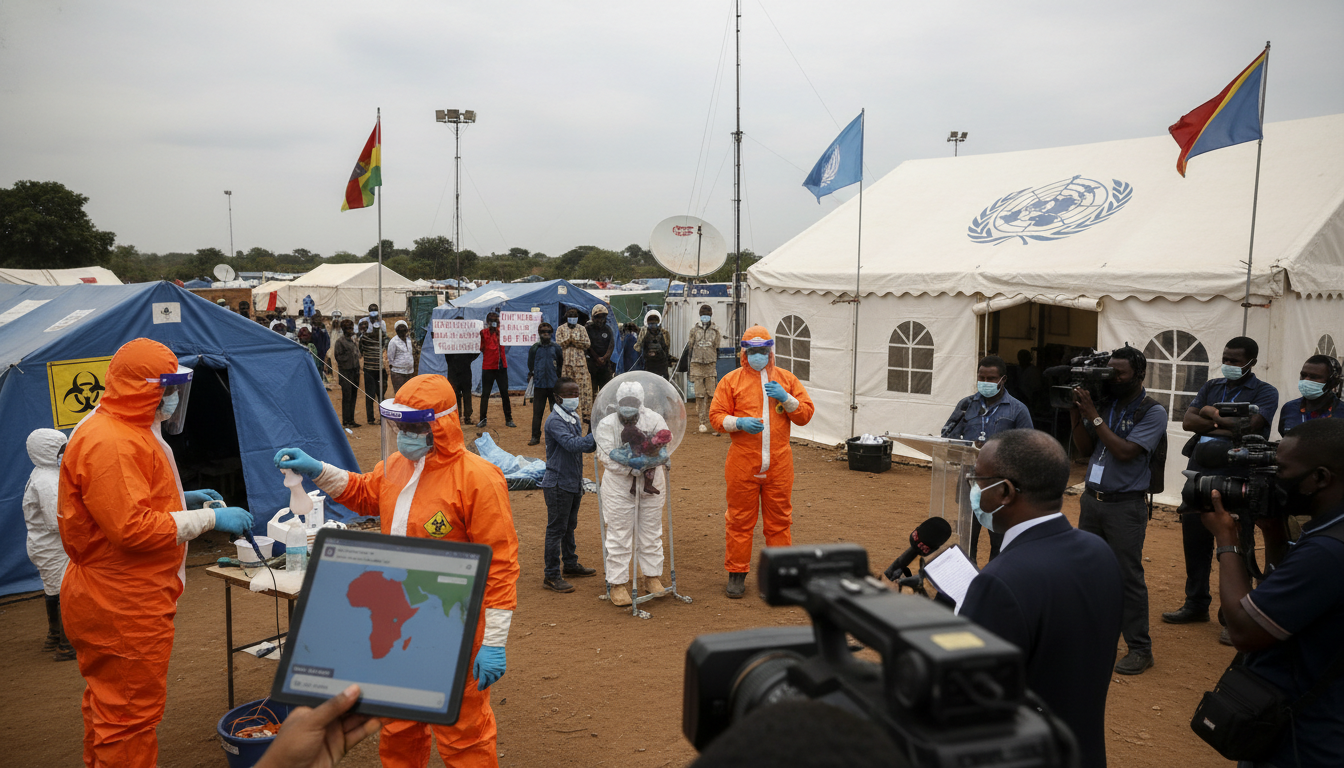
WHO sounds alarm as Ebola outbreak in the DRC spreads to Goma
WHO warns of the scale and speed of an Ebola outbreak in the DRC as suspected deaths top 130; cases reach Goma and Uganda while response is hampered by conflict
The World Health Organization has issued an international alert after an Ebola outbreak in the DRC rapidly expanded in eastern provinces, with suspected deaths now exceeding 130 and more than 500 suspected cases. The outbreak, driven by the Bundibugyo strain, has reached the city of Goma and crossed into neighbouring Uganda, prompting urgent warnings from health officials. With testing limited and insecurity constraining access, the WHO and Congolese authorities warn the response will need sustained resources and may not be short-lived.
WHO raises alarm over speed and scope of the outbreak
The WHO said the size and velocity of the outbreak in eastern Democratic Republic of Congo are cause for serious concern, prompting an international public health alert. Anne Ancia, the WHO representative in the DRC, cautioned that the outbreak is unlikely to be contained within a few months and noted that a prior epidemic in the country lasted two years. The agency has dispatched supplies and is evaluating candidate vaccines and treatments, but laboratory confirmation remains limited and many figures in official tallies are based on suspected cases.
Deaths and suspected infections reported across Ituri and North Kivu
Congolese health authorities have reported 136 deaths they believe are linked to Ebola and roughly 543 suspected cases, figures presented by the health minister at a press briefing. Much of the reported activity is clustered in Ituri province, an area already affected by violence and displacement, while suspected cases have also been flagged in Butembo in North Kivu. Front-line health workers say that low testing capacity and the reliance on clinical suspicion are complicating efforts to produce a definitive epidemiological picture.
Response hindered by insecurity and logistical barriers
The outbreak response has been severely constrained by persistent insecurity in the eastern provinces, where armed groups and active front lines impede movement and supply lines. In Rwampara, one of the affected hospitals, aid workers noted only rudimentary isolation measures and improvised burial practices, with some teams reporting interments carried out without proper protective equipment. Calls from local health representatives and civil society underscore an urgent need for protective gear, safe burial teams and secure access corridors for humanitarian deliveries.
Goma case raises alarm over urban spread
The confirmation of an Ebola case in Goma — a major regional hub — has intensified concern about transmission in densely populated urban settings and along transport routes. Goma’s airport has been a focus of appeals from Congolese and international figures urging reopening or secured operation to expedite aid deliveries. Medical personnel in the city have implemented temperature screening at hospital entrances and other initial containment steps while authorities seek to strengthen surveillance and infection control measures across health facilities.
No licensed vaccine for Bundibugyo strain; containment is central
Health officials say the current outbreak is caused by the Bundibugyo strain, for which no licensed vaccine or specific antiviral therapy is presently available. As a result, public health measures hinge on rapid detection, contact tracing, isolation of suspected cases and strict adherence to barrier precautions by health workers and communities. The DRC has extensive experience managing Ebola, having recorded numerous outbreaks in past decades, but the absence of a targeted vaccine for this strain elevates the importance of non-pharmaceutical interventions.
International reactions include travel advisories and medical evacuations
Several countries have adjusted travel guidance and border procedures in response to the outbreak. The United States raised its travel advisory for the DRC, South Sudan and Uganda to the highest level and announced reinforced health checks for inbound travellers from affected countries. Germany has reported it will receive and treat a missionary doctor exposed while working with patients in Ituri, and neighbouring Uganda has confirmed cases linked to travel from the DRC, though it has not identified a local transmission hotspot. Donor fatigue and reductions in international aid have been cited as complicating factors for sustained relief operations.
Local hospitals and humanitarian organizations warn that, without rapid and better-coordinated assistance, containment efforts may falter amid ongoing fighting and logistical constraints. Community leaders and health officials are calling for predictable funding, expanded laboratory capacity and secure transport routes to deliver supplies and personnel. The WHO has emphasized that the ultimate scale of the outbreak will hinge on the speed and scale of the collective response, and it has mobilized resources to support surveillance, clinical care and infection prevention measures.
Ebola is known for its high fatality rate but transmits less readily than some respiratory viruses, a factor that makes prompt case isolation and contact tracing potentially effective. Still, public health experts stress that complacency would be costly in a region marked by porous borders and limited health infrastructure. The situation remains fluid, and authorities warn that additional cases and fatalities are likely as surveillance and testing expand.
