
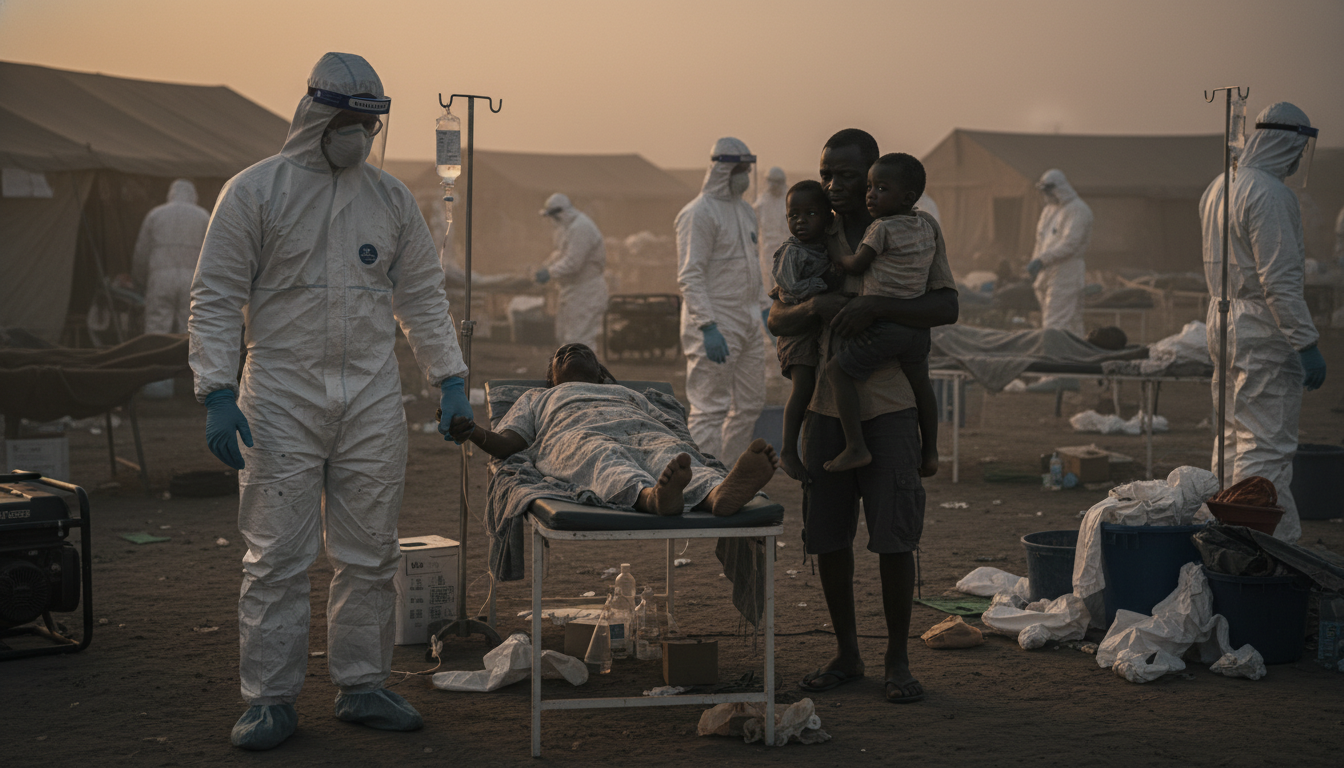
Ebola Outbreak Overwhelms Hospitals and Burial Teams at Epicenter
Ebola outbreak in an African epicenter is overwhelming hospitals and burial teams as families, volunteers and aid agencies confront rising deaths and grief.
Ebola Outbreak Intensifies in Epicenter
As of June 3, 2026 health officials report a surge of Ebola cases concentrated in a central district that has become the outbreak’s epicenter. The Ebola outbreak has forced families, local health workers and volunteers into a daily struggle to care for the sick and manage funerals amid scarce resources. Communities say the scale of illness and the speed of transmission have outpaced local capacity, leaving clinics and burial teams stretched thin.
Local authorities describe a pattern of clustered transmission in tightly knit neighbourhoods, where traditional caregiving and burial practices complicate infection control. Residents and officials alike report a growing anxiety about safe isolation and the ability to reach patients quickly after symptoms appear.
Hospitals and Clinics Strained by Patient Surges
Health centres that normally serve hundreds are now operating at or above capacity, with limited isolation wards and shortages of personal protective equipment. Nurses and clinical staff report long shifts and makeshift triage areas, redirecting space to separate suspected Ebola patients from others. The strain is forcing some clinics to defer non-emergency care as they prioritize containment and life-saving treatment for those afflicted.
Ambulance and transport services have become bottlenecks as families seek urgent transfers to treatment units, and some patients remain at home awaiting help. Supply chains for basic medicines and protective gear are unpredictable, complicating efforts to maintain consistent infection-control standards across facilities.
Burial Practices and Families Confront Loss
Safe and dignified burials have become a central challenge as the number of deaths increases in the outbreak zone. Traditional funerals—often large, communal events with close contact—pose a high transmission risk, prompting health teams to work with communities to modify rites. Even with outreach, many families struggle to accept restrictions on touching the deceased, and conflicting information has sometimes heightened mistrust.
Community members report fear and sorrow as volunteers in protective clothing carry out burials in makeshift cemeteries or designated sites. For many relatives, the inability to conduct customary farewells has deepened grief, while public health teams strive to balance cultural sensitivity with the urgent need to prevent further spread.
Local Volunteers Leading Burial and Care Efforts
Volunteers drawn from neighbourhoods and faith groups have stepped forward to assist with burial teams, patient transport and community education. These volunteers often act as the bridge between official health directives and local families, translating guidance and helping to identify symptomatic individuals. Their work has been critical in areas where government outreach is limited or delayed.
Volunteers face significant personal risk and emotional strain, and several have reported exhaustion and fears for their own families’ safety. Despite this, many say they continue because formal systems are overwhelmed and immediate local action is the only way to save lives and contain the outbreak.
Aid Agencies and Government Mobilize Support
International health organizations and non-governmental groups are mobilizing to provide technical assistance, equipment and surge staffing to the affected region. Emergency teams are focused on expanding treatment capacity, improving laboratory testing, and supplying protective gear to hospitals and burial crews. The government has declared a public health response and is coordinating with partners to scale up vaccinations, contact tracing and public information campaigns.
Officials emphasize the importance of rapid detection and isolation, as well as engaging community leaders to adapt burial practices. Constraints on logistics and funding, however, mean that response operations remain uneven across districts, with rural and remote communities particularly vulnerable.
Public Health Surveillance and Next Steps
Surveillance teams are intensifying contact tracing and ring vaccination efforts aimed at breaking chains of transmission in the outbreak’s epicenter. Public health experts say timely isolation of symptomatic people and safe burial protocols are the most effective immediate measures to reduce mortality. Authorities also stress the need for clear risk communication to combat misinformation that can hinder containment.
Longer-term priorities include strengthening local healthcare infrastructure, ensuring sustained supplies of medical equipment, and supporting mental health services for families and frontline workers coping with grief and trauma. The coming weeks will be critical in determining whether the outbreak can be brought under control or if further restrictions and resource mobilization will be required.
Communities at the epicenter continue to mourn lost loved ones while volunteers, health workers and aid agencies push to contain the outbreak and restore essential services. The human toll is widening the sense of urgency as public health teams balance cultural realities with the imperative to prevent more deaths.
