
Drone Footage Raises Questions Over ECCO Landfill Compliance
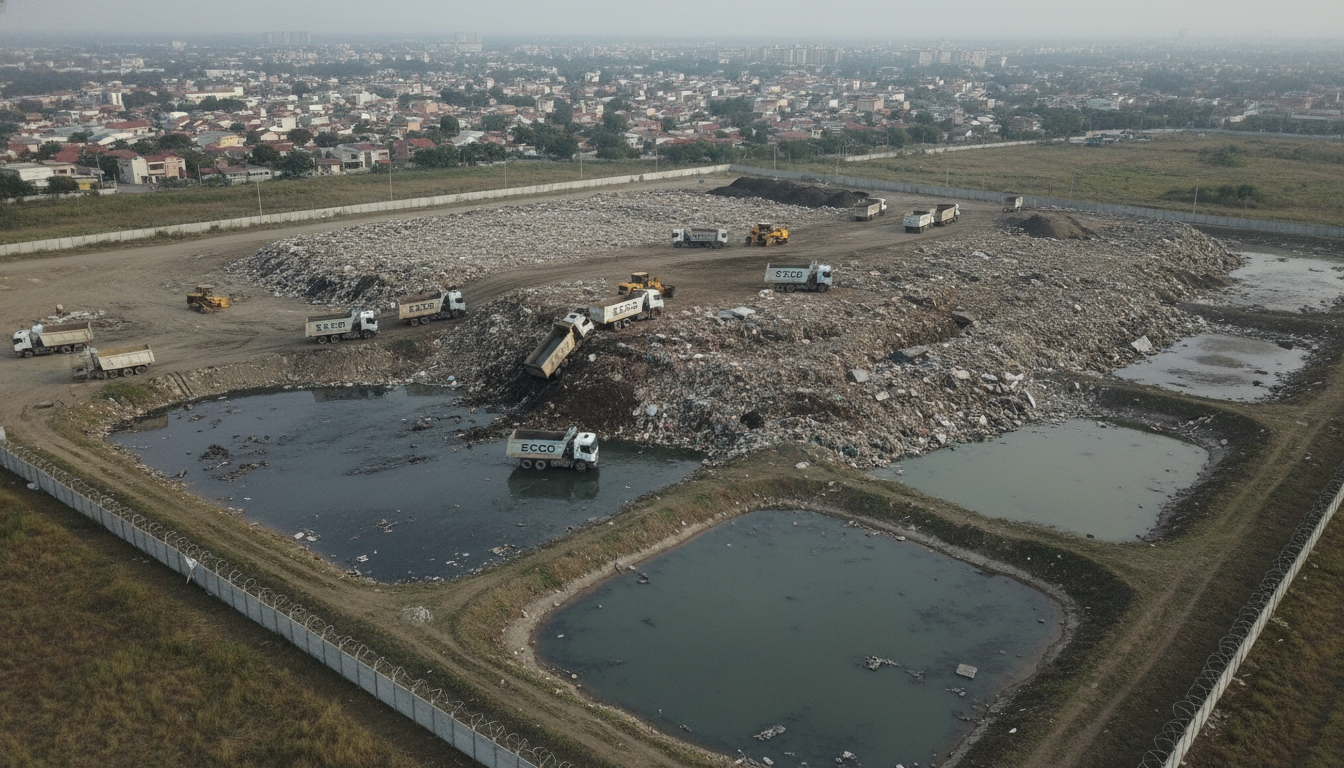
Drone footage May 29 appears to show trucks dumping material at the ECCO landfill site, raising questions about whether the activity breaches a June 2, 2025 tribunal ban.
The footage captured on May 29 appears to show a string of heavy trucks unloading material along the southeast portion of the site’s landfill mound. The images suggest material was moved and deposited within the property boundaries rather than at a clearly separate staging area. The timing of that activity has prompted renewed scrutiny because it follows a June 2, 2025 ruling from the Land and Property Rights Tribunal that prohibits ECCO from accepting and disposing of waste on the landfill portion of the site.
Drone Footage Shows Dumping Along Southeast Mound
The video imagery shows trucks pulling up to a ridge on the southeast flank of the landfill mound and then discharging a load that appears to settle on a slope. The sequence repeats over several passes in the footage, indicating multiple deliveries rather than a single isolated movement. Observers note that the exact nature of the material in the clips is not clear from the images alone and that visual evidence cannot confirm whether regulated waste streams were involved.
Investigators and legal analysts caution that drone footage is a starting point for inquiry but not definitive proof of a regulatory breach. Chains of custody, manifest records and on-site inspections would be required to determine the contents of the loads and whether the material meets the legal definition of “waste” under the tribunal order. Those steps will be essential to any formal determination about compliance with the tribunal’s directive.
June 2, 2025 Tribunal Order Banned Waste Acceptance
On June 2, 2025 the Land and Property Rights Tribunal issued an order that explicitly bars ECCO from accepting and disposing of waste on the landfill portion of its site. The ruling came after a contested proceeding in which the tribunal considered land-use, environmental and property-right claims associated with the facility. The order remains the controlling adjudicative pronouncement unless stayed or overturned by a higher court or through a subsequent tribunal process.
Legal experts say the tribunal’s wording and the scope of its jurisdiction will guide enforcement options. That ruling focused specifically on activities “on the landfill portion of the site,” language that now requires interpretation if material is deposited elsewhere on the property footprint. How regulators and courts construe the phrase could determine whether the May 29 activity complies with the June 2, 2025 ban.
Ambiguity in Site Boundaries and Legal Interpretation
A central question is whether the southeast mound where the footage shows material being dumped lies inside the defined “landfill portion” referenced in the tribunal order. Property maps, site plans and the tribunal’s record will be needed to resolve that boundary issue. If the area visible in the video is outside the prohibited zone, regulators may deem the activity permissible; if inside, it could constitute a breach of the order.
Legal counsel for affected parties note that enforcement often hinges on technical definitions and on-the-ground facts, including prior land disturbance, permitted uses and any outstanding permits. Even if material was deposited in a marginal area, the tribunal may consider intent, frequency and the nature of the substance when assessing whether to classify the conduct as unlawful acceptance or disposal of waste.
Regulators Face Options for Investigation and Enforcement
Provincial environmental regulators and the Land and Property Rights Tribunal have a range of tools to respond, from administrative inspections to orders compelling remediation. Regulators can request records such as trucking manifests, waste characterization reports and weigh tickets to establish what was transported and accepted. On-site sampling and soil tests would be used to assess whether contamination has occurred and to quantify any environmental impact.
If an investigation finds non-compliance, sanctions could include stop-work orders, fines, remediation directives and referrals for further legal action. The pace and scope of enforcement will depend on the evidence available, the statutory powers of the agencies involved and any appeals or stays sought by the operator.
Company Communication and Permit Status Remain Central
Public documents accompanying the footage do not include a contemporaneous statement from ECCO addressing the specific May 29 activity. Company statements and permit records will play a key role in clarifying whether routine permitted transfers, permitted staging of non-waste materials, or unauthorized disposal occurred. Access to manifests and related documentation will also help determine whether trucks were delivering materials under an existing waste-handling agreement or moving inert fill under a different authorization.
Industry analysts say operators typically keep detailed logs for incoming loads; those records, if produced, can either corroborate the footage or explain the presence of trucks on site. Absent a clear record, authorities and community groups will likely press for more transparency and for expedited review of permits tied to the ECCO landfill operation.
Local Residents and Environmental Groups Call for Clarity
Community members and environmental advocates who have monitored the site said the drone footage has increased anxiety about potential contamination and about adherence to the tribunal order. Residents cited concerns about runoff, dust and longer-term impacts on groundwater if regulated waste were to be deposited in or moved across the landfill mound. Those groups have called for immediate regulatory verification and for public disclosure of inspection findings.
Advocacy organizations also urged that any investigation be completed promptly and that regulators release results and corrective actions publicly to restore confidence. The situation underscores a broader demand for clearer communication between site operators, regulators and communities when contentious land-use orders are in effect.
The tribunal’s June 2, 2025 order and the May 29 footage set the stage for a focused review by authorities to establish whether the ECCO landfill activity violated the ban. Officials will need access to site plans, load records and environmental sampling to reach a definitive conclusion, and both legal interpretation and practical evidence will shape the next steps. Regulators and stakeholders say they expect further clarification in the coming weeks as inspections and document reviews proceed.
